



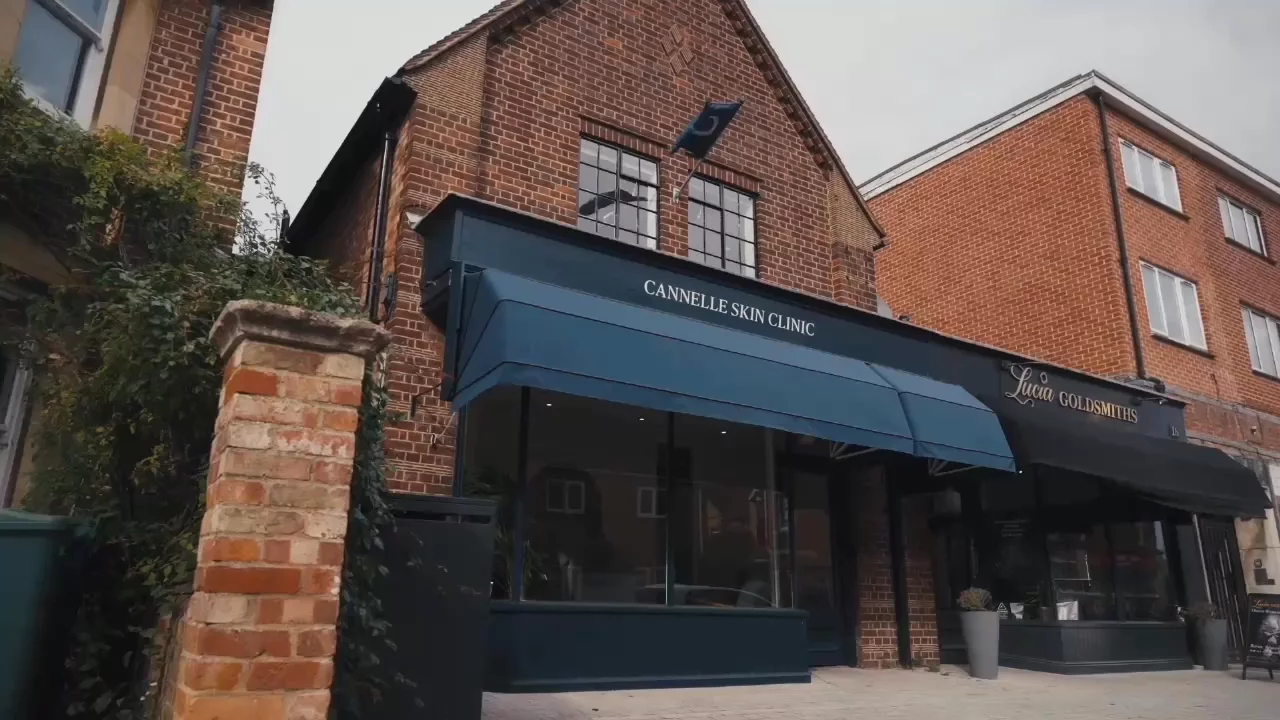
PicoSure picosecond laser at Cannelle Skin Clinic in Oxford, for stubborn pigmentation, melasma, sun damage, post-acne marks, dull skin and tattoo removal.
Cannelle Skin Clinic in Oxford now runs PicoSure. It is the picosecond laser used for melasma, sun spots, post-acne marks, dull skin and tattoos. Sessions are carried out by our trained laser specialists after a face to face assessment and a patch test.

PicoSure at Cannelle Skin Clinic in Oxford is for men and women with stubborn pigmentation or unwanted ink. It works on colour held in the skin rather than on volume or laxity. That makes it a good fit when tone, clarity or ink is the concern, and when you cannot spare downtime.
Patients usually come to us with one or more of these:
PicoSure is suitable across Fitzpatrick skin types I to VI. It has a strong safety profile on types IV, V and VI when the settings are matched to your skin.
Because each pulse is measured in picoseconds, far less heat spreads into the skin around the target. Heat is what drives the rebound darkening that deeper tones are prone to. Your practitioner assesses your skin in person and patch tests before your first full session.
PicoSure treats colour rather than loose skin or deep lines. Laxity is better answered by Morpheus8 or laser skin tightening. We postpone treatment if the area is freshly tanned, broken or actively inflamed. Melasma is driven by hormones and light, so it can return. Most of our patients keep it settled with a session once or twice a year.
Related concerns: pigmentation, sun damage and acne scarring.
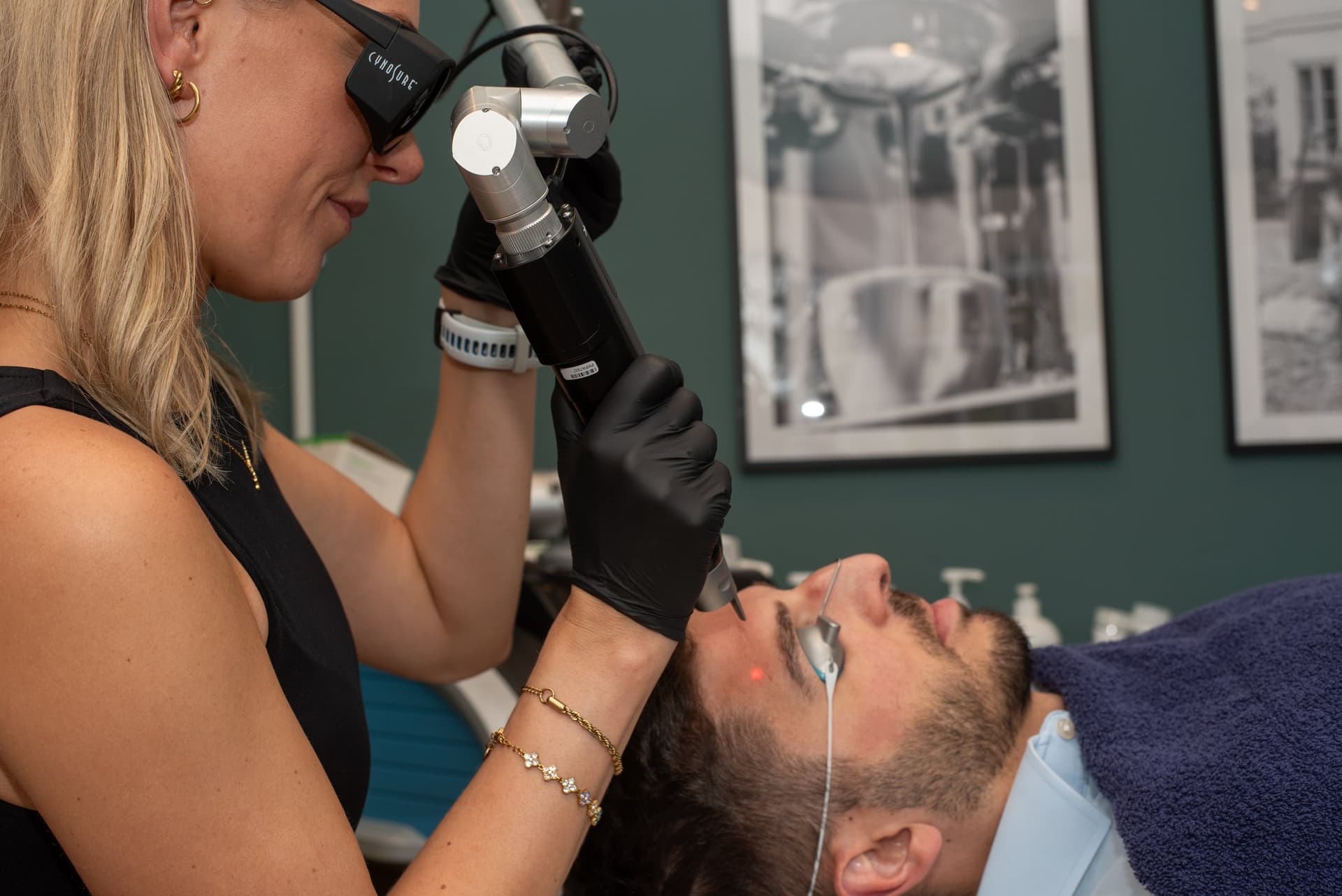
PicoSure is a picosecond laser made by Cynosure. Each pulse lasts roughly one trillionth of a second. That is fast enough to act on pigment before heat spreads into the skin around it. Older nanosecond and millisecond lasers rely far more on heat, and heat is what brings burning and downtime.
Rather than cooking pigment out, PicoSure creates a photomechanical pressure wave just beneath the surface. Pigment and tattoo ink shatter into dust-fine particles, and your lymphatic system carries them away over the following weeks. The surface of the skin is never removed, which is why recovery is counted in hours rather than weeks.
The laser runs at 755nm, a wavelength that pigment and most tattoo inks absorb well. Because the energy arrives in picosecond pulses, it fractures that colour mechanically rather than by heating the skin around it.
Every course begins with a consultation at our Oxford clinic. Where pigmentation is layered or hard to read, a VISIA skin analysis maps what sits below the surface. We choose your settings from what it shows.
Pigmentation looks like a surface problem and rarely is. Melanin gathers in clusters at different depths, which is why creams reach some of it and leave the rest sitting there.
PicoSure delivers light at 755nm in pulses so brief that the pigment absorbs the energy and releases it as pressure rather than heat. Those clusters then fracture into fragments small enough for your immune system to clear.
Tattoo ink behaves in much the same way. Ink particles are far larger than anything the body can carry off, which is why a tattoo sits in the skin for decades. Break them down finely enough and the lymphatic system does the rest, so the design fades a little further after every session.
If you are unsure whether pigment or texture is your main concern, our team will tell you plainly at your consultation. We will also say so if a chemical peel or microneedling would serve you better.
Your first appointment is an assessment, not a treatment. Your practitioner looks at your skin type, how deep the pigment sits, what you have already tried and what you are hoping for. From that they choose the head and the energy settings that suit your skin tone. A patch test is carried out at this stage so your skin’s response is known before a full session goes ahead.
On the day, the area is cleansed of makeup, oils and SPF. A topical numbing cream goes on and stays for 20 to 30 minutes. That is the difference between a session you tolerate and one you barely notice. Larger areas such as the full face benefit most from that wait. The time is built into the appointment rather than rushed.
The handpiece moves across the area in a series of controlled pulses. Each one lasts picoseconds and feels like a warm snap against the skin. For pigmentation the energy is concentrated into precise zones so pigment fractures without meaningful heat reaching the tissue around it. A full face takes 20 to 30 minutes from the first pulse.
A cooling gel or soothing mask goes on straight after, which settles any warmth and redness before you leave. Your practitioner applies SPF and hands you a written aftercare sheet. Skin often looks a little pink for a few hours. Makeup can go over the top the next morning if you want it.
The change you see on the day is only the start. Over the next two to four weeks your body carries away the fragmented pigment. Tone keeps evening out between appointments. That is why results are judged four weeks after a session rather than the day after it.
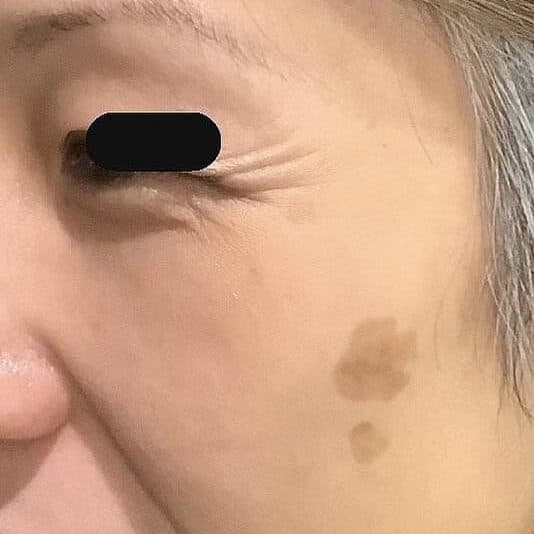
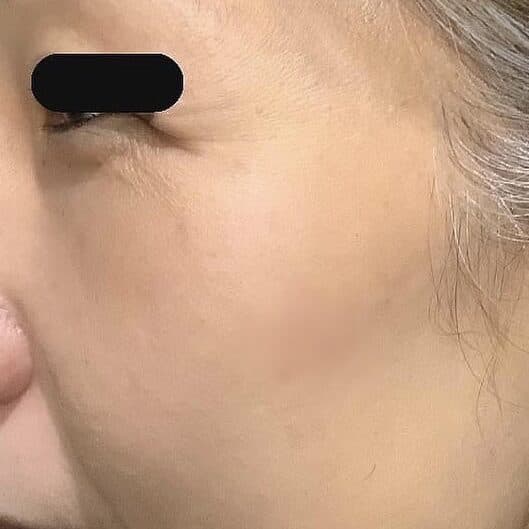
Pigmentation fades in stages rather than all at once. Skin often looks brighter within days of a first session, then keeps clearing over two to four weeks as the treated pigment is carried away. Tattoos follow the same pattern over a longer course. The results below were achieved on the same laser we now run in Oxford. They were treated at our sister clinic, Dr Joney De Souza Skin & Laser in London. Individual results vary.
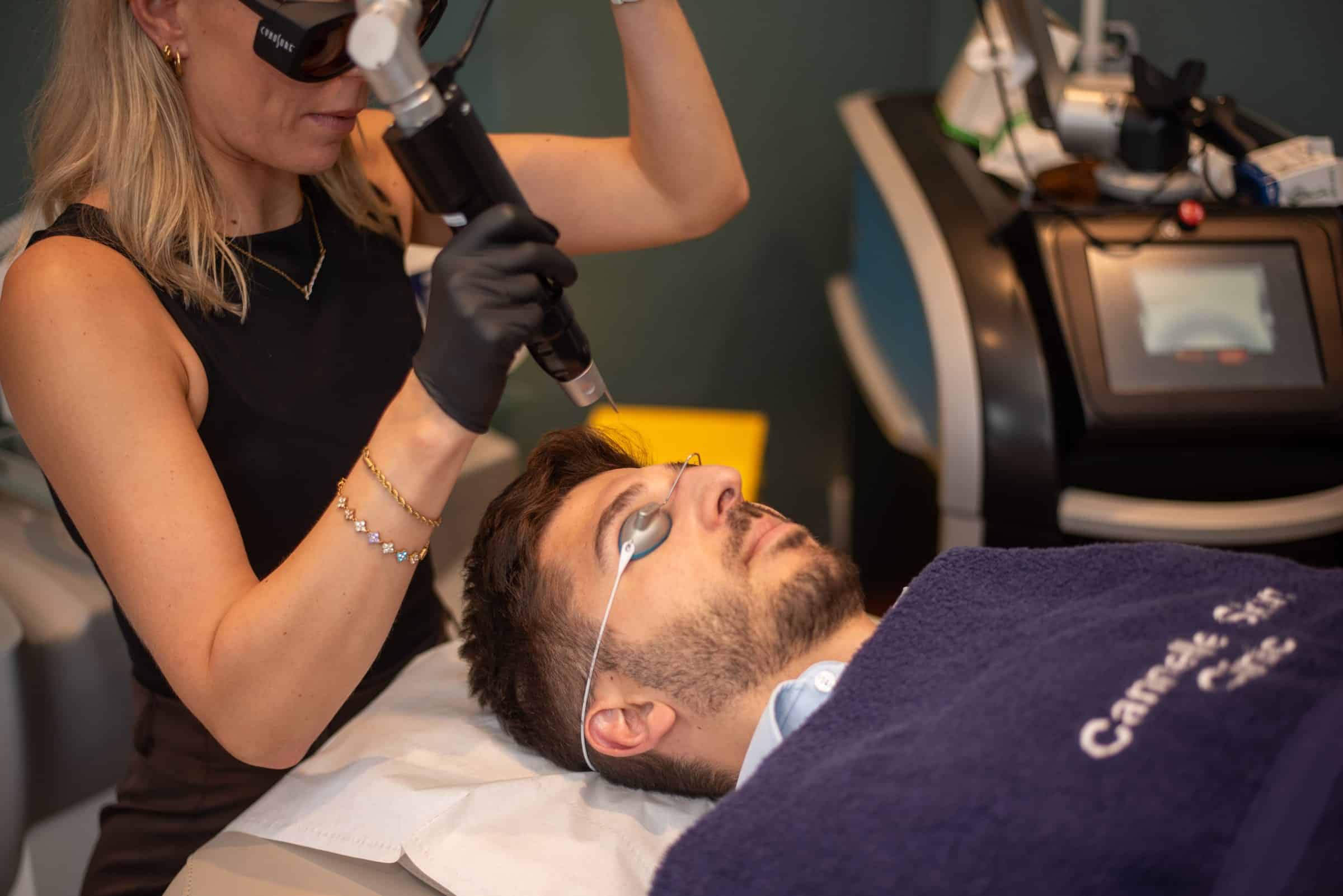
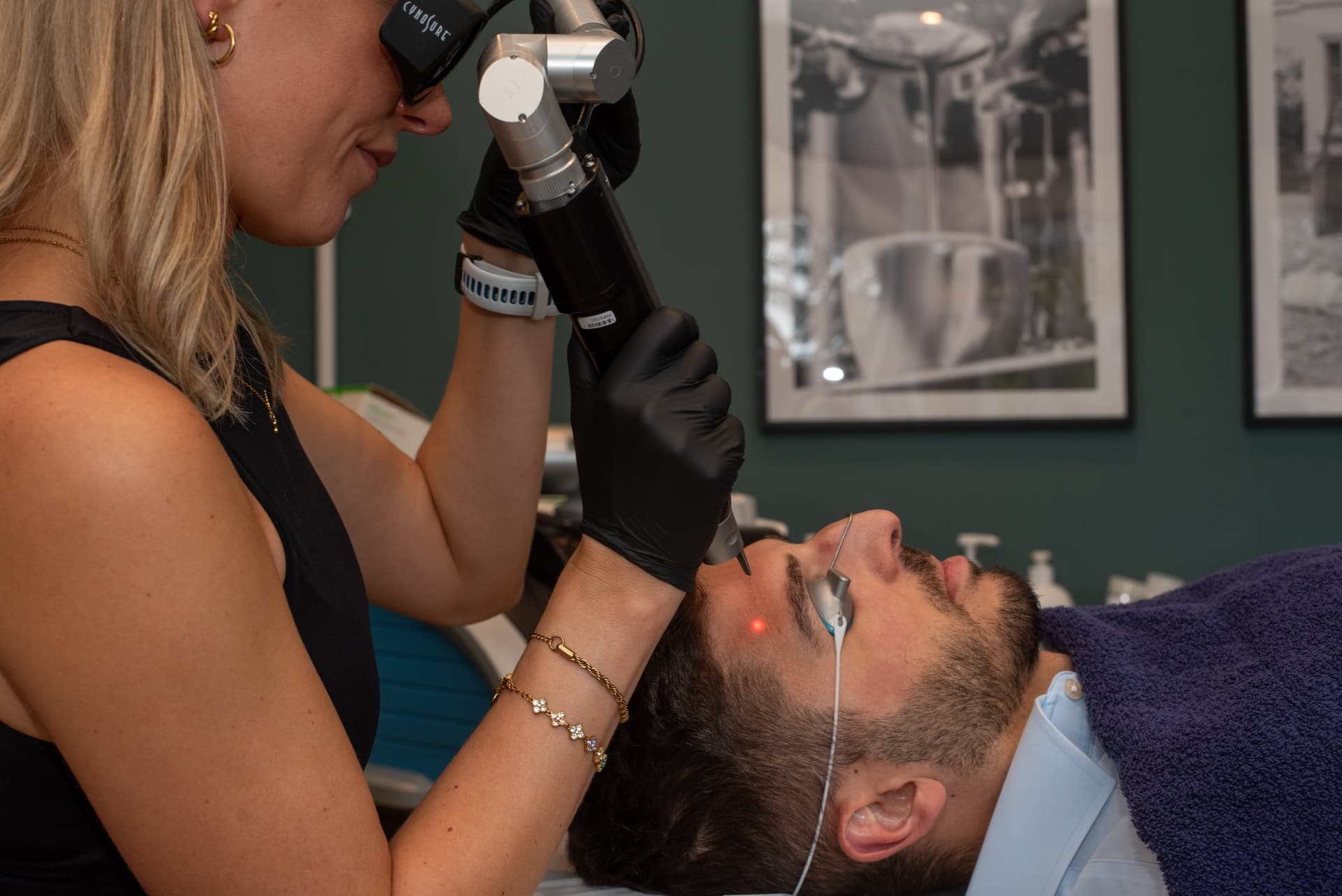
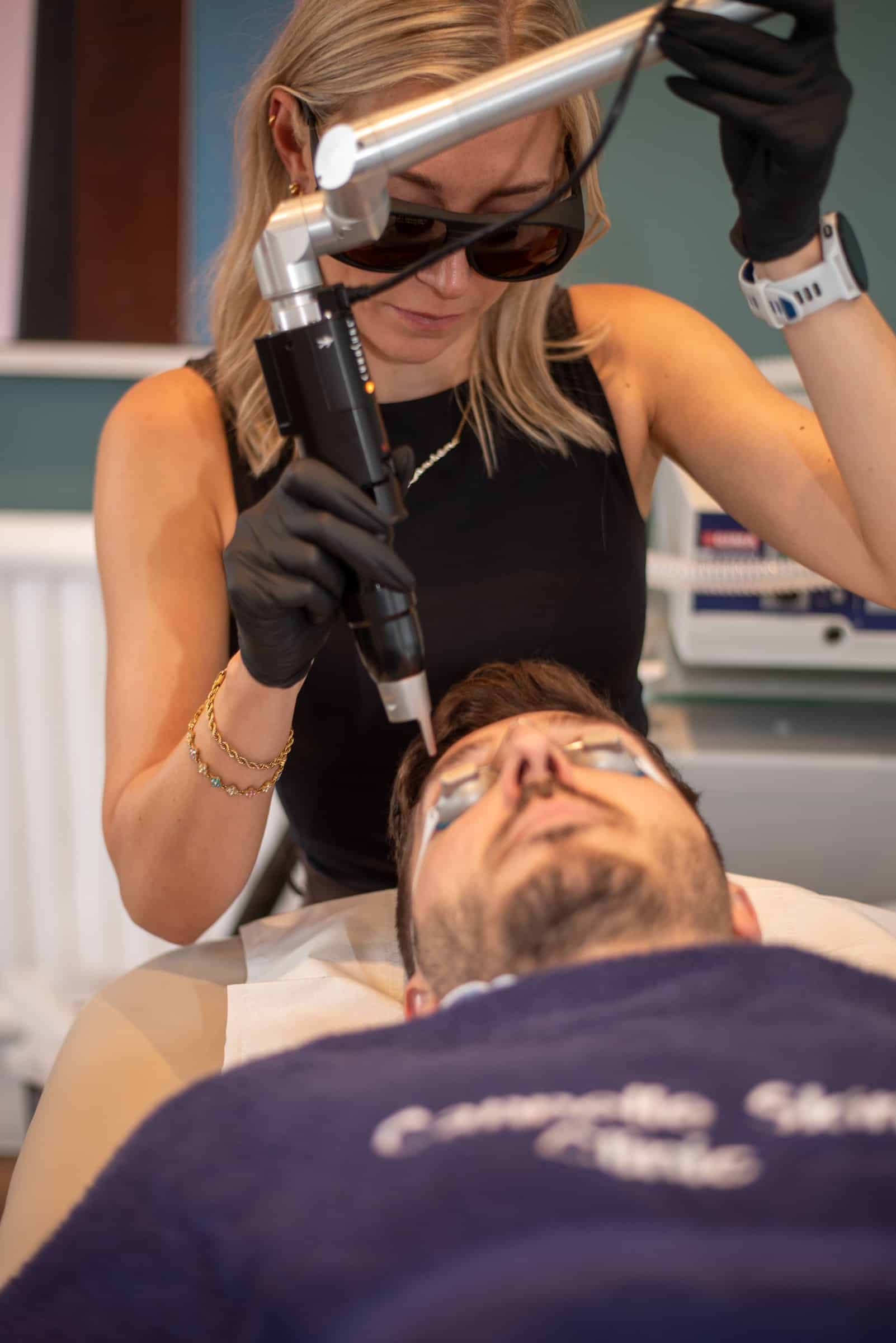
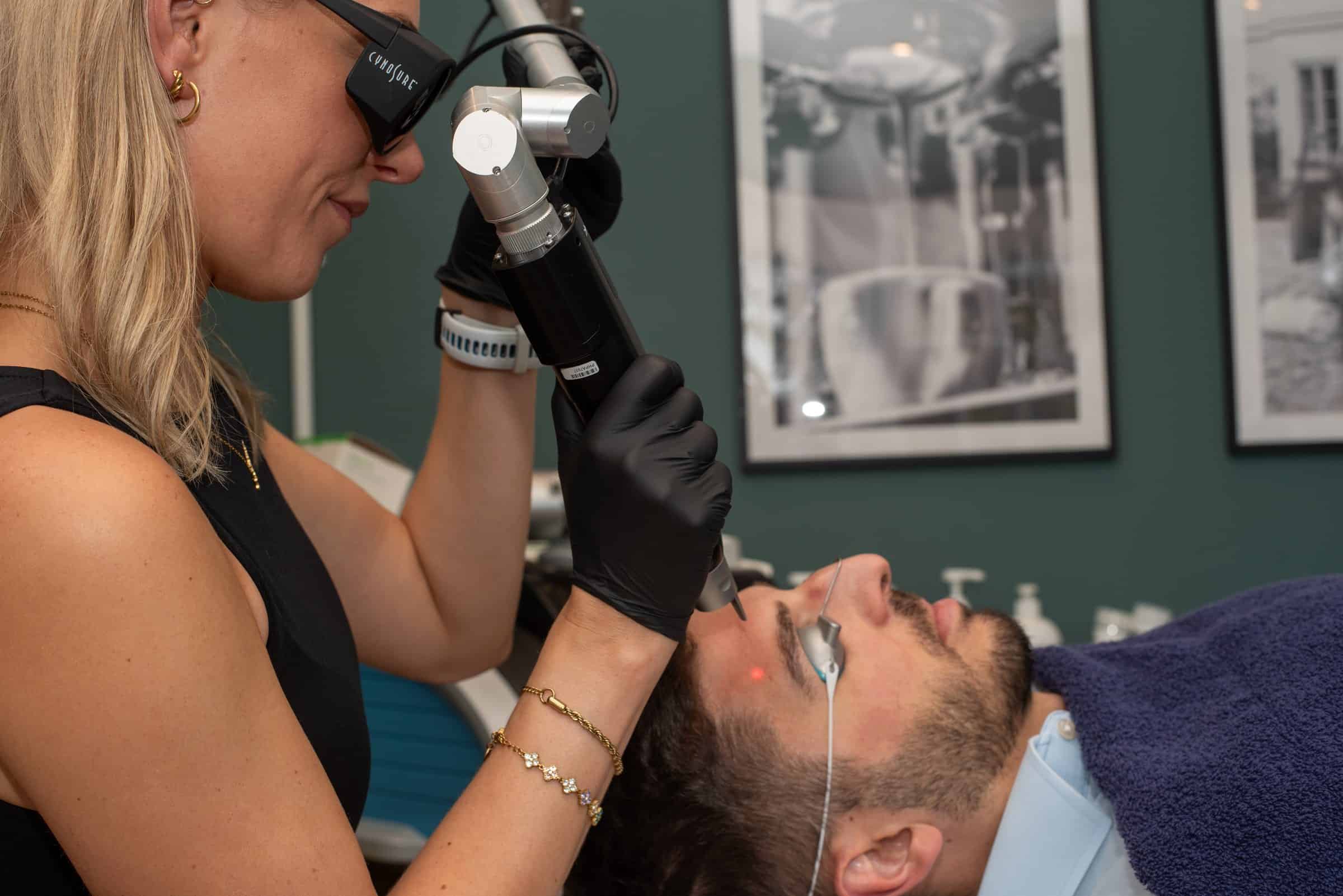
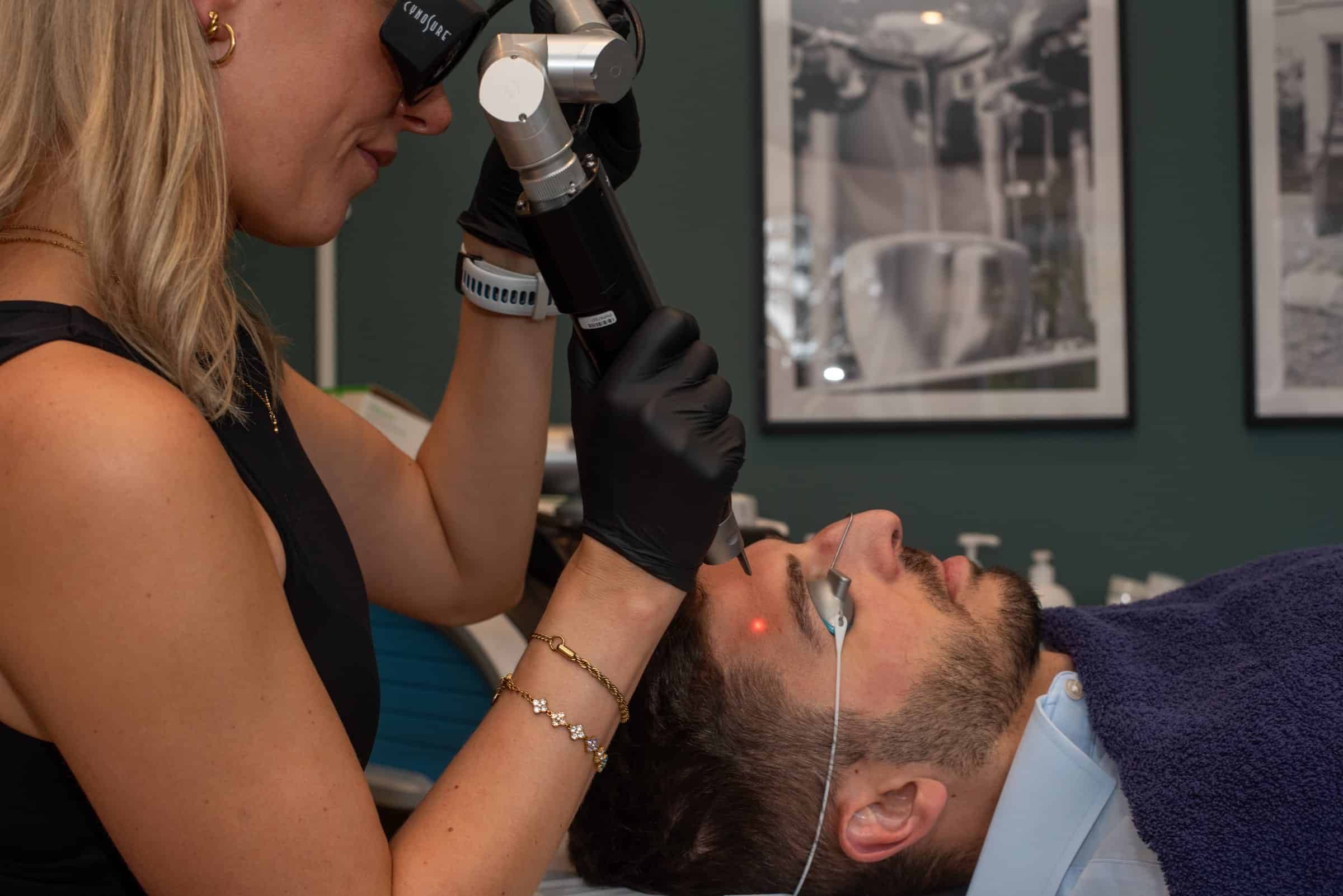
Cannelle Skin Clinic photographed a PicoSure session in Summertown, from protective eyewear to the final pass of the handpiece.
From the journal
Latest
You were told your skin type ruled out lasers. That was true of heat based machines, and PicoSure at Cannelle in Oxford works a different way, with a…
More from the journal
Most people come to Cannelle in Oxford for PicoSure when pigmentation has stopped responding to skincare. Others come to fade a tattoo that no longer suits them. From your first consultation through to your follow-up, your practitioner explains every step. We review your skin at each visit and adjust the settings and the spacing to what it is actually doing.
Keep the area out of direct sun for two weeks beforehand and skip sunbeds and self-tan altogether. Pause retinol, prescription retinoids and strong acids for a week. Arrive with clean skin, no SPF, no makeup and no active skincare on the treatment area. Tell your practitioner about any medication that makes you sensitive to light, including some antibiotics. Timing can be adjusted where it needs to be.
Your skin is cleansed and numbed for 20 to 30 minutes before the laser starts. The pulses feel like a series of warm snaps, and most patients describe the session as easier than they had braced for. A full face takes 20 to 30 minutes of laser time. Cooling and SPF go on before you leave, and you can drive yourself home.
Expect mild pink and a little warmth for the first day or two, sometimes with fine flaking as pigment lifts to the surface. Wear SPF 50 every day through your course, and for four weeks after the last session. Unprotected light is what brings pigmentation back. Skip saunas, steam rooms, hot yoga and hard exercise for 48 hours, and keep retinoids and acids out of your routine for a week. Call the clinic if you see blistering or anything you were not expecting.
Choosing PicoSure at Cannelle means a treatment run to a medical standard. Your skin tone, the depth of the pigment and the settings are all considered before anything begins. Our trained laser and skin specialists carry out every session under the oversight of Dr Mattia Parducci (GMC 7635663).
Pigmentation is one of the easiest concerns to make worse with the wrong settings, so who reads your skin matters as much as which laser is in the room.
A laser is only as good as the judgement behind it. We set every plan against your skin history, your skin tone and what you are realistically trying to change. It is then adjusted as your skin responds. If your pigmentation needs a different approach, or needs skincare first, our team will say so at your consultation.
Explore the rest of our skin treatments in Oxford, or read about Lumecca IPL if redness sits alongside your pigmentation.
Your doctor
Pigment and tattoo ink sit at different depths and answer to different wavelengths, so a picosecond laser is only as good as the assessment in front of it. Cannelle Skin Clinic keeps that assessment with a doctor.

Laser and injectables
Lead Aesthetic Doctor
Dr Mattia assesses and performs PicoSure himself at our Summertown clinic, reading depth and pigment before he selects a wavelength.
PicoSure at Cannelle Skin Clinic is priced by the area treated, and every price includes your consultation, patch test and aftercare. A course of three gives the strongest and longest-held improvement for pigmentation. Single sessions are available if you would rather see how your skin responds first.
Most people see a visible lift in brightness after a single session. For pigmentation, the average plan is a course of three sessions spaced four to six weeks apart. Deeper or layered pigmentation such as melasma usually needs the full course before it settles. A maintenance session once or twice a year then holds it.
Tattoos take longer than skin work. Most need four to eight sessions spaced six to eight weeks apart. Your body needs that time to clear the fragmented ink between visits. Your practitioner confirms a realistic number for your skin or your tattoo at your consultation.
Tattoo removal is priced by the size of the design rather than by the area treated. It has its own table in the tattoo removal section, where sessions start at £90.
| Treatment area | Single | Course of 3 |
|---|---|---|
Full face | £390 | £995 |
Face and neck | £510 | £1,300 |
Face, neck and décolletage | £650 | £1,655 |
Neck | £325 | £830 |
Neck and décolletage | £465 | £1,185 |
Décolletage | £325 | £830 |
Eye area | £230 | £585 |
Perioral area / smoker's lines | £230 | £585 |
Small scar or focal area (10 x 10 cm or under) | £230 | £585 |
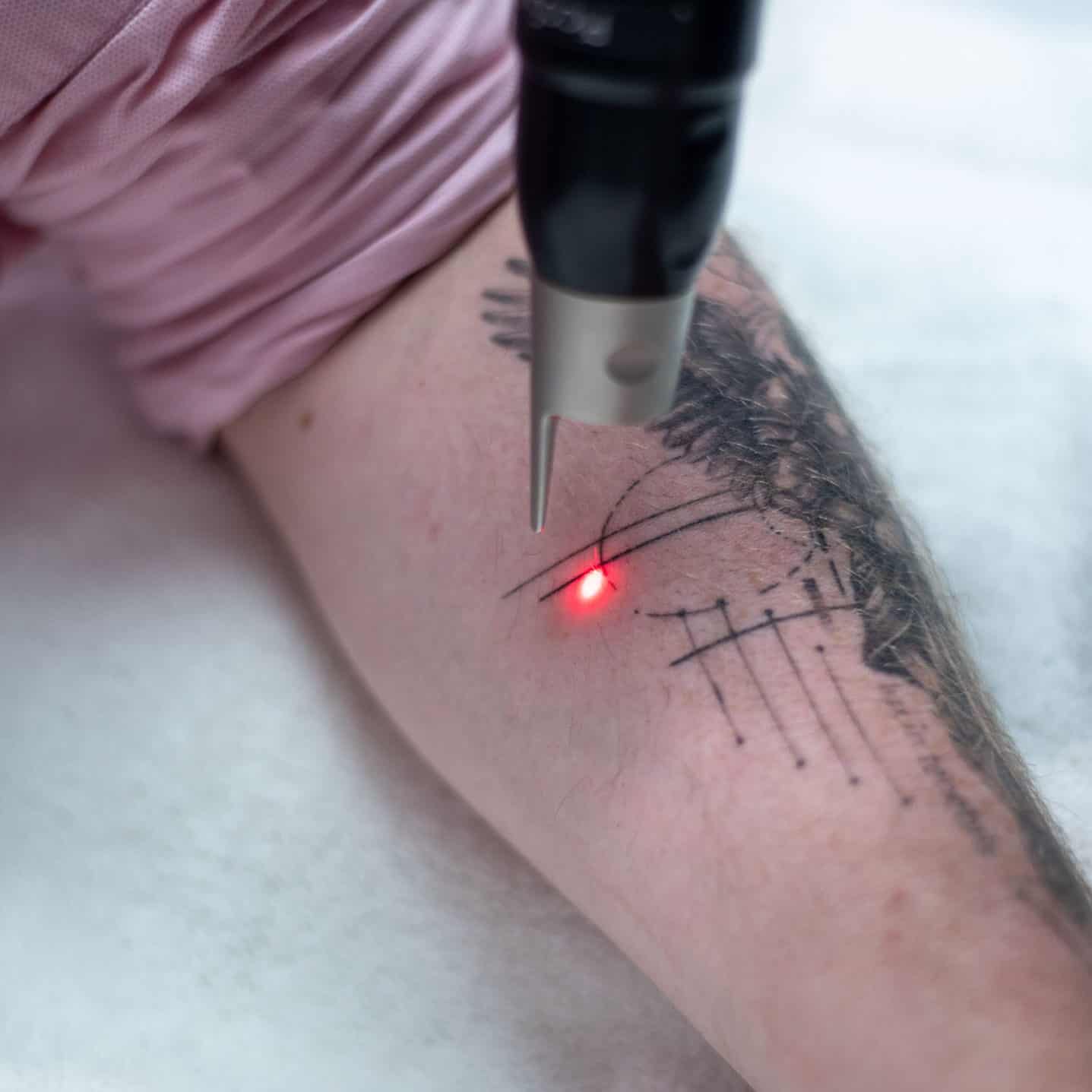
The same laser that lifts pigment also clears tattoo ink, and it reaches colours that older machines leave sitting in the skin. Black and blue respond fastest, while green and multi-coloured work is where a picosecond laser earns its place.
Ink fragments into dust-fine particles under each pulse, and your immune system carries them off over the following weeks. That is why a treated tattoo keeps fading between visits rather than vanishing in one go. Most tattoos need four to eight sessions spaced six to eight weeks apart, and old, small or single-colour designs usually clear in fewer.
Very old or heavily saturated ink can leave a faint shadow. A small number of tattoos need a longer course than the estimate given at consultation. We assess your ink, its depth and your skin type before any course is agreed, so the session count you are given is realistic. We postpone treatment if the skin over the tattoo is tanned or broken.
Prices start at £90 a session for a micro design and are set by size, with anything over 20 cm quoted after assessment. Ink depth and colour drive the number of sessions as much as size does. We give you an estimate of the total once we have seen your tattoo.
Related reading: laser tattoo removal, what to expect and our guide to tattoo removal.
| Tattoo size | Indicative size | Single | Course of 4 |
|---|---|---|---|
Micro | Up to 2 cm | £90 | £305 |
Small | 2.1 to 5 cm | £130 | £440 |
Medium | 5.1 to 10 cm | £195 | £665 |
Large | 10.1 to 15 cm | £280 | £950 |
Extra large | 15.1 to 20 cm | £390 | £1,325 |
Oversized | Over 20 cm | On assessment | Bespoke |
PicoSure raises a familiar set of questions from patients in Oxford about comfort, results, skin tone and how many sessions it takes. We have answered the most common ones below, and if something specific is on your mind, the team is always happy to help.
PicoSure is used for sun damage and age spots, melasma, post-inflammatory pigmentation left by acne, freckles, uneven tone, dullness, shallow acne scarring and tattoo removal.
For most pigmentation a course of three sessions four to six weeks apart gives the most consistent result. Lighter, more superficial marks sometimes improve enough after one. Melasma is more stubborn and can need four or more, plus occasional maintenance. Tattoos usually take four to eight sessions six to eight weeks apart. Your practitioner reviews your skin after each session and adjusts the plan.
Yes, at the right settings. The picosecond pulse puts far less heat into the skin than nanosecond or millisecond lasers. That lowers the risk of post-inflammatory pigmentation in skin with more melanin. Our practitioners treat Fitzpatrick types IV to VI regularly. A patch test before your first full session confirms how your skin responds.
Most patients describe a series of warm snaps against the skin. Numbing cream goes on 20 to 30 minutes beforehand and cooling runs through the session. Most patients find it comfortable, and much easier than expected. Bony areas and denser tattoo ink feel sharper than open areas such as the cheeks.
Very little. Expect pink skin and mild warmth for a few hours to a day, sometimes with fine flaking as pigment lifts. Most people carry on with their day and wear makeup the following morning. Saunas, steam rooms and hard exercise wait 48 hours, and SPF 50 is daily through your course.
Many patients notice brightening straight after the first session as pigment begins to fragment. The full change from each session develops over two to four weeks while your body clears the treated pigment. The clearest difference usually appears between the second and third session. Judge the result four weeks after your last appointment, not the day after.
Pigment that has been cleared does not come back, but the conditions that created it can. Sun exposure and hormonal change are the two big drivers. Daily SPF and sensible light habits do most of the work in holding a result. Melasma in particular is prone to returning. Many patients keep it settled with a single session once or twice a year.
Yes, with sensible spacing. Many patients follow a course with Profhilo or skin boosters for hydration and skin quality. Others pair it with chemical peels for surface texture. Your practitioner will set the order and the gaps so your skin recovers fully between appointments.
Our trained laser and skin specialists carry out every session, working to protocols agreed with Dr Mattia Parducci. He provides the medical oversight at the clinic. Laser treatment is not a beauty service. Your assessment, your settings and your review are handled by practitioners who work with this laser regularly.
Keep the area clean and leave it alone. SPF 50 goes on daily through your course and for at least four weeks after the final session. No saunas, steam rooms, hot yoga or intense exercise for 48 hours. Leave retinoids, acids and scrubs out of your routine for seven days and stick to gentle, hydrating products. Skip heavy makeup for 24 hours. Contact the clinic if redness persists, or if you see blistering or any change you were not warned about.
Once patients understand what PicoSure involves, the next questions are usually about how it compares with IPL, peels and microneedling. Which one suits you depends on whether pigmentation, texture or ink is the concern. The answers below cover the comparisons the Cannelle team hears most often about PicoSure in Oxford.
Lumecca IPL uses broad-spectrum light. It is excellent value on superficial sun spots, and on redness or thread veins, which PicoSure does not address. PicoSure uses a single 755nm wavelength in picosecond pulses. It reaches deeper, more stubborn pigment, and it is the safer choice for deeper skin tones and for melasma. If redness and brown patches sit together, many patients use both in sequence rather than picking one.
A chemical peel works from the surface down. As a course it is a strong, affordable option for dullness, congestion and light surface pigmentation. PicoSure works from below without removing the surface. That is what lets it reach pigment sitting deeper than a peel can safely go. Peels also need more care in deeper skin tones. The two combine well when spaced properly.
These treat different halves of the same problem. Morpheus8 uses radiofrequency microneedling to remodel deeper tissue, so it is the stronger answer for indented, textured scarring and for laxity. PicoSure works on the brown and red marks acne leaves behind, and on shallow texture. Many patients need both, and the order matters, so it is worth planning at consultation.
SkinPen microneedling creates controlled micro-injuries to build collagen, which suits fine lines, pores and texture. PicoSure works on colour rather than on collagen, and it clears pigment that microneedling cannot reach. Where pigmentation is the main complaint, PicoSure is the better first move. Where fine lines and texture are, microneedling is.
Yes, and it is one of the better laser options for it, because low heat matters with melasma. Heat is a trigger, so high-energy or ablative treatments can leave it worse than before. PicoSure works with very little thermal load, which is what matters here. Melasma is hormone-driven, so results vary between patients. A course of three with steady sun protection is the realistic plan, with the option of a further session later, not a single fix.
Good skincare matters and holds a result. Vitamin C, brightening acids and retinoids work slowly, though, on pigment that sits deeper than they reach. PicoSure breaks that pigment down directly. A course of three often achieves in three months what years of topicals could not. The sensible plan uses both, laser to clear and skincare plus SPF to keep it clear.
Message the clinic on WhatsApp, call 01865 511960 or use the enquiry form on this page. A consultation takes about 30 minutes and covers a skin assessment, your medical history and what you want to change. If PicoSure is right for you, a patch test can be done at the same visit. There is no obligation to book a course.
Year after year, our patients in Oxford return to Cannelle Skin Clinic for natural, healthy-looking results. Every review reflects our commitment to precision, safety and a personalised, doctor-led approach.
Our clinic is located in Summertown, Oxford, just north of the city centre in one of Oxford’s most sought-after neighbourhoods. Discreet and easy to reach, we offer a premium setting for bespoke skin, aesthetic and wellness care.
We welcome patients from across Oxford city and Oxfordshire, including Summertown, Headington, Kidlington, Abingdon, Bicester, Witney and the surrounding towns and villages. Whether you’re coming for routine skin-health treatments or specialist aesthetic consultations, our location is well connected and simple to access.
Our clinic, Cannelle Skin Clinic, is just minutes from Oxford city centre and easily reached by car, bus or rail. Oxford’s mainline stations Oxford Station and Oxford Parkway are a short taxi or bus ride away, and regular services link to London, Reading, Didcot, Banbury and beyond.
By car, we’re conveniently accessed via key local routes with nearby parking options; by public transport, frequent bus routes along Banbury Road drop you within a short stroll of the clinic.
Whether you’re travelling from within Oxfordshire, further afield in the UK or internationally, our clinic offers a calm, personalised and professional environment for your visit.