


Laser and injectables
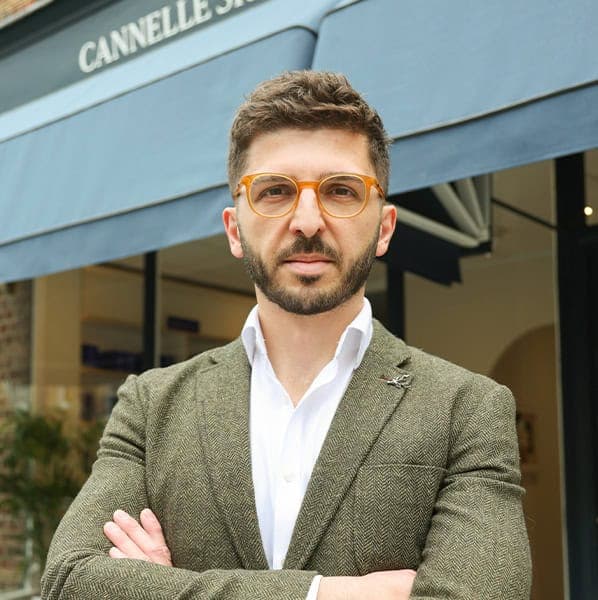
Dr Mattia Parducci
Lead Aesthetic Doctor
Dr Mattia assesses every tattoo at our Summertown clinic and sets the plan and laser settings for each session.
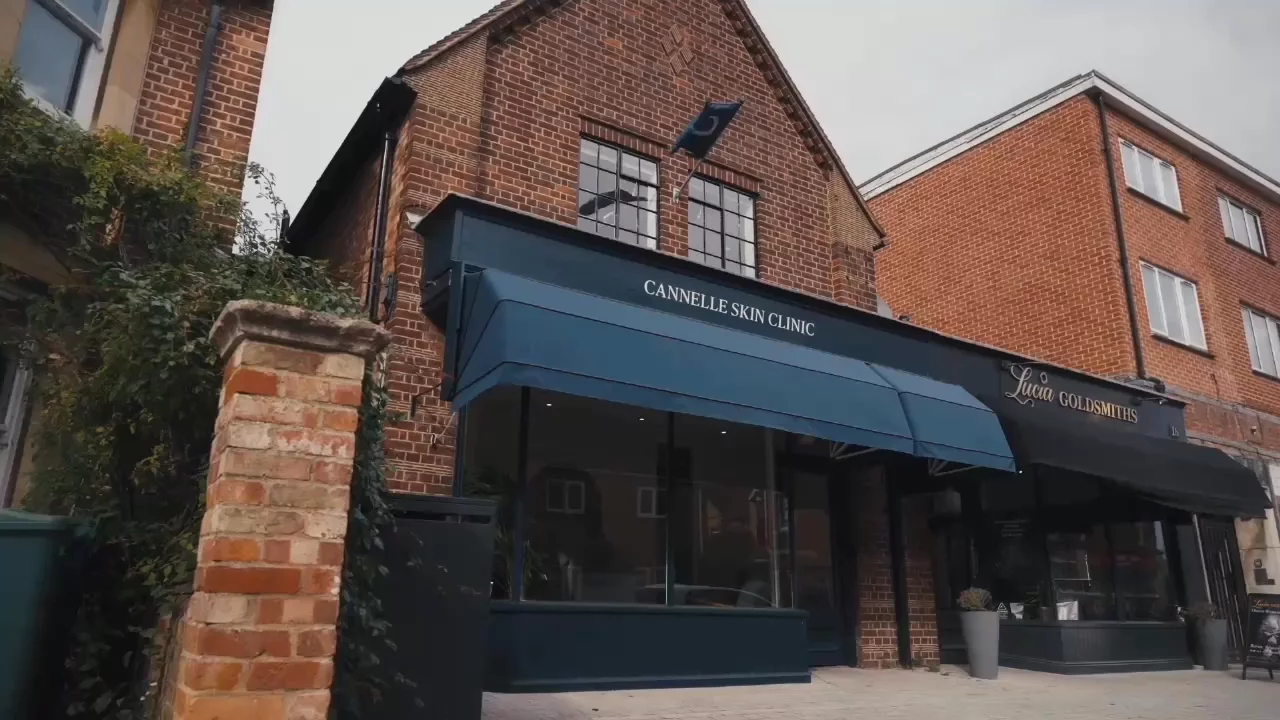
PicoSure laser tattoo removal at Cannelle Skin Clinic in Summertown, Oxford, for black, blue, green and multi-coloured ink, whether you want it gone completely or faded for a cover-up.
Cannelle Skin Clinic in Oxford removes and fades tattoos with PicoSure, a 755nm picosecond laser. Dr Mattia Parducci assesses your tattoo and sets your plan, and a patch test comes before your first full session.

Laser tattoo removal at Cannelle Skin Clinic in Oxford is for anyone carrying ink they have outgrown. It might be a name, a design picked on holiday at nineteen, or work that has blurred and spread over the years. Some patients want the tattoo gone completely. Others want it faded far enough for an artist to cover it well.
Patients usually come to us with one of these:
PicoSure suits Fitzpatrick skin types I to VI. Each pulse lasts picoseconds, so far less heat reaches the skin around the ink. Heat is what leaves dark or pale marks on deeper skin tones after older lasers. Dr Mattia matches the settings to your skin and patch tests before your first full session.
We schedule each session around your skin, not the calendar. If the skin over the tattoo is tanned, broken or still healing, we let it settle first and treat it once it has.
Looking to clear pigment rather than ink? Our PicoSure laser for pigmentation page covers sun spots, melasma and post-acne marks.
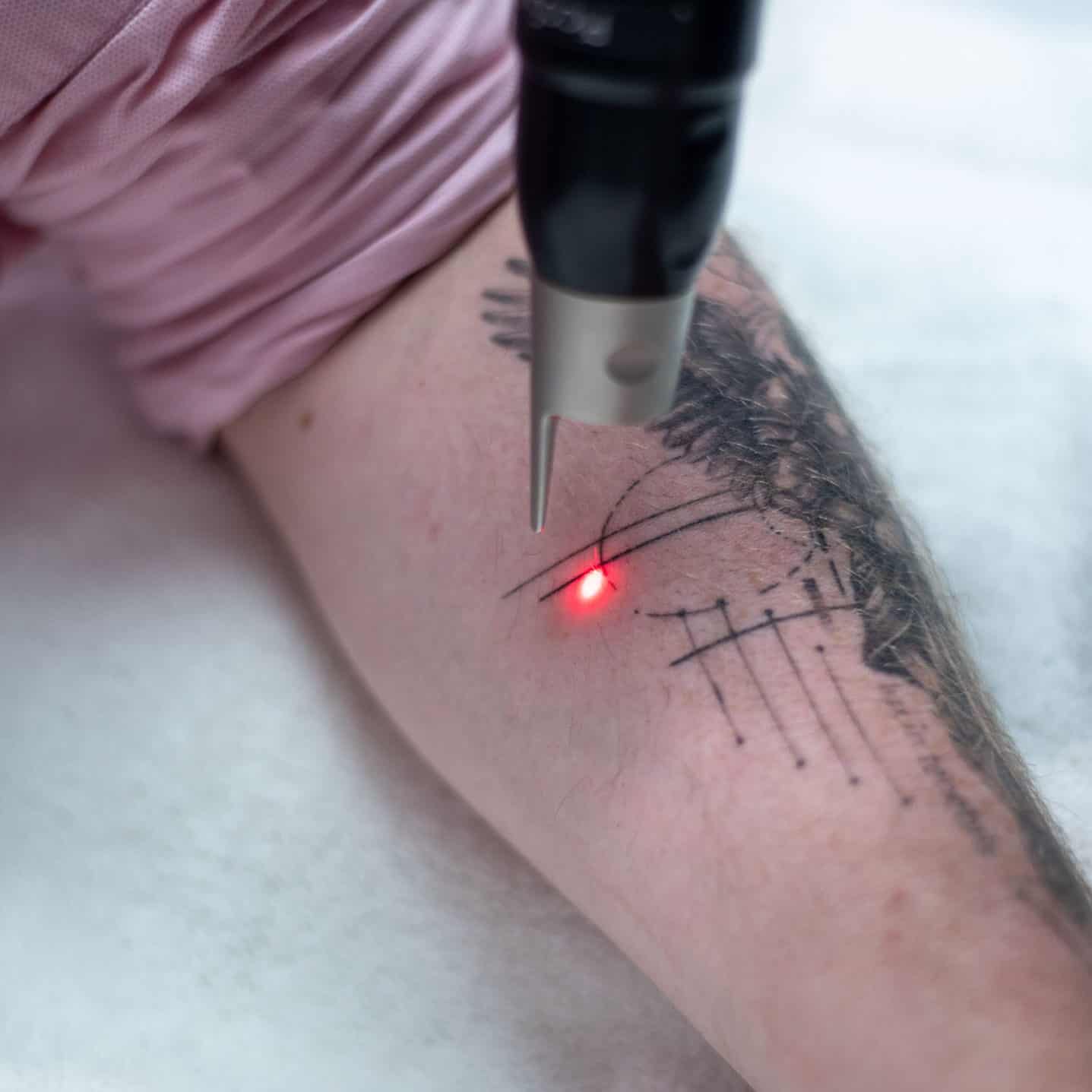
PicoSure is a picosecond laser made by Cynosure. Each pulse lasts around one trillionth of a second. That is short enough to hit tattoo ink with a burst of pressure rather than a slow build of heat. Heat is how the Q-switched nanosecond lasers behind most tattoo removal have always worked.
The pressure wave shatters ink into particles fine enough for your lymphatic system to carry away. A tattoo lasts for decades because its ink particles are far too large for the body to shift. Break them small enough and the body does the rest, so the design keeps fading for weeks after each session.
The laser runs at 755nm. Black and dark blue ink absorb that wavelength well and respond most predictably. Green and blue-green inks, famous for resisting removal, respond strongly too. Red, orange and yellow rely on other wavelengths and clear more slowly, while white and pale inks are the least predictable of all.
The top layer of skin is never removed. The treated area turns white for a few minutes, then pink, warm and slightly raised, and most people go straight back to their day.
Tattoo ink sits in the dermis, below the layer of skin that renews itself. Your body tries to clear it from the day it goes in. The particles are simply too big, so they stay locked inside the cells that hold them.
PicoSure delivers energy in pulses so brief that the ink absorbs it and breaks apart before heat can spread. Each session fractures another layer of particles. Your immune system clears those fragments over the following six to eight weeks, which is why sessions are spaced that far apart.
Density decides the pace as much as size does. A thin, single-colour line clears faster than a solid block of professional shading, and old ink usually clears faster than new.
If another approach would suit your tattoo better, Dr Mattia will tell you honestly at your consultation.
Your first appointment is an assessment. Dr Mattia looks at the size, colours, age and density of your tattoo, alongside your skin type and medical history. From that he sets your laser settings and a realistic session estimate. A patch test is carried out on a small area, and your first full session follows at least 24 hours later.
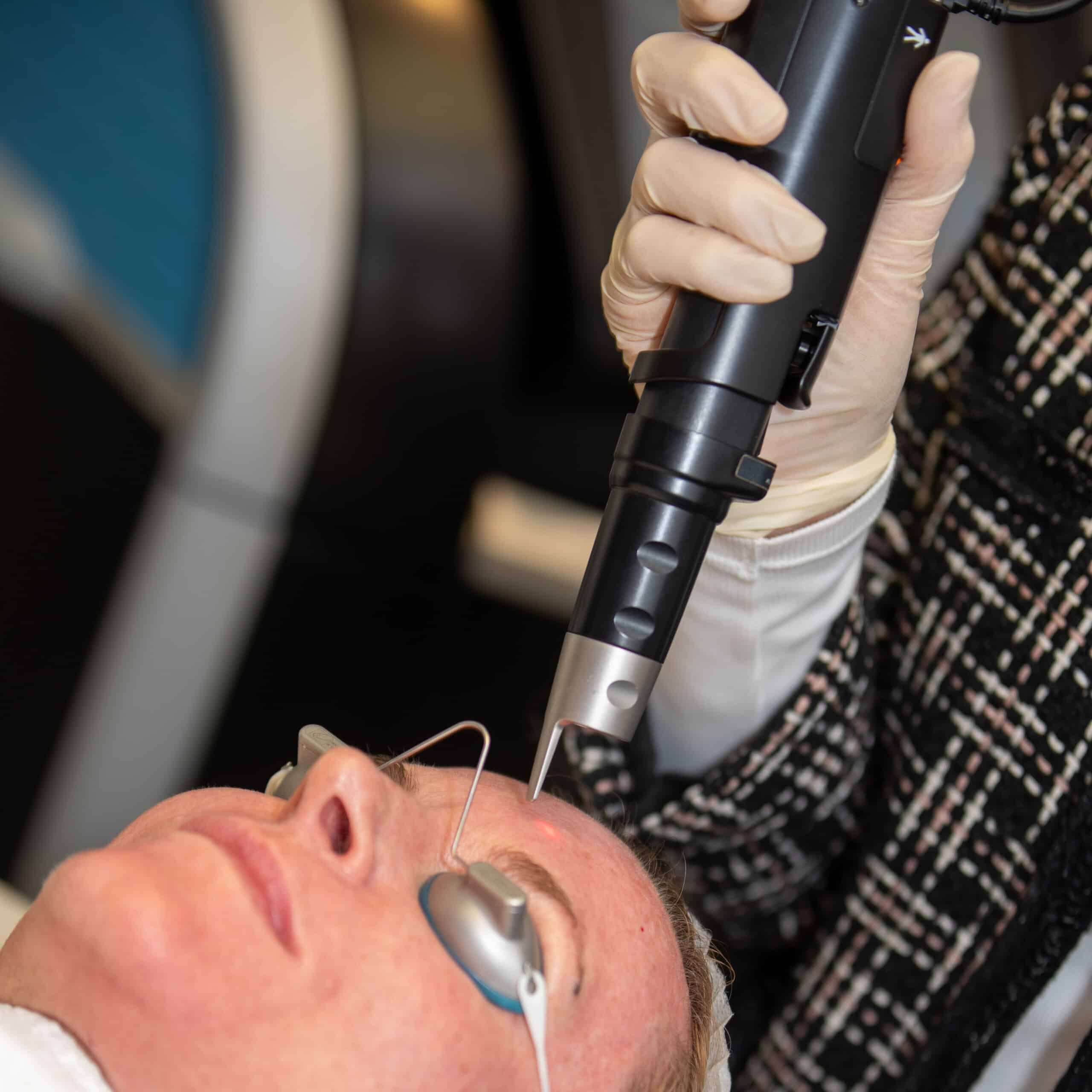
The area is cleansed and a topical numbing cream goes on for 20 to 30 minutes before the laser starts. Cooling then runs through the session. Together they turn the appointment into something short and manageable rather than something to brace for.
The handpiece moves across the tattoo in controlled pulses, each one felt as a quick, hot snap. The ink turns white for a few minutes as it fractures, a reaction called frosting. Most designs take 5 to 20 minutes of laser time, and oversized work may be split across visits.
Cooling settles the warmth straight after, and a soothing balm and dressing go over the area. You leave with written aftercare and can drive yourself home. The skin is usually pink and slightly raised for a few hours.
The fading you see happens between sessions rather than on the day. Over six to eight weeks your lymphatic system carries away the fractured ink and the tattoo keeps lightening. We review the area at each visit and adjust the plan to how your ink is clearing.
Tattoos fade in stages, a little further after every session, as the body clears the fractured ink. The results below were achieved on the same PicoSure laser we use in Oxford, at our sister clinic, Dr Joney De Souza Skin & Laser in London. Individual results vary.
Most people arrive at Cannelle in Oxford having thought about removing a tattoo for years. Some are ready to see it gone, and others want it faded before an artist works over it. Whichever you choose, you know what each visit involves before it starts, and we review how the ink is clearing every time you come back.
Keep the tattoo out of direct sun for at least two weeks beforehand, and skip sunbeds and self-tan on the area. Tanned skin holds more of its own pigment, which means gentler settings and slower progress. Arrive with clean skin and no lotion over the tattoo. Tell us about any medication that makes you sensitive to light, including some antibiotics.
Numbing cream goes on for 20 to 30 minutes before the laser starts, and cooling runs through the session. The pulses feel like quick, hot snaps, a little sharper over bone and dense ink. Most designs take 5 to 20 minutes of laser time, and you can go back to work or drive home afterwards.
Expect redness, swelling and some tenderness for a day or two. Light scabbing or small blisters can follow and settle within days, so leave them to heal on their own. Keep the area clean and dry, and skip swimming, saunas, steam rooms and hard exercise for 48 hours. Protect it with SPF 50 once healed, and call the clinic if anything worries you.
Tattoo removal at Cannelle Skin Clinic is run to a medical standard. Dr Mattia Parducci (GMC 7635663), our Lead Aesthetic Doctor, assesses every tattoo and sets every plan. He has carried out more than a hundred laser treatments across our Summertown clinic and our sister clinic in London, Dr Joney De Souza Skin & Laser.
Ink removal rewards patience. Settings matched to your skin get more from every visit. Sessions spaced to the pace your body clears ink protect the skin under the tattoo. The plan matters as much as the laser.
Not everyone wants a blank canvas. Tattoo artists often do their best cover-up work over ink that has been lightened first, and partial fading takes fewer sessions than full clearance. Tell us what you are planning and we will build the course around it.
Your doctor
Every tattoo holds a different mix of inks at a different depth, so the plan matters as much as the laser. At Cannelle Skin Clinic, that plan starts with a doctor.
Laser and injectables
Lead Aesthetic Doctor
Dr Mattia assesses every tattoo at our Summertown clinic and sets the plan and laser settings for each session.
Laser tattoo removal at Cannelle Skin Clinic is priced by the size of your tattoo, measured across its longest edge. Sessions start at £90 for a micro design. A course of four costs around 15% less than four single sessions, and your first visit is a £50 consultation and patch test.
Most tattoos need four to eight sessions, spaced six to eight weeks apart so your body can clear the fractured ink between visits. Small, older and single-colour designs usually clear in fewer. Dense professional work and layered colour take longer, while fading for a cover-up needs fewer than full removal. Your consultation gives the real number for your tattoo.
Size sets the price of each session, because size decides how long the laser pass takes. Colour, density and the age of the ink decide how many sessions you need. We give you a full estimate once we have seen your tattoo, so the total is clear before you book a course.
Related reading: laser tattoo removal, what to expect.
| Tattoo size | Indicative size | Single | Course of 4 |
|---|---|---|---|
Consultation and patch test | All sizes | £50 | n/a |
Micro | Up to 2 cm | £90 | £305 |
Small | 2.1 to 5 cm | £130 | £440 |
Medium | 5.1 to 10 cm | £195 | £665 |
Large | 10.1 to 15 cm | £280 | £950 |
Extra large | 15.1 to 20 cm | £390 | £1,325 |
Oversized | Over 20 cm | On assessment | Bespoke |
Patients ask us the same few things before they book tattoo removal: how much it hurts, how many sessions it takes and whether it will leave a mark. The answers are below, and the team is always happy to talk through your tattoo in person.
Most patients compare it to a rubber band snapping against the skin, repeated quickly. Numbing cream goes on 20 to 30 minutes beforehand and cooling runs through the session, which takes the edge off considerably. Areas over bone, such as the ankle, wrist or ribs, feel sharper than the upper arm or back. Sessions are short, usually 5 to 20 minutes of laser time.
Most tattoos need four to eight sessions spaced six to eight weeks apart. Small, older and single-colour designs usually clear in fewer, while dense professional work and layered colour take longer. Fading ahead of a cover-up needs fewer than full removal. Dr Mattia gives you a realistic estimate at your consultation and reviews it at every visit.
Yes, though different colours clear at different speeds. Black and dark blue respond most predictably at 755nm, and green and blue-green inks respond strongly too, which is where a picosecond laser earns its place. Red, orange and yellow clear more slowly because they absorb other wavelengths. White and pale inks are the least predictable, and we will tell you plainly what to expect from yours.
Laser tattoo removal is designed to leave the skin intact, and the short PicoSure pulse keeps heat away from the surrounding tissue. The best outcome comes from settings matched to your skin, sessions spaced far enough apart and aftercare followed carefully. Very old or heavily saturated ink can leave a faint shadow. Any scarring left by the original tattoo stays, and we will point it out at consultation.
Yes, at the right settings. PicoSure is suitable across Fitzpatrick skin types I to VI, with a strong safety profile on types IV, V and VI when the settings are matched to your skin. The picosecond pulse puts far less heat into the skin than older lasers, which lowers the risk of dark or pale marks. Your patch test confirms how your skin responds before the first full session.
At Cannelle, sessions start at £90 for a micro tattoo up to 2 cm and rise to £390 for a design of 15.1 to 20 cm. A course of four runs from £305 to £1,325, and anything over 20 cm is quoted after assessment. Your first visit is a £50 consultation and patch test. We confirm the size and a full estimate before you commit.
The ink turns white for a few minutes, then the area goes pink, warm and slightly raised. Redness and swelling usually settle within a day or two. Light scabbing or small blisters can follow and heal within days if left alone. Keep the area clean, skip saunas, swimming and hard exercise for 48 hours, and protect it with SPF 50 once it has healed.
Yes, and many tattoo artists prefer to work that way. Lightening the old ink gives the artist more freedom with colour and design, and the finished piece usually looks cleaner. Fading takes fewer sessions than full removal. Tell us what your artist is planning, and we will stop once the ink is light enough for the work they have in mind.
Dr Mattia Parducci (GMC 7635663), our Lead Aesthetic Doctor, assesses every tattoo and sets every PicoSure plan and its settings. He has carried out more than a hundred laser treatments across our Summertown clinic and our sister clinic in London. Your progress is reviewed at every visit, with the settings adjusted to how your ink is clearing.
Fading shows after the first session and carries on over the following six to eight weeks as your body clears the ink. The clearest change usually builds across the middle sessions of a course. Because each session needs that gap, starting sooner means finishing sooner. You can book your consultation and patch test now, with the first full session at least 24 hours later.
Once patients understand how laser tattoo removal works, the next questions are about the alternatives. Which route suits you depends on the size of the tattoo, its colours and what you want in its place. The answers below cover the comparisons the Cannelle team hears most often.
Q-switched lasers fire in nanoseconds and have removed tattoos for decades. PicoSure fires in picoseconds, a far shorter pulse. More of the energy works as pressure on the ink and less of it as heat in the skin. That tends to break ink into finer particles, which is why picosecond lasers suit stubborn colours and deeper skin tones so well.
Creams cannot reach tattoo ink, which sits in the dermis below the surface layer of skin. Products that promise removal either do very little or work by damaging the skin, which risks chemical burns and scarring. Laser breaks the ink down at the depth where it actually sits and leaves the surface of the skin intact.
Excision cuts the tattoo out and stitches the skin closed, which always leaves a scar and only suits very small designs. Laser works through the skin without cutting, so it suits tattoos of almost any size. For most people it is the gentler route to clear skin, and Dr Mattia will advise at consultation if your tattoo needs a different approach.
A cover-up hides the old design under a new one, which works best when the new piece can be darker and larger. A few laser sessions first give the artist a lighter base and far more freedom. Full removal suits anyone who wants clear skin rather than a new tattoo. We can plan either route with you.
A course costs more than a single cover-up session, but it gives you a choice a cover-up cannot: clear skin, or a lighter base for better new work. Priced per session by size, the cost also spreads across the months the ink takes to clear. Your consultation gives you a full estimate before you commit to anything.
Message the clinic on WhatsApp, call 01865 511960 or use the enquiry form on this page. Your first appointment is a £50 consultation and patch test in Summertown, where Dr Mattia assesses your tattoo and gives you a session estimate and price. The first full session follows at least 24 hours later, and there is no obligation to book a course.
Year after year, our patients in Oxford return to Cannelle Skin Clinic for natural, healthy-looking results. Every review reflects our commitment to precision, safety and a personalised, doctor-led approach.
Our clinic is located in Summertown, Oxford, just north of the city centre in one of Oxford’s most sought-after neighbourhoods. Discreet and easy to reach, we offer a premium setting for bespoke skin, aesthetic and wellness care.
We welcome patients from across Oxford city and Oxfordshire, including Summertown, Headington, Kidlington, Abingdon, Bicester, Witney and the surrounding towns and villages. Whether you’re coming for routine skin-health treatments or specialist aesthetic consultations, our location is well connected and simple to access.
Our clinic, Cannelle Skin Clinic, is just minutes from Oxford city centre and easily reached by car, bus or rail. Oxford’s mainline stations Oxford Station and Oxford Parkway are a short taxi or bus ride away, and regular services link to London, Reading, Didcot, Banbury and beyond.
By car, we’re conveniently accessed via key local routes with nearby parking options; by public transport, frequent bus routes along Banbury Road drop you within a short stroll of the clinic.
Whether you’re travelling from within Oxfordshire, further afield in the UK or internationally, our clinic offers a calm, personalised and professional environment for your visit.