You were told the green would never come out. Every ink colour absorbs a particular wavelength, and 755 nanometres is the one green ink answers to, on the PicoSure laser at Cannelle in Oxford.
You were told years ago that the green in your tattoo would never come out. It might be a tribal band that faded to a soft blue-green, or a shamrock a friend drew freehand one summer. PicoSure at Cannelle Skin Clinic in Oxford reads ink by colour rather than by reputation. Green is a colour it answers strongly.
The elegance of a picosecond laser is all in the timing. One pulse is finished in about a trillionth of a second, fast enough to shatter ink by pressure rather than by heat. The fragments are then fine enough for your lymphatic system to carry away. Your skin surface is never removed, so most people go straight back to their day.
Dr Mattia Parducci (GMC 7635663) leads the clinic, and the plan for your tattoo is his from the first setting onwards. He arrived here having performed more than 100 of these laser treatments at our sister clinic in London, Dr Joney De Souza Skin & Laser. You can read about his work on his profile page before you book.
Every ink colour has a wavelength it absorbs and a wavelength it more or less ignores. A laser that arrives at the wrong one passes through the pigment and does very little, which is where the old advice about impossible colours began. Matching the wavelength to the ink is the whole craft of removal.
PicoSure is a 755 nanometre alexandrite laser, and that number is the point. Green and blue-green ink absorb 755 nanometres strongly, so each pulse of energy lands where you want it rather than glancing past the colour. Black and dark blue absorb across a wide span of wavelengths. That is why they have always been the most predictable colours to clear.
Speed matters as much as colour does. A longer pulse warms the ink and the skin holding it, while a picosecond pulse arrives and leaves before that warmth can gather. The ink is broken apart by pressure and your body collects the fragments. The design keeps lightening in the weeks between appointments rather than only on the day.
[ASSET PLACEHOLDER 1: Manufacturer chart, which ink colours absorb which wavelengths, with 755 nm marked. Credit: Images courtesy of Cynosure]
Green has a long history of disappointing people. The first removal lasers ran at wavelengths that black ink loved and green ink largely shrugged off. A design would thin around its outlines and keep its green heart, and plenty of people stopped there with a patchy tattoo. The advice that followed was usually to learn to live with it.
That advice has been overtaken by the physics rather than by any one clinic. Several picosecond lasers now reach into the greens, and 755 nanometres is one of the wavelengths green ink responds to best. Your result depends on whether that wavelength suits your ink and whether the settings suit your skin. The second of those is a medical judgement.
You may be somewhere in the middle of this already. Perhaps you paid for four or five sessions, watched the black lift away, and watched the green stay exactly where it was. You are not looking for a miracle, only for somebody to tell you what is realistic. That is what a consultation is for.
You deserve an honest read on your own design. Amateur ink sits at uneven depths and mixes pigments that no chart can name from a photograph. Dr Mattia looks at the piece itself, at how far it has faded already, and at how your skin behaves in the sun. He then tells you what each colour is likely to do.
Colour by colour, here is what the wavelength means for the design on your arm. These are the patterns Dr Mattia works from, and your consultation refines them against your own ink rather than against an average.
Black and dark blue. These are the most predictable inks in removal, because they absorb energy across a wide range of wavelengths and sit at depths the laser reaches comfortably. Most designs are largely black, so a course tends to start with the satisfying part. The darkest lines lift first and the piece begins to look lighter and softer.
Green and blue-green. These are the colours this wavelength suits best. Green absorbs 755 nanometres strongly, so a faded tribal band or a shamrock that stalled under an older laser has a genuine path forward. Green usually lightens gradually rather than dropping away in one dramatic session, and that steady change is exactly what you want to see.
Red, orange and yellow. Warm inks answer to other wavelengths, so they clear more slowly here and ask for patience and a longer plan. Bring a warm-coloured design to your consultation and Dr Mattia will tell you plainly what he expects from it. He will also say whether fading it for a cover-up is the more rewarding goal.
White and pale inks. These are the least predictable of all, because pale pigments can behave in ways that are hard to read in advance. They are treated cautiously and tested first, which is one more reason the patch test earns its place. Where white sits inside a larger design, Dr Mattia plans around it rather than through it.
[ASSET PLACEHOLDER 2: Clearance sequence, a green and blue-green tattoo photographed across a course of PicoSure sessions. Credit: Images courtesy of Cynosure]
Most tattoos take four to eight sessions, spaced six to eight weeks apart, and that gap between visits is doing real work. Your body spends those weeks clearing the fragments the laser made. A treated tattoo therefore carries on fading between appointments. You see the change at home, in ordinary light, rather than under a lamp in a treatment room.
Green sits inside that range rather than outside it, and it often takes a session or two longer than the black beside it. Colours within one design clear at different speeds, so a piece can look uneven halfway through a course. That stage is the middle of the story rather than the end of it. Dr Mattia tells you when to expect it.
If your plan is a cover-up rather than full clearance, you need fewer sessions than you might think. A tattooist only needs the old design faded enough to work over, so say that at your consultation and the plan is built to suit. Removal is priced by the measured size of the design, from £90 a session. The size bands sit on the PicoSure page.
Your first appointment for PicoSure in Oxford is a consultation, and it is where the guesswork ends. Allow around thirty minutes. Your tattoo is measured and photographed in consistent light, so that every comparison you make later on is honest rather than a memory. Dr Mattia reads the colours in the piece alongside the way your skin responds to sun. VISIA skin imaging fills in what sits below the surface.
A patch test comes first, and it is never done on the same day as a full session. A small, discreet corner of the design is treated at the settings intended for you, and at least 24 hours pass before your first full session. That short wait lets your skin be read properly.
PicoSure is used across all six Fitzpatrick skin types, with the settings matched to the skin in the chair. Its safety record on deeper tones is one of the quiet strengths of a picosecond laser. Dr Mattia sets those settings himself and reviews them at every session.
You will leave knowing what is being treated and how many sessions to plan for. You will also know how they are spaced, what the course costs, and how to look after the area in between. Should another route serve you better, he will say so before you commit to a course. Our page on laser tattoo removal sets out how the sessions run.
If you have been carrying a green tattoo you stopped liking, bring it in and let somebody read the colour properly. Botley, Marston and Kidlington are all short journeys into Summertown, and patients bring green work in from across Oxfordshire. Your next step is the PicoSure treatment page, and then get in touch so that we can book you in.
If a green design stalled under an older laser, the colours in it deserve a proper look. Book a consultation with Dr Mattia at our Summertown clinic, message us on WhatsApp or call 01865 511960, and we will get you in to see him.

People whose tattoos carry green, blue-green or warm colour work ask us these most often. If yours is not here, Dr Mattia will answer it properly at your consultation.
Green ink absorbs 755 nanometres strongly, which is the wavelength PicoSure works at, so a green design has a genuine path forward rather than a polite no. It usually lightens steadily across a course instead of dropping away in one session. Bring the tattoo to a consultation and Dr Mattia will read the colours in it and tell you what he expects each one to do.
Each ink colour absorbs some wavelengths and ignores others, so a laser aimed at the wrong one passes through the pigment and does very little. That single fact explains why people were once told certain colours were permanent. PicoSure runs at 755 nanometres, which black, dark blue, green and blue-green inks all absorb well, and Dr Mattia matches the settings to your skin.
White and pale inks are the least predictable, because they can behave in ways that are difficult to read in advance, so they are tested carefully first. Red, orange and yellow answer to other wavelengths and clear more slowly at 755 nanometres. Black and dark blue are the most predictable of all, and green and blue-green respond strongly here.
Most tattoos take four to eight sessions, six to eight weeks apart, and green often asks for a session or two more than the black beside it. Size, depth, layering and the age of the piece all move that number. The consultation gives the real number for you, because Dr Mattia can see how your own ink has already faded.
It is brief and sharp rather than long and heavy, and most people describe it as an elastic band flicked against the skin. A picosecond pulse lasts about a trillionth of a second, so the sensation is over almost as soon as it lands. Cooling is used through the session, and the area stays pink and warm for a few hours afterwards.
Yes, and it happens before the first full session rather than on the same day. A small, discreet corner of the design is treated at the settings intended for you, and at least 24 hours pass so your skin can be read properly. It is a short wait that lets Dr Mattia start your first full session already knowing how you respond.
Removal is priced by the measured size of the design, from £90 a session, and each size band also has a course of four. A micro tattoo up to 2 cm is £90 a session, and a small design of 2.1 to 5 cm is £130. The full list of bands sits on the PicoSure page alongside the pigmentation prices.
Yes. PicoSure is used across all six Fitzpatrick skin types, and it has a strong safety profile on types four, five and six when the settings are matched to the skin. Published reviews place picosecond lasers among the devices shown to be safe for darker skin. Dr Mattia chooses those settings himself and patch-tests you before the first full session.
It will, and that is the most satisfying part of the process. Each pulse shatters ink into fragments fine enough for your lymphatic system to carry away, and that clearing carries on for weeks. The six to eight week gap between sessions is there to let it happen. Photograph your arm in the same light each month and you will see the difference.
Say so at the consultation, because partial fading needs fewer sessions than full clearance and changes the whole plan. A tattooist needs the old design light enough to work over rather than gone completely. Dr Mattia will treat to that target, and you can take your photographs back to your artist when the ink has lightened enough for the new piece.
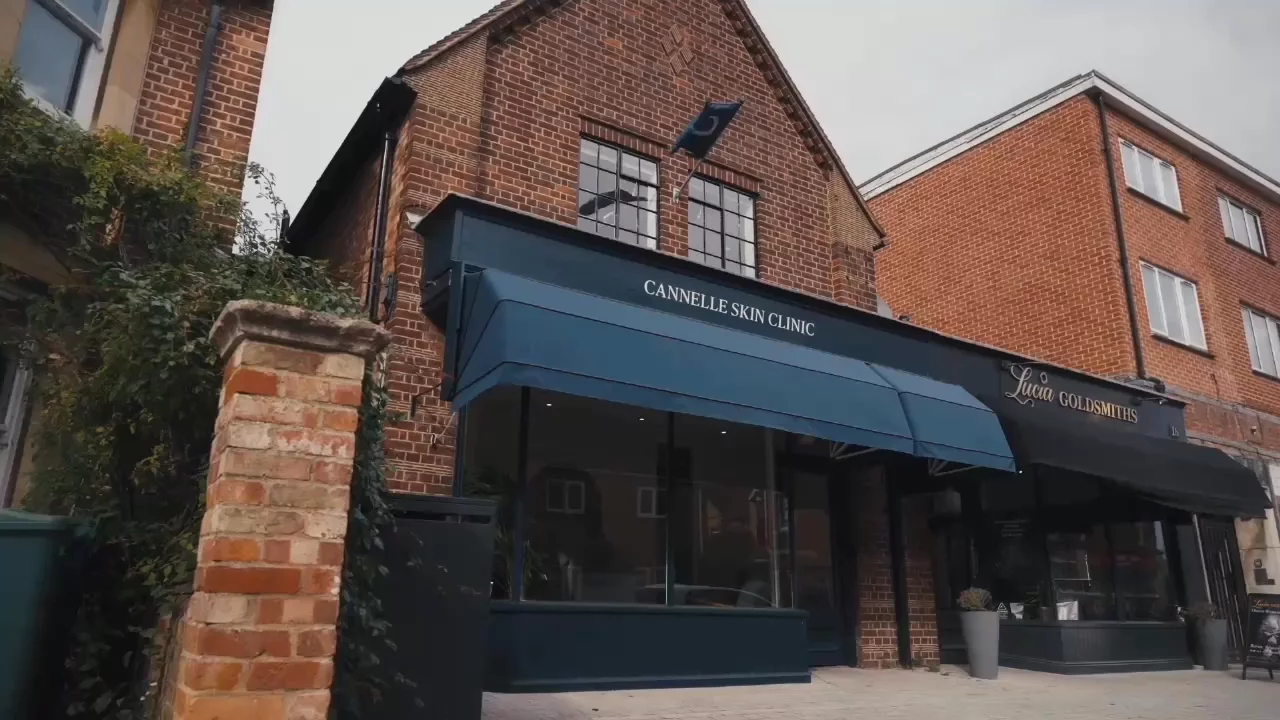
Our clinic is located in Summertown, Oxford, just north of the city centre in one of Oxford’s most sought-after neighbourhoods. Discreet and easy to reach, we offer a premium setting for bespoke skin, aesthetic and wellness care.
We welcome patients from across Oxford city and Oxfordshire, including Summertown, Headington, Kidlington, Abingdon, Bicester, Witney and the surrounding towns and villages. Whether you’re coming for routine skin-health treatments or specialist aesthetic consultations, our location is well connected and simple to access.
Our clinic, Cannelle Skin Clinic, is just minutes from Oxford city centre and easily reached by car, bus or rail. Oxford’s mainline stations Oxford Station and Oxford Parkway are a short taxi or bus ride away, and regular services link to London, Reading, Didcot, Banbury and beyond.
By car, we’re conveniently accessed via key local routes with nearby parking options; by public transport, frequent bus routes along Banbury Road drop you within a short stroll of the clinic.
Whether you’re travelling from within Oxfordshire, further afield in the UK or internationally, our clinic offers a calm, personalised and professional environment for your visit.