You have been choosing your sleeves around it for years. PicoSure at Cannelle in Oxford shatters tattoo ink into fragments your body carries away, from £90 a session, with every plan set by Dr Mattia.
You were nineteen when you had it done, and that week it meant everything. Ten years on you choose your sleeves around it, and you have stopped mentioning it altogether. PicoSure at Cannelle Skin Clinic in Oxford is the laser that undoes it. It works session by session, until that patch of skin is simply your skin again.
The clever part is the speed. Each pulse lasts about a trillionth of a second, fast enough to shatter ink by pressure rather than by heat. The fragments come apart so fine that your lymphatic system carries them away. Your skin surface is never removed, so most people walk straight back out into their day, pink and warm for a few hours.
Every PicoSure plan here is written by Dr Mattia Parducci (GMC 7635663), who leads the clinic and chooses the settings himself. At our sister clinic in London, Dr Joney De Souza Skin & Laser, he has already performed more than 100 of these laser treatments. Your plan is a medical decision, made by a doctor who has looked at your ink properly.
YouGov put the share of Britons with a tattoo at 26 percent in 2024. About one in seven of those admit to regretting one, which is a great many people living quietly around a small patch of skin. The single most regretted design is a partner’s name, and it has held that position for years.
Regret is rarely about the work itself. The line is clean and the shading is good. The studio did exactly what was asked of it on the day. What changed is the life around the tattoo, the relationship, the band, the summer that no longer needs a record on your forearm.
The reasons people give at a consultation are rarely dramatic. Some want a name gone. Others want the space for a better piece, or want rid of a design that no longer looks like them. People come in before a wedding, before a new job, or because they have simply stopped looking at that part of their arm.
Cowley Road is home to the oldest tattoo studio in the city, and Oxford studios turn out work that people love for decades. Removal is not a verdict on any of it. Think of it as the other half of the same conversation. Plenty of people clear one piece in order to make room for the next.
Oxford has a median age of 31, which makes it the second youngest city in England and Wales. Thirty percent of residents are aged between 18 and 29. Around 36,000 are full-time students, the highest share of any city in England and Wales. A place that young collects a great many first tattoos.
Nineteen is a wonderful age at which to decide something permanently. It is also the age whose decisions most often belong to a version of you that has since moved on. Nothing about that is a failure of judgement. The city that gave you the tattoo is perfectly able to take it back for you.
[ASSET PLACEHOLDER 1: Tattoo clearance sequence, after session one, session three and session six. Credit: Images courtesy of Cynosure]
There is real pleasure in understanding where the ink goes. Each pulse breaks a solid particle of ink into fragments fine enough for your lymphatic system to carry away. Nothing is scrubbed off the skin and nothing is cut out. The design lightens from the inside as your own body clears it, which is why the change looks gradual rather than sudden.
PicoSure is a 755 nm alexandrite laser, and wavelength decides how a design behaves. Black and dark blue respond the most predictably, which covers most of the script, lettering and line work people bring in. Greens and blue-greens respond strongly at 755 nm too. Those are the colours older machines so often left sitting in the skin.
Red, orange and yellow depend on other wavelengths, so they clear more slowly and ask for more patience. White and pale inks are the least predictable of all. Bring a warm-coloured design to a consultation and Dr Mattia will tell you plainly what to expect from it before you commit to anything.
The age of the piece matters too, along with how densely the ink was packed and how deep it sits. A hand-poked piece and a heavily layered professional one behave quite differently under the same laser. The tattoo removal section of our PicoSure page sets out how a design is assessed.
Most tattoos take four to eight sessions, spaced six to eight weeks apart. The gap between visits is doing real work, because your body is still clearing shattered ink throughout it. A treated tattoo carries on fading while you get on with your life, which is the part people most enjoy watching.
A session itself is short. The design is measured, the settings are matched to your skin and your ink, and the laser passes over the area. You leave pink and warm, cover the skin as you are shown, and keep sunscreen over it while it settles. Nothing about the day needs to be booked off work.
Removal is priced by the measured size of the design, from £90 a session for the smallest pieces. A course of four brings the rate per session down. The bands run from micro, at up to 2 cm, through to extra large, and anything bigger is priced on assessment. The full table sits on the PicoSure page, alongside the rest of our prices.
Your own number comes out of the consultation rather than out of a table. Dr Mattia reads the ink, the colours, the depth and the way your skin answered its patch test, then tells you what to plan for. Nobody here will promise you a session count before they have seen your tattoo.
[ASSET PLACEHOLDER 2: The PicoSure handpiece and the 755 nm wavelength it delivers. Credit: Images courtesy of Cynosure]
Everything starts with a consultation, and the time you spend with Dr Mattia shapes the course that follows. He looks at the tattoo in good light and measures it. He asks when it was done, where, and what it was drawn with. VISIA skin imaging shows him how your skin is behaving, and that guides the settings he chooses.
A patch test comes before your first full session, with at least 24 hours in between and never on the same day. He treats a small, discreet corner of the design at the settings he intends to use, then reads how your skin has answered. PicoSure suits all six Fitzpatrick skin types, and matching the settings to your tone is what keeps it that way.
By the time you leave you know how many sessions to expect and how they are spaced. You know what the course costs and what to expect on the day itself. If Dr Mattia believes a different approach would serve you better, he will say so. That includes fading a design for a cover-up rather than clearing it outright.
Looking after the area between sessions is simple, and it matters. You keep the skin covered as you are shown, keep sunscreen over it daily, and let it settle on its own. Sun protection is the most useful habit while a course is running, and it is what keeps the cleared skin looking even afterwards.
If the tattoo you got at nineteen has been quietly choosing your clothes for you, an assessment is the useful next step. Summertown is a straightforward journey from Jericho or Headington, and patients travel in from across Oxfordshire for this laser. Have a look at the PicoSure page for what it treats, or get in touch and we will find you a time.
Book a consultation with Dr Mattia Parducci at our Summertown clinic and you will leave knowing how many sessions your design needs and what the course costs. Call 01865 511960, message us on WhatsApp or book online.

These are the questions we hear most from people weighing up removal, from how many sessions a design takes to what happens to the ink afterwards. Anything we have missed is a question for your consultation.
Most tattoos take four to eight sessions, six to eight weeks apart, and your design keeps fading in the weeks between visits. The number depends on the ink colours, how densely the tattoo was packed, how deep it sits and how quickly your body clears it. Dr Mattia gives you the real number for your tattoo at your consultation.
Removal is priced by the measured size of the design, starting from £90 a session for the smallest pieces, with a course of four at a lower rate per session. The bands run from micro, at up to 2 cm across, through to extra large, and oversized designs are priced on assessment. The full table sits on the PicoSure page.
Black and dark blue respond the most predictably at 755 nm, and greens and blue-greens respond strongly too, which older single-wavelength machines often could not manage. Red, orange and yellow rely on other wavelengths, so they clear more slowly. White and pale inks are the least predictable. Bring a warm-coloured design in and Dr Mattia will tell you plainly what to expect.
PicoSure suits all six Fitzpatrick skin types, with a strong safety record on types four, five and six when the settings are matched to the skin. Each pulse lasts about a trillionth of a second, so the energy arrives as pressure rather than heat. Dr Mattia sets those settings himself and patch-tests before your first full session.
A patch test treats a small, discreet corner of the design at the settings Dr Mattia intends to use, and it happens at least 24 hours before your first full session rather than on the same day. That pause lets him read how your skin has answered and adjust before the whole tattoo is treated. It is a short wait that makes the course safer and more predictable.
It will, and this is the part people find most satisfying. Each pulse shatters the ink into fragments fine enough for your lymphatic system to recognise and carry away, and that clearance carries on for weeks after you leave. Six to eight weeks between sessions gives your body time to finish the job before the next pass.
No. Your skin surface is never removed, so most people go straight back to their day, pink and warm for a few hours. You cover the area as you are shown and keep sunscreen over it while it settles. A lunchtime appointment fits round a working day, which is one reason a course of six to eight sessions is manageable.
Yes, and it is a common reason people come in. Partial fading for a cover-up needs fewer sessions than full clearance, because the aim is to lighten the ink rather than clear it entirely. Your tattooist then draws on much lighter skin, which opens up the design. Dr Mattia plans the fade with the new tattoo in mind.
It does. The same laser clears pigment, so sun spots, age spots, freckles, melasma and the brown marks left behind by breakouts are all treated on it. Pigmentation courses average three sessions, four to six weeks apart, with a visible lift after the first. You can have your ink and your pigmentation looked at in the same conversation.
Dr Mattia Parducci (GMC 7635663), our Lead Aesthetic Doctor, sets every PicoSure plan and the settings that go with it. More than 100 of these laser treatments are already behind him at our sister clinic in London, Dr Joney De Souza Skin and Laser. Your first appointment is a consultation with him, with VISIA skin imaging and a patch test before any full session.
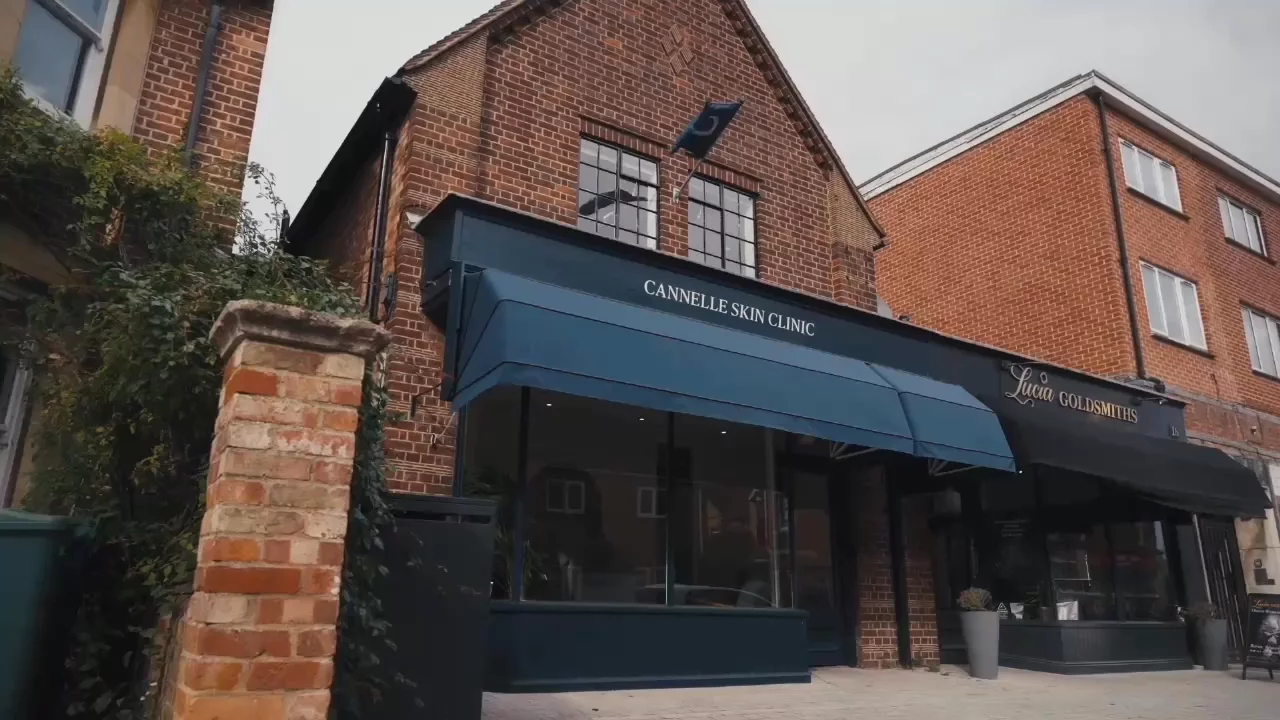
Our clinic is located in Summertown, Oxford, just north of the city centre in one of Oxford’s most sought-after neighbourhoods. Discreet and easy to reach, we offer a premium setting for bespoke skin, aesthetic and wellness care.
We welcome patients from across Oxford city and Oxfordshire, including Summertown, Headington, Kidlington, Abingdon, Bicester, Witney and the surrounding towns and villages. Whether you’re coming for routine skin-health treatments or specialist aesthetic consultations, our location is well connected and simple to access.
Our clinic, Cannelle Skin Clinic, is just minutes from Oxford city centre and easily reached by car, bus or rail. Oxford’s mainline stations Oxford Station and Oxford Parkway are a short taxi or bus ride away, and regular services link to London, Reading, Didcot, Banbury and beyond.
By car, we’re conveniently accessed via key local routes with nearby parking options; by public transport, frequent bus routes along Banbury Road drop you within a short stroll of the clinic.
Whether you’re travelling from within Oxfordshire, further afield in the UK or internationally, our clinic offers a calm, personalised and professional environment for your visit.