You were told your skin type ruled out lasers. That was true of heat based machines, and PicoSure at Cannelle in Oxford works a different way, with a patch test and a doctor setting every number.
A clinic looked at your skin once and told you that its laser was not suitable for your skin type. You went home with the mark or the tattoo you had walked in with, and with the impression that lasers were not for you. That advice was about the machine in that room rather than about your skin. PicoSure at Cannelle Skin Clinic in Oxford is the answer you were told did not exist.
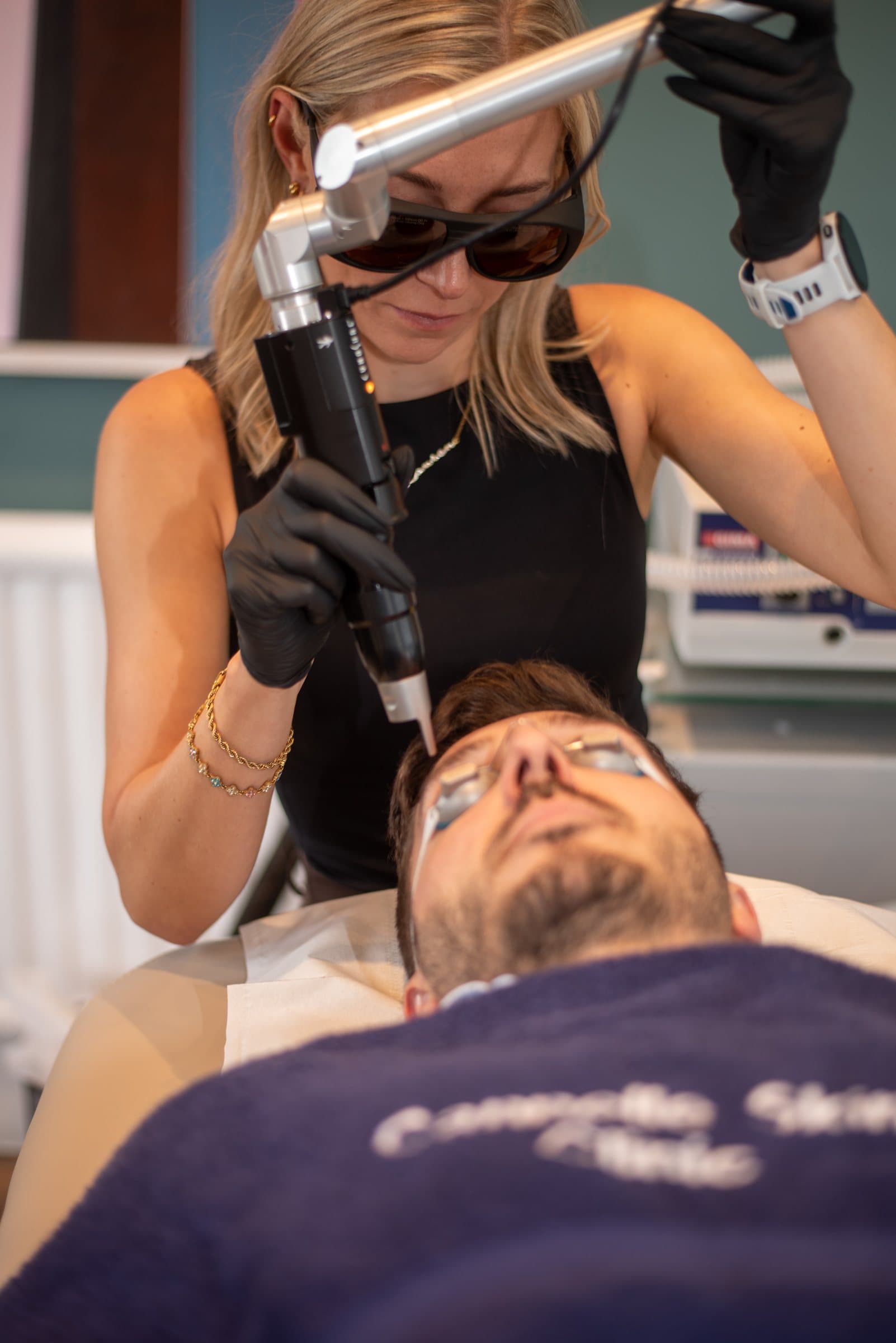
Speed is where the elegance of it sits. PicoSure fires for about a trillionth of a second, which shatters pigment and ink by pressure rather than by heat. Your lymphatic system then carries the fragments away over the following weeks. Heat is what has always called for caution in deeper skin, and there is very little of it here.
Dr Mattia Parducci (GMC 7635663) heads the clinic, and every PicoSure plan and setting is written by him. He has performed more than 100 of these laser treatments, already at our sister clinic in London, Dr Joney De Souza Skin & Laser. On deeper skin tones the settings decide the result, and they belong to a doctor rather than to a default.
The caution was real, and it was earned by a particular kind of device. Machines that work by heating the skin bring warmth and melanin together, and melanin absorbs that energy wherever it happens to sit. In Fitzpatrick IV and above, that combination raises the risk of dark marks appearing after a treatment. A 2025 meta-analysis and a Dermatology Times review both point at the same devices, IPL and fractional lasers among them.
Post inflammatory hyperpigmentation is the name for those marks. It is also the reason so many people were quietly turned away by clinics doing the responsible thing with the equipment they owned. The accurate version of that sentence was always that the laser was unsuitable, and what most people heard instead was that their skin was.
Nearly three in ten Oxford residents are from Black and minority ethnic groups, up from 22% in 2011. A great many of them have heard some version of that no. It tends to arrive politely, at the end of a consultation, and it tends to close the subject for years. The mark stays, the tattoo stays, and the assumption hardens that nothing can be done.
Shortening the pulse changed what your skin actually receives. At a trillionth of a second the energy arrives as a sharp mechanical pressure, and it is gone before warmth has time to build. The pigment or the ink absorbs that shock and breaks into fragments. The skin around it is left undisturbed, which is precisely what deeper tones need.
Published reviews now place picosecond lasers among the devices shown to be safe for darker skin, where heat based devices carry the higher risk of dark marks. PicoSure runs at 755 nm, a wavelength brown pigment absorbs strongly, so the light goes after the colour you want gone. It is suitable across Fitzpatrick types I to VI when the settings are matched to you.
What people notice afterwards is transient redness and, rarely, a temporary lightening that settles within months. The treated area is pink and warm for a few hours, and then you carry on with your day. The surface of your skin is never removed, so there is no healing to plan your week around. Sunscreen every morning is the one thing we ask of you.
[ASSET PLACEHOLDER 1: Before and after. Pigmentation and tattoo ink clearance on Fitzpatrick IV to VI skin. Credit: Images courtesy of Cynosure]
Most people arrive with one of three things. There is the blotchy, uneven tone across the cheeks and forehead that makeup evens out for a morning at most. There are the flat brown or grey marks left behind for months after a breakout has healed. Then there is the tattoo, which has usually been thought about for longer than anything else.
Pigmentation and post breakout marks respond to a course of three sessions on average, four to six weeks apart. Most people see a lift after the first. A small or focal area is £230 a session, or £585 for a course of three, and a full face is £390 or £995. Our pigmentation page sets out what each kind of mark involves.
Melasma sits slightly apart, because it is hormonal and heat sensitive as well as light driven. It asks for the full course and then maintenance once or twice a year alongside daily sun protection. It is managed rather than cured, and it is exactly the kind of pigment a low heat laser suits. Dr Mattia assesses every melasma case himself before a single setting is chosen.
Tattoo ink comes away on its own schedule, and colour decides most of it. Black and dark blue respond most predictably at 755 nm, and green and blue-green respond strongly too. Red, orange and yellow answer to other wavelengths and fade more slowly, and white and pale inks are the least predictable of all. Removal starts from £90 a session, with the bands on the PicoSure page.
Everyone who comes to us for a pigment course or a tattoo has a patch test before the first full session. A small, discreet area is treated at the settings Dr Mattia has chosen for you. Your first full session follows no sooner than twenty four hours later, and never on the same day. It is a short pause, and it is the difference between a considered plan and a guess.
What the patch shows him is how your skin answers those settings rather than how it ought to. Skin tone and the depth of the pigment vary from person to person. So do the density and age of the ink, and the speed at which you clear fragments. The settings are adjusted to what he sees, and they are adjusted again as your course goes on.
Fitzpatrick types IV, V and VI are treated at Cannelle regularly, and that is the part worth hearing plainly. It is routine work in this clinic rather than an exception made for you. If something else would serve you better, Dr Mattia tells you so before a course is booked. He also performs UltraClear, the cold fibre laser designed for skin types I to VI.
[ASSET PLACEHOLDER 2: Patch test on the inner arm, Fitzpatrick V skin, photographed at 24 hours. Credit: Cannelle Skin Clinic]
You begin with a consultation, and Dr Mattia builds the whole plan out of it. He reads your skin in good light and with VISIA skin imaging, which shows the pigment sitting below what a mirror can show you. He asks how your skin reacts to sun, what you use at home, and what you would most like to see change.
Photographs in consistent light come next, so that your progress is something you can see rather than something you have to remember. Pigmentation averages a course of three, while most tattoos take four to eight sessions, six to eight weeks apart. A partial fade for a cover up needs fewer sessions than full clearance. Your own figure comes out of the consultation rather than out of an average.
You leave knowing what is being treated and how the sessions are spaced, along with what the whole course costs. Nobody at Cannelle will tell you that your skin type is the problem. If you were turned away years ago, the device has moved on, and the conversation deserves to be had again.
Marston, Cowley and Headington are all a short drive from Summertown, and patients reach us from every corner of Oxfordshire. Bring the mark you were told to live with, or the tattoo you stopped liking a decade ago. There is more on the PicoSure treatment page, and one note through get in touch is enough to arrange a consultation.
One consultation with Dr Mattia in Summertown gives you a straight answer about your skin and your ink. A patch test comes first, always. Call 01865 511960, message us on WhatsApp, and we will arrange your appointment.
Readers who have been told a laser was not for their skin type ask us these most often. If yours is not here, Dr Mattia will answer it when he sees your skin.
Picosecond lasers are among the devices published reviews place in the safe column for darker skin, because they work by pressure rather than heat. PicoSure is suitable across Fitzpatrick types I to VI once the settings are matched to you, and types IV, V and VI are routine work here. Dr Mattia sets those settings himself and patch tests before your first full session.
Because it probably was not suitable, and the clinic was being responsible about the machine it owned. Devices that work by heating the skin bring warmth and melanin together, which raises the risk of dark marks in Fitzpatrick IV and above. That caution belongs to those devices rather than to your skin, and a picosecond laser works a different way entirely.
Yes, and it is regular work here. The pulse shatters ink by pressure rather than by heat, so very little warmth reaches the skin around the design, and the settings are matched to your skin tone by Dr Mattia. A patch test comes first, with at least twenty four hours before your first full session, so your course starts with your skin already understood.
It is the flat brown or grey mark left behind after the skin has been inflamed, by a breakout, an injury or a treatment that put too much heat into deeper skin. The mark can sit for months after the original problem has healed. PicoSure breaks up that pigment below the level any cream reaches, and most people see a lift after the first session.
Transient redness is the usual one, with the treated area pink and warm for a few hours before it settles. Temporary lightening of the treated skin is rare, and it settles within months where it does happen. The surface of your skin is never removed, so there is no healing period to arrange your week around. Daily sunscreen is the one thing we ask.
Because it tells Dr Mattia how your skin answers the settings he has chosen, rather than how it ought to answer them. A small, discreet area is treated, and at least twenty four hours pass before your first full session, never the same day. That short wait is what lets us treat every skin tone with confidence and adjust the plan before the course begins.
Pigmentation averages a course of three sessions, four to six weeks apart, with a visible lift after the first. Most tattoos take four to eight sessions, six to eight weeks apart, and keep fading between visits. A partial fade for a cover up needs fewer sessions than full clearance. Those are averages, and your own plan is written once Dr Mattia has seen the mark.
Yes, and melasma is one of the concerns a low heat laser suits best, since it is hormonal and heat sensitive as well as light driven. The plan is the full course and then maintenance once or twice a year, alongside sun protection every day. Melasma is managed rather than cured, and Dr Mattia assesses every case himself before choosing a single setting.
Pigmentation is priced by area. A small or focal area is £230 a session or £585 for a course of three, a full face is £390 or £995, and face and neck is £510 or £1,300. Tattoo removal is priced by the measured size of the design, from £90 a session or £305 for a course of four, and every band is on the PicoSure page.
Dr Mattia Parducci (GMC 7635663), our Lead Aesthetic Doctor, sets every PicoSure plan and its settings. He has performed more than 100 of these laser treatments, already at our sister clinic in London, Dr Joney De Souza Skin & Laser. He assesses your skin himself, and where a mark needs dermatology or histology input the clinic arranges that referral for you.
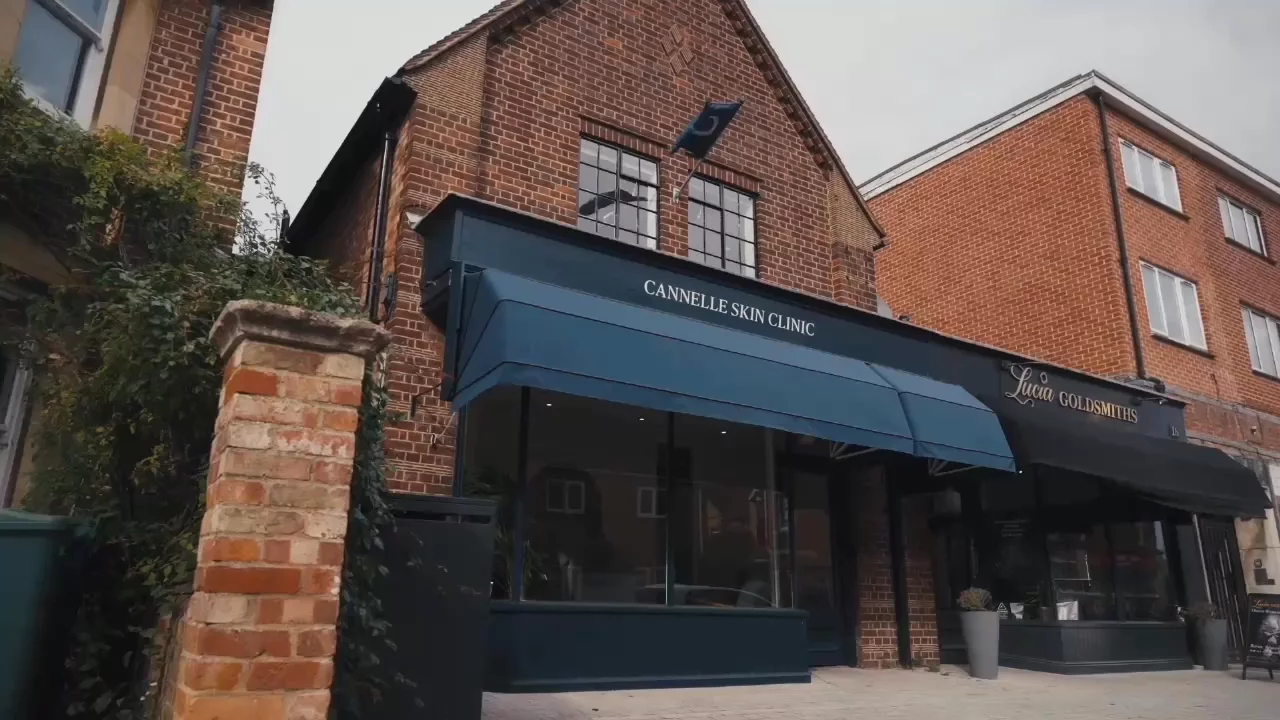
Our clinic is located in Summertown, Oxford, just north of the city centre in one of Oxford’s most sought-after neighbourhoods. Discreet and easy to reach, we offer a premium setting for bespoke skin, aesthetic and wellness care.
We welcome patients from across Oxford city and Oxfordshire, including Summertown, Headington, Kidlington, Abingdon, Bicester, Witney and the surrounding towns and villages. Whether you’re coming for routine skin-health treatments or specialist aesthetic consultations, our location is well connected and simple to access.
Our clinic, Cannelle Skin Clinic, is just minutes from Oxford city centre and easily reached by car, bus or rail. Oxford’s mainline stations Oxford Station and Oxford Parkway are a short taxi or bus ride away, and regular services link to London, Reading, Didcot, Banbury and beyond.
By car, we’re conveniently accessed via key local routes with nearby parking options; by public transport, frequent bus routes along Banbury Road drop you within a short stroll of the clinic.
Whether you’re travelling from within Oxfordshire, further afield in the UK or internationally, our clinic offers a calm, personalised and professional environment for your visit.