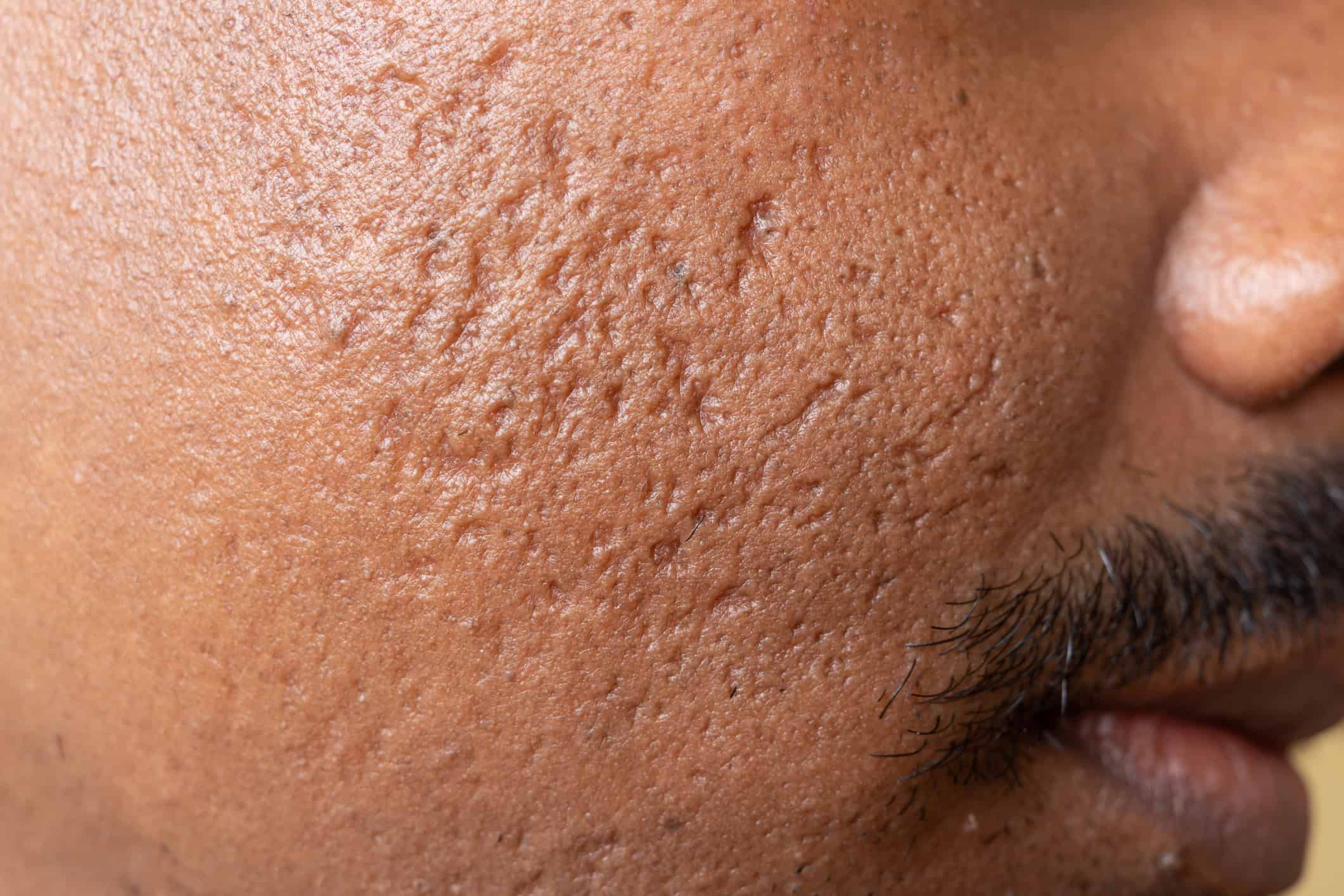
Broad and wavy
Rolling scars
Shallow, undulating dips with soft edges, tethered to the tissue below so the surface rolls rather than pits. These respond well to treatments that break the tethering and rebuild collagen underneath.
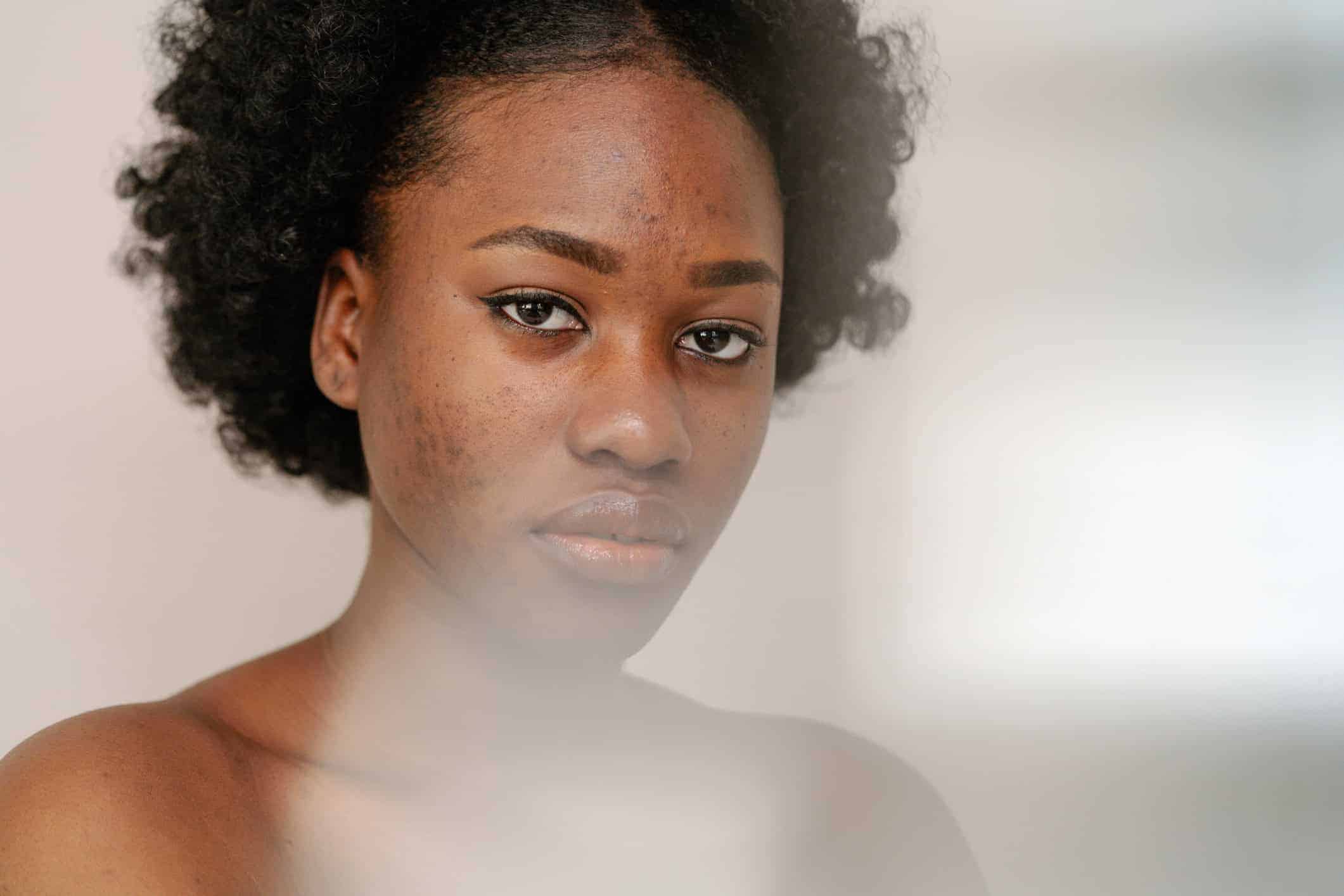
Acne scarring treatment at Cannelle Skin Clinic in Oxford rebuilds the collagen that inflammation took away, using Morpheus8, microneedling, PicoSure and peels. Dr Mattia Parducci assesses the mix of rolling, boxcar and ice pick scarring before choosing the route.
Run a finger over it. If the surface is smooth, what you have is a mark, and marks fade. If you can feel a dip, that is a scar, and it needs rebuilding rather than fading. Almost everyone arrives calling both the same thing, and telling them apart changes what we can promise you.
A mark is a change in colour where a spot used to be: red, brown or purple, but flat. Run a finger over it and the surface is smooth. Marks fade on their own, given months and sunscreen, and treatment mostly shortens the wait. A scar is a change in the structure of the skin itself. Inflammation has destroyed collagen and the repair has come back short, leaving a depression you can feel as well as see. That does not fade, because there is less tissue there than there used to be.
Scars come in recognisable shapes. Rolling scars are broad, shallow undulations tethered from below, so the surface looks wavy in raking light. Boxcar scars have steep, defined edges like small craters. Ice pick scars are narrow and deep, as though the skin was pierced. Most people have a mixture, and the mixture matters, because each shape responds differently and one device rarely handles all three.
The range worth expecting is an improvement of somewhere between half and three quarters with a full course. That is a substantial change, and for most people it is the point at which they stop thinking about their skin altogether.
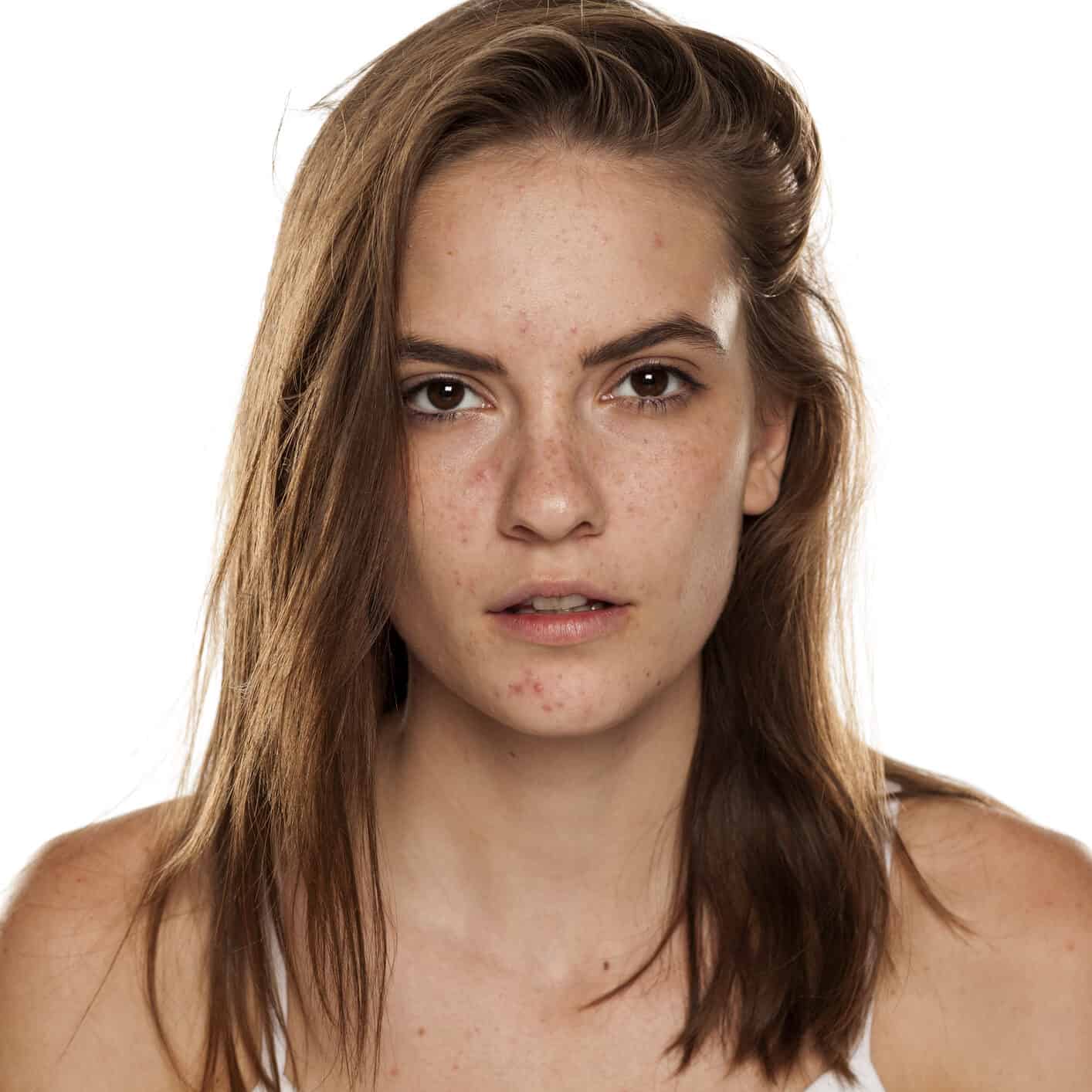
Look in raking light from the side rather than straight on, which is when the shape of a scar shows. Most people recognise two or three of these.
Broad and wavy
Shallow, undulating dips with soft edges, tethered to the tissue below so the surface rolls rather than pits. These respond well to treatments that break the tethering and rebuild collagen underneath.
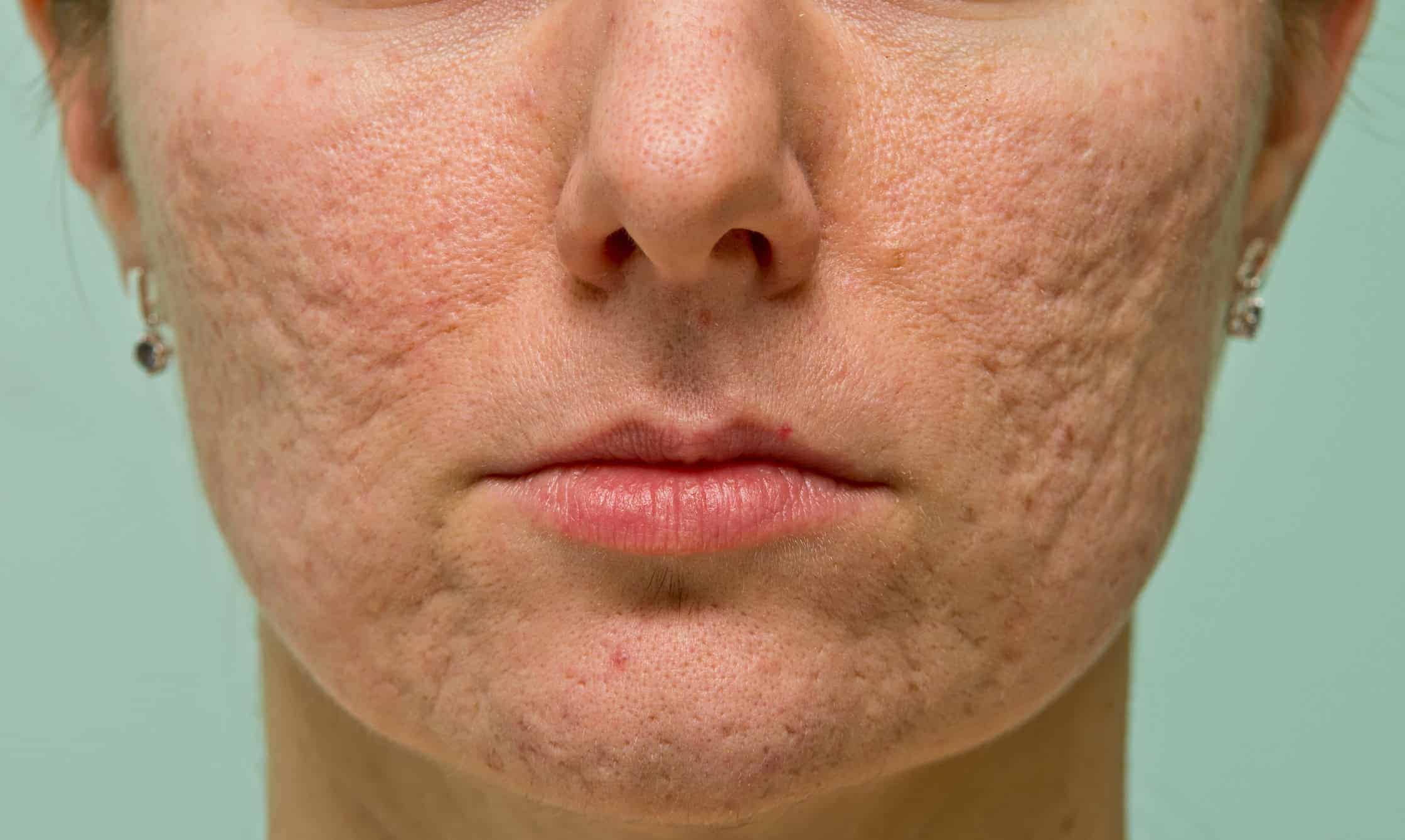
Steep edged
Defined craters with sharp walls, or narrow deep punctures. The hardest shapes to improve, because there is genuinely less tissue there. They need energy delivered deep rather than surface resurfacing.
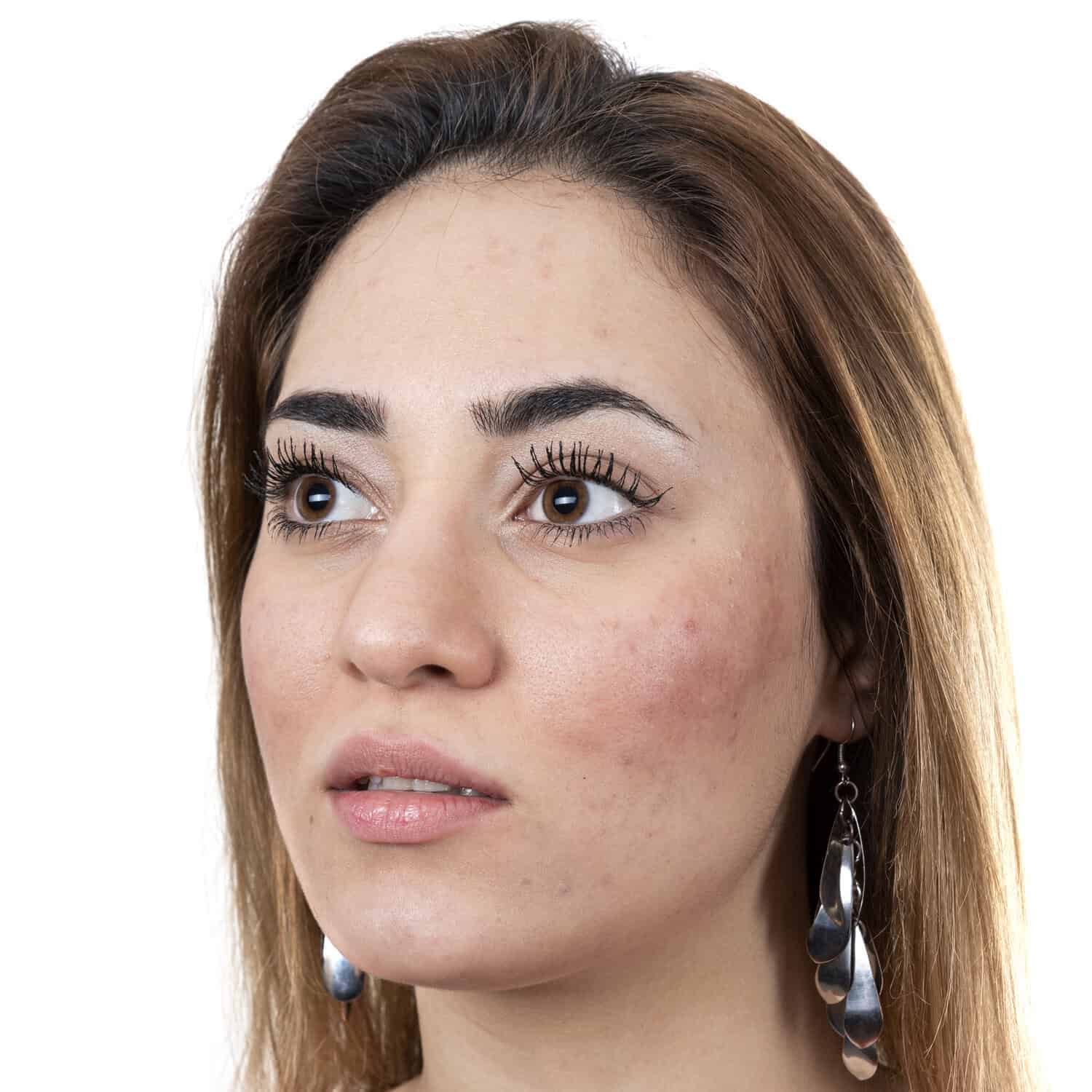
Shape and colour together
Uneven surface plus brown or red discolouration, which is the most common picture. It usually needs two things: one treatment for the texture and another for the pigment, rather than one device asked to do both.
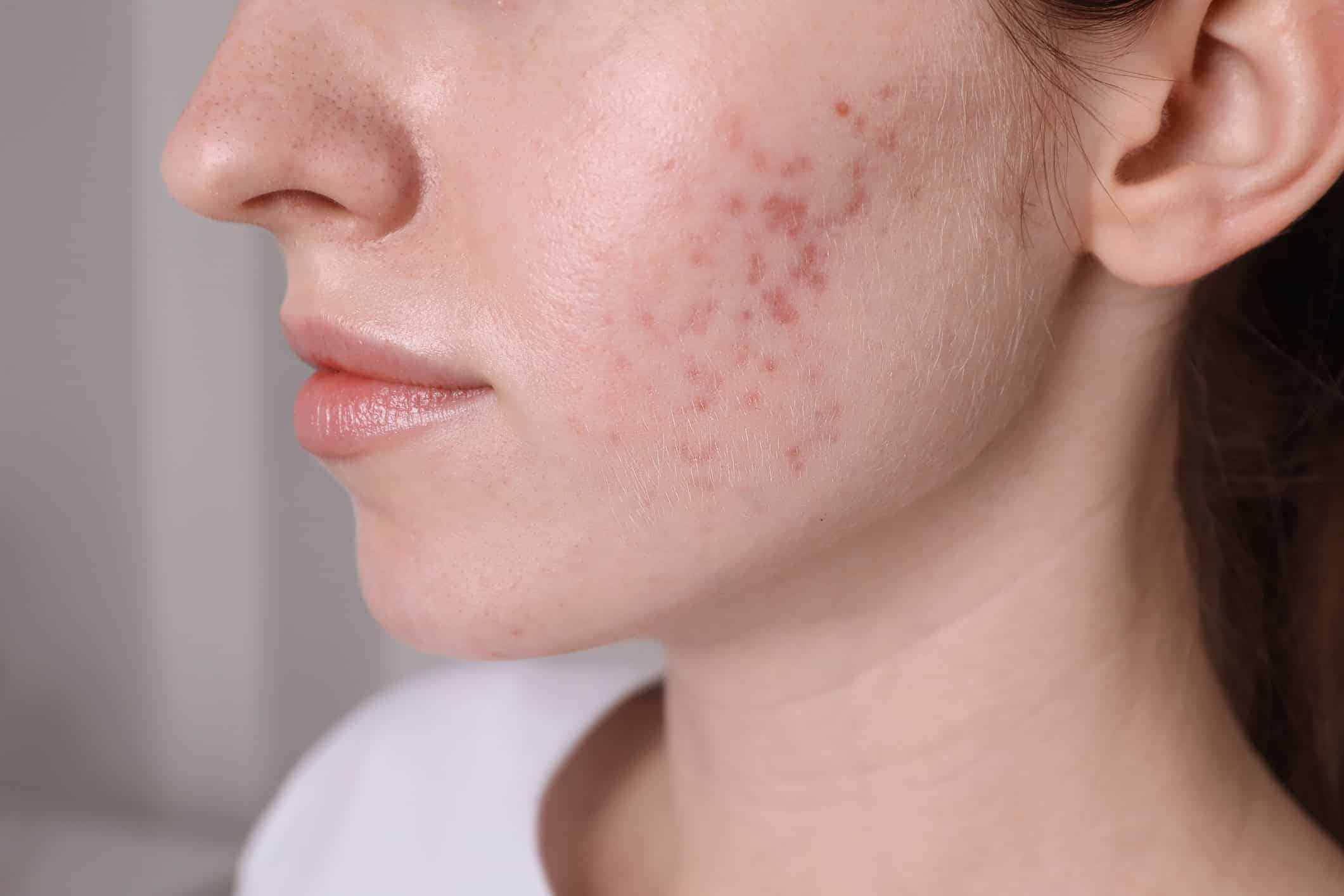
Flat to the touch
Discolouration where spots used to be, with a smooth surface. Good news: these are not scars and they do fade. Treatment shortens the timeline, and daily sunscreen does more than most people expect.
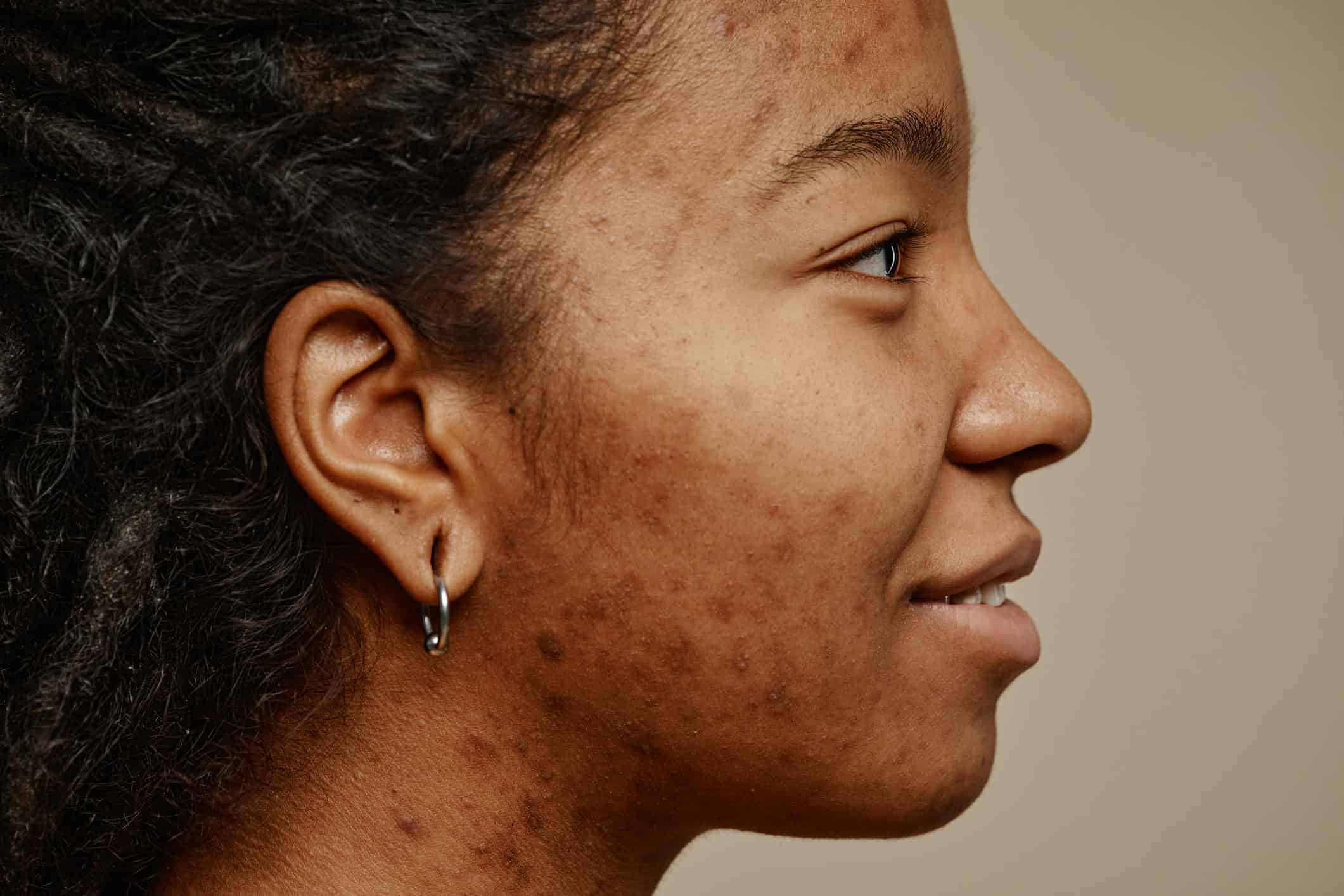
Different risk profile
Richer skin tones scar no more readily but pigment far more readily in response to heat and injury. Settings must be conservative and the course slower. It is very treatable, but not with a one size fits all protocol.
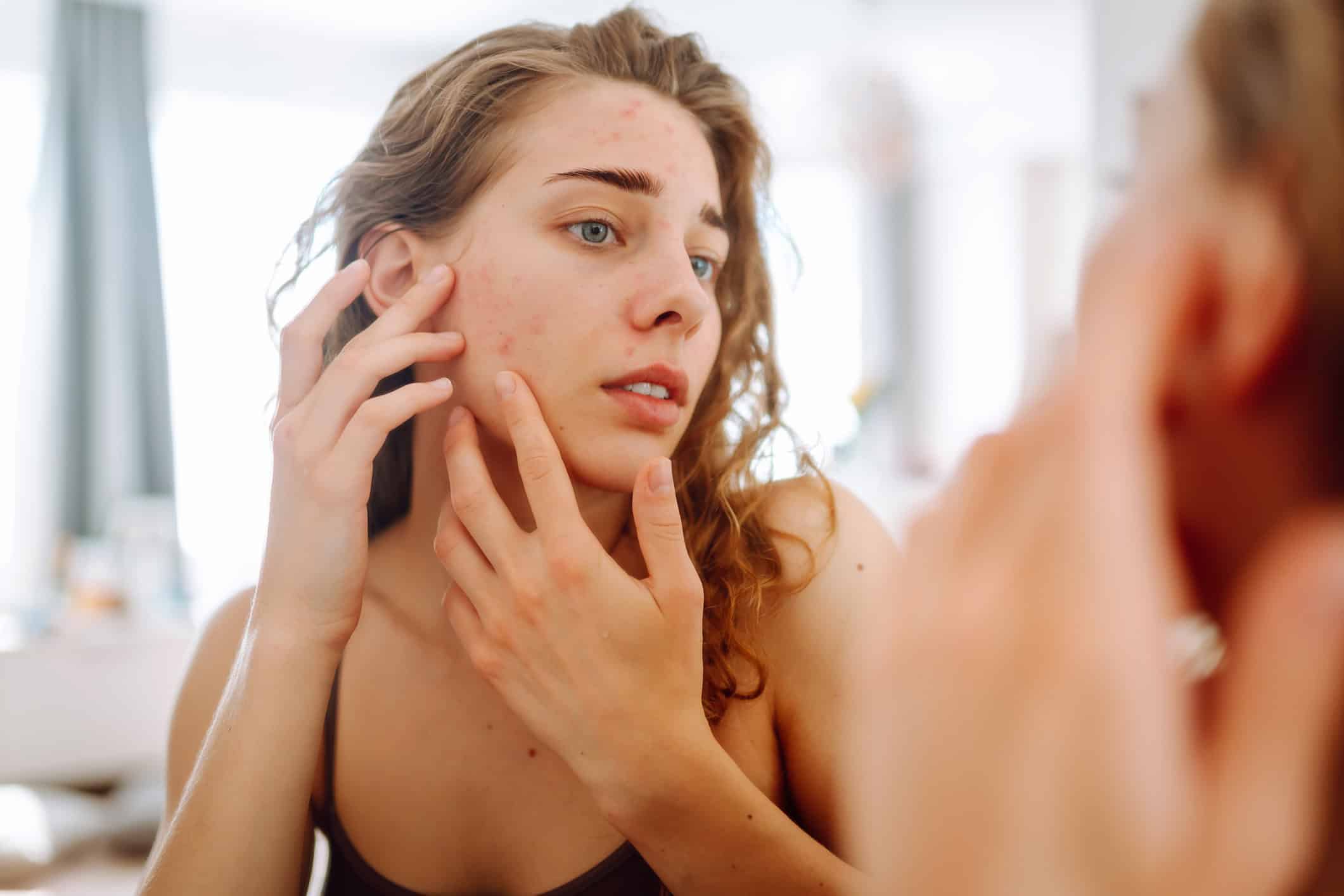
Treat the acne first
If acne is still active, scar treatment is premature. New inflammation creates new scars faster than we can improve the old ones. Get the acne controlled with your GP or a dermatologist first, then come back.
Texture and tone are two different problems and most plans address both. Depth of scarring decides how much energy is needed and therefore which device leads.
| Compare | Morpheus8For deeper scars | MicroneedlingFor shallow scarring | PicoSure laserFor texture and pigment | Chemical peelsFor marks and tone |
|---|---|---|---|---|
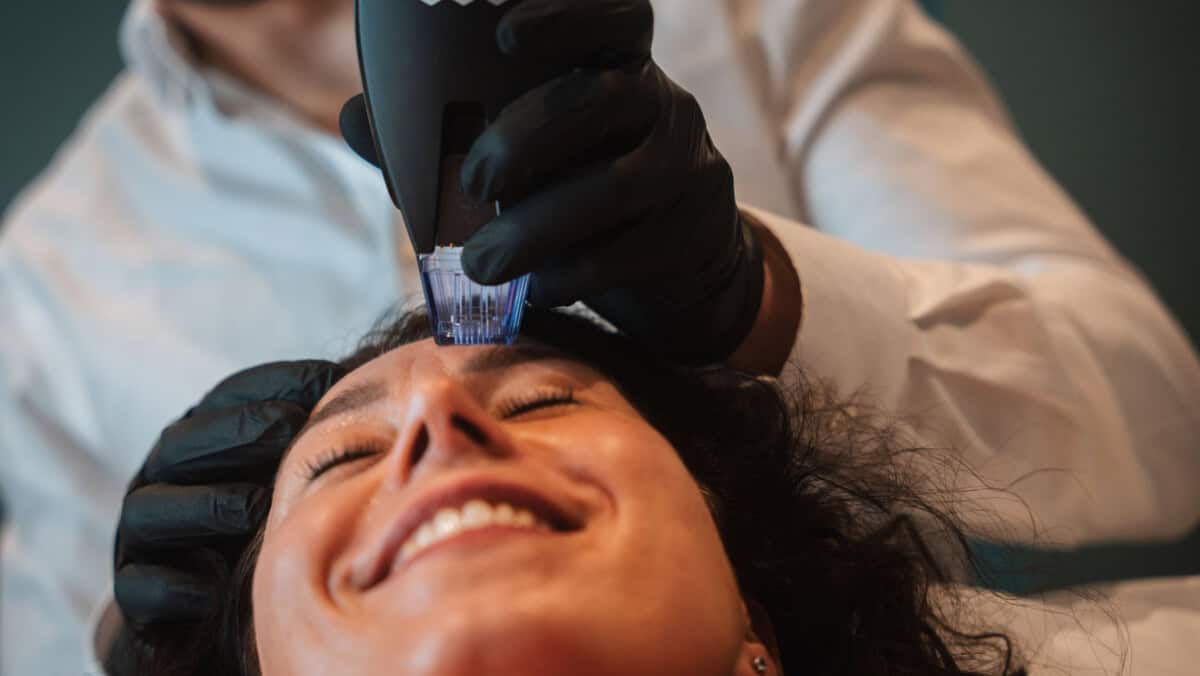 |  |  | 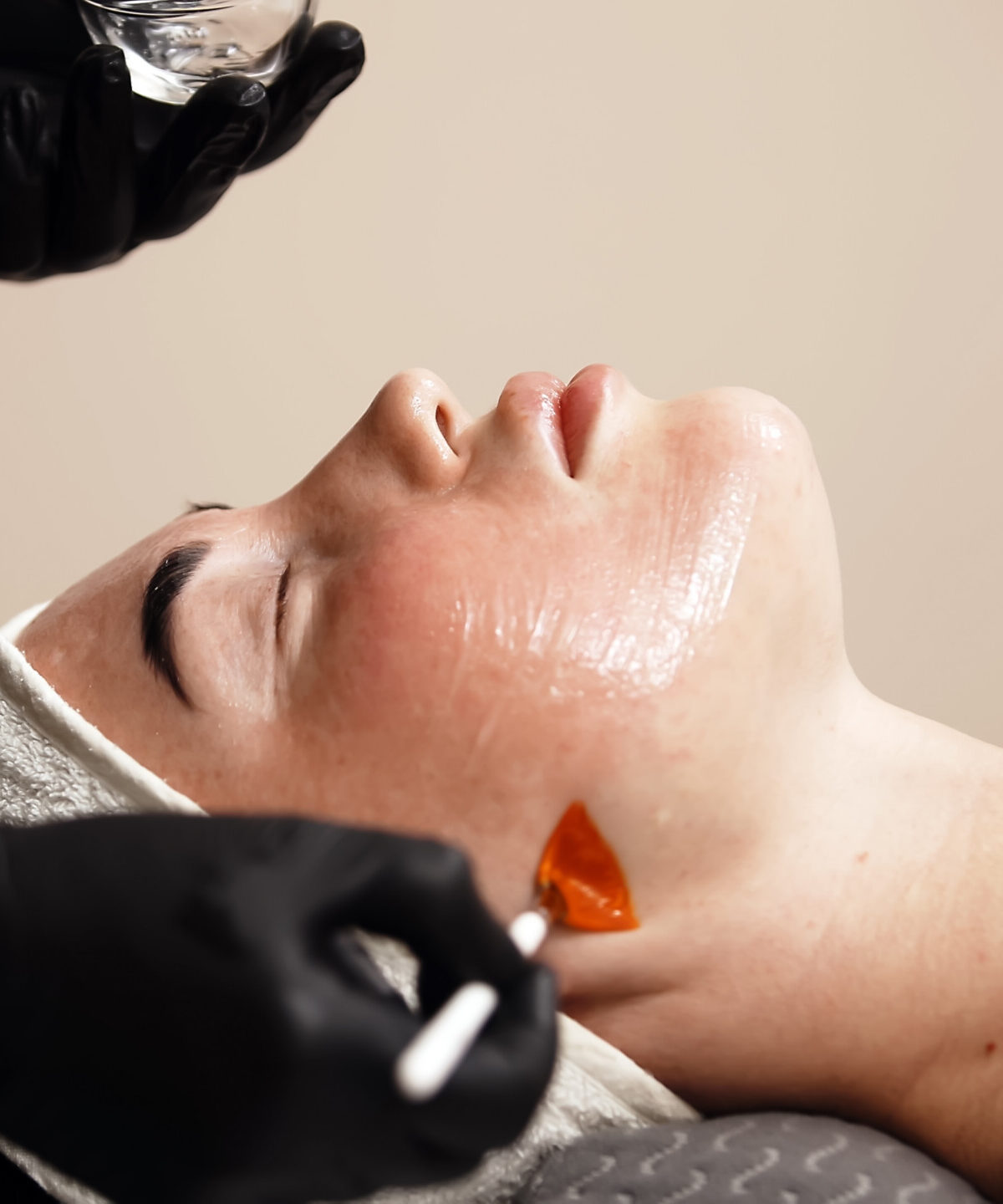 | |
| Best for | Morpheus8 Rolling and boxcar scars with real depth | Microneedling Shallow, widespread scarring and general texture | PicoSure laser Texture with pigment left behind | Chemical peels Flat red and brown marks rather than scars |
| Typical course | Morpheus8 Three sessions, spaced monthly | Microneedling Three to six, spaced monthly | PicoSure laser Three to six, spaced monthly | Chemical peels Three to six, spaced fortnightly |
| Downtime | Morpheus8 Redness for two to three days | Microneedling Redness for one to two days | PicoSure laser Mild redness for a day | Chemical peels Light flaking for three to five days |
| Skin tones | Morpheus8 All tones, settings adjusted | Microneedling All skin tones | PicoSure laser All tones, settings adjusted | Chemical peels All tones, strength adjusted |
| Price from | Morpheus8 £550 | Microneedling £260 | PicoSure laser Priced at consultation | Chemical peels £85 |
| See Morpheus8 | See microneedling | See PicoSure | See chemical peels |
Short clips of the two treatments that do most of the work on acne scarring.
Acne scarring responds best to a combination and a course, which is why we plan it that way from the start. Exosomes are often added alongside needling to speed recovery. UltraClear laser resurfacing is the stronger resurfacing option where scarring is widespread and you can take a few days of recovery.
Radiofrequency microneedling
Needles deliver radiofrequency energy at a controlled depth, remodelling collagen where the scar was formed rather than at the surface. It is our strongest option for rolling and boxcar scarring, and depth is adjusted across the face.
Collagen induction
Fine needles create controlled micro injuries that prompt the skin to lay down new collagen. Gentler than Morpheus8, safe across every skin tone, and well suited to shallower scarring taken as a course.
Picosecond laser
Short pulses that both break down the pigment left behind by old spots and trigger a collagen response in the surrounding skin. Useful where texture and discolouration arrived together, which is most people.
Resurfacing
Best aimed at the flat marks rather than the scars themselves. A course evens tone and brightens the background, which often makes the remaining texture far less noticeable than treating the texture alone would.
The assessment is done in raking light rather than flat light, because that is the only way to see the shape of a scar rather than just its colour.
Dr Mattia Parducci works out the proportion of rolling, boxcar and ice pick scarring you have, how deep it goes, how much of what you are seeing is actually flat marking, and how your skin tone changes the safe settings. He will ask whether your acne is genuinely controlled, and whether you are taking or have recently taken oral isotretinoin, which changes the timing of any needling or resurfacing.
He will also set the range. Substantial improvement is realistic and it is what most people get. Perfectly smooth skin is not, and knowing that up front is what makes the result feel like a win rather than a shortfall.
Come without makeup. Tell us if you have taken oral isotretinoin in the last six to twelve months, since that affects healing. Stop retinoids for around five days, and avoid sun exposure and self tan for two weeks.
Numbing cream goes on for around thirty minutes first. Morpheus8 and microneedling then take thirty to forty five minutes. Most people describe pressure and heat rather than sharpness once numbed.
Expect redness like strong sunburn for one to three days, and a sandpapery texture for a few days after that. No makeup for twenty four hours, no gym for two days, sunscreen daily. Collagen rebuilds over three to six months, so results keep improving between sessions.
Home care will not raise the floor of a scar, but it does more for the marks than most people realise, and the two are easy to confuse.
Daily broad spectrum sunscreen is the single most useful habit, because ultraviolet exposure darkens post-inflammatory marks and slows their fading considerably. A retinoid used consistently over months speeds cell turnover, fades marks and modestly improves shallow texture. Vitamin C and niacinamide both help with the discolouration. Above all, keeping active acne under control prevents new scars forming, which matters more than anything aimed at the existing ones.
What home care cannot do is rebuild the collagen that inflammation destroyed. No serum, roller or device sold for home use reaches the depth where a boxcar or ice pick scar was formed. Home microneedling rollers in particular are not a small version of what we do: they are too shallow to remodel anything and can spread bacteria across active acne.
If what you are seeing is flat discolouration rather than a change in surface, our page on pigmentation is a closer fit. For roughness and enlarged pores without true scarring, see textured skin.
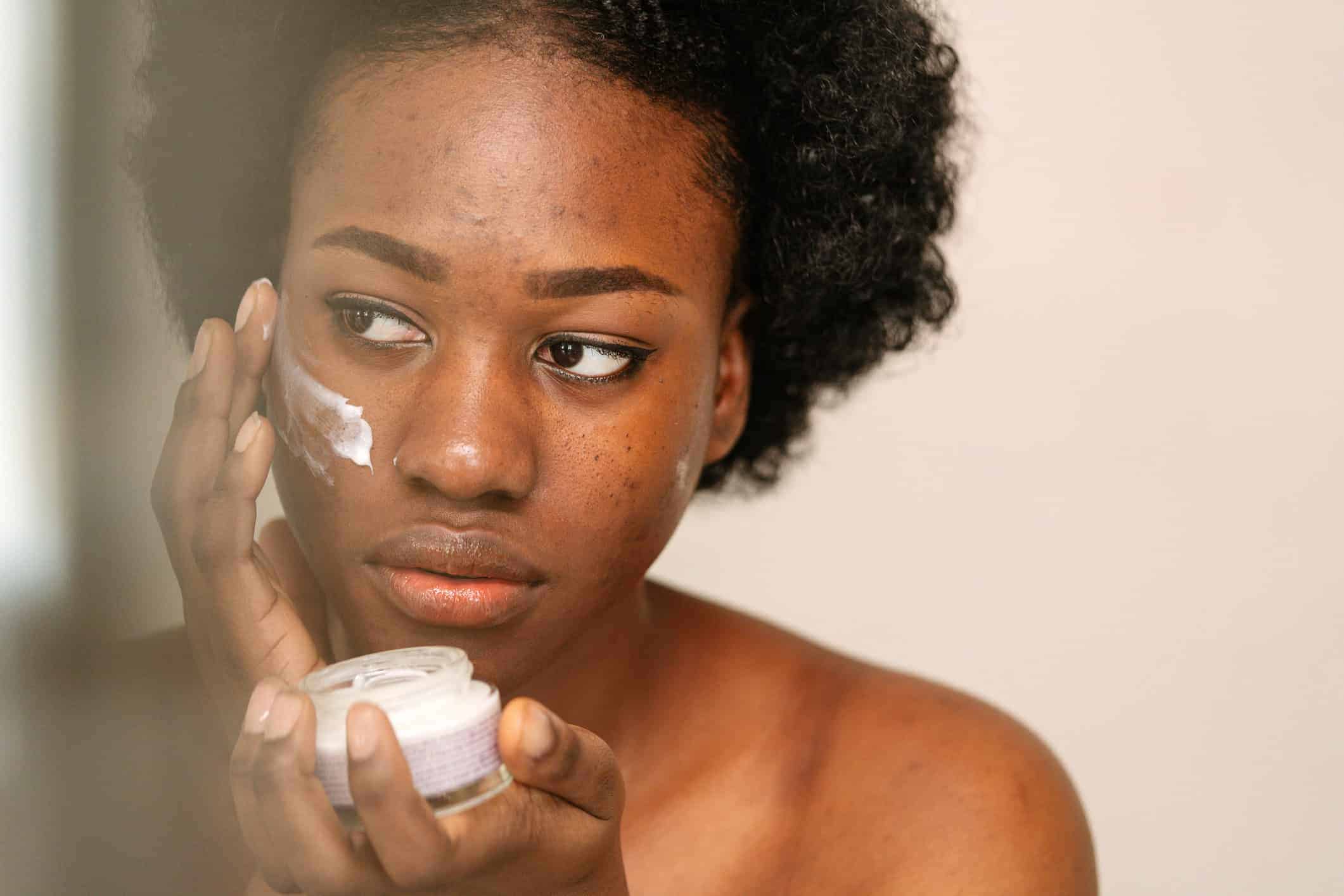
Realistic improvement is somewhere between half and three quarters with a full course, which for most people is the point at which they stop noticing their skin altogether. Complete removal is not achievable by any method.
Microneedling starts at £260 and Morpheus8 at £550. Chemical peels start at £85. PicoSure is priced at consultation. Almost everyone needs a course rather than a single session, so we quote the course.
Usually three to six depending on depth. Results continue building for three to six months after the last session as collagen remodels, so we assess the final result at six months rather than immediately.
Morpheus8 delivers energy deeper and is stronger for rolling and boxcar scars. Microneedling is gentler, less expensive and well suited to shallower, widespread scarring. Depth of your scarring decides it.
Yes, always. Treating scars while acne is active means new scars form as fast as old ones improve. Get it properly controlled with your GP or dermatologist first, then the scar work is worth doing.
Not immediately. We generally wait six to twelve months after finishing oral isotretinoin before needling or resurfacing, because healing is altered. Tell us at the consultation and we will time it properly.
Yes, with the right settings and a slower course. Richer skin tones are more prone to pigmenting after heat or injury, so we treat conservatively. Microneedling is particularly well tolerated across all tones.
Numbing cream is applied for around thirty minutes beforehand, after which most people describe pressure, vibration and warmth rather than pain. The bony areas are the least comfortable.
Run a finger over it. A mark is flat and is a change in colour only, and it fades over months. A scar is a change in the surface you can feel, and it does not fade because tissue is missing.
For individual deep rolling scars, sometimes, as a temporary lift. It is not a general solution for widespread scarring and it does not rebuild anything, so we treat it as an adjunct rather than a plan.
Some improvement in texture is visible after the first session, but the meaningful change arrives between three and six months as new collagen matures. This is a slow treatment by nature.
Yes. The mix of scar shapes you have, their depth and your skin tone all change the plan, and none of that can be judged from a photograph.
Verified Google reviews of the clinic.
Fantastic. Very welcoming, explained the process and kept me updated throughout. I can already see an improvement in my skin texture and tone. Would highly recommend and cannot wait to return.
I had a lovely facial here. Sajida took the time to listen to my skin concerns and recommend the appropriate treatment.
Natalia did an amazing job, she took the time to ask me my skin concerns and to adapt the facial to my needs. She recommended steps to add to my skincare routine and a couple products that would help. I had a great time!
From the journal
Latest
Your acne cleared years ago and the scars stayed. Laser Coring lifts micro columns of that scar tissue out rather than heating them, and Dr Mattia…
More from the journal
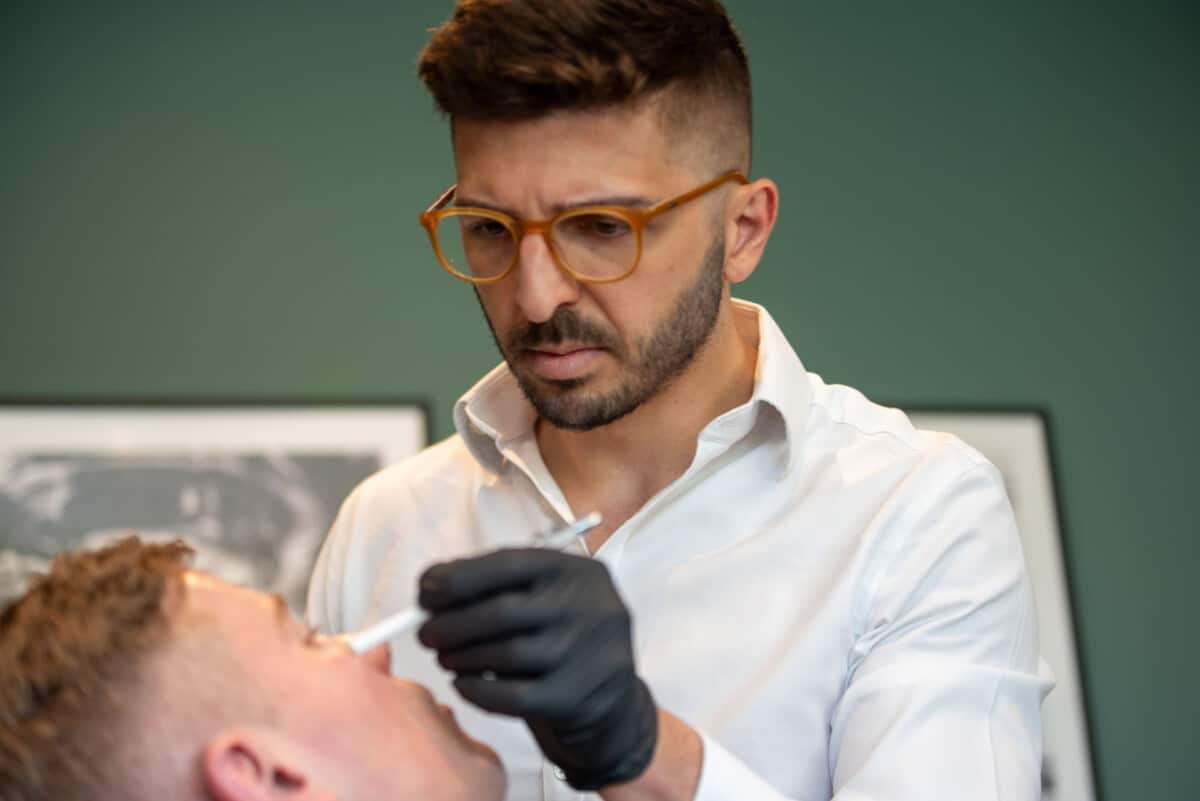
Acne & Acne Scarring
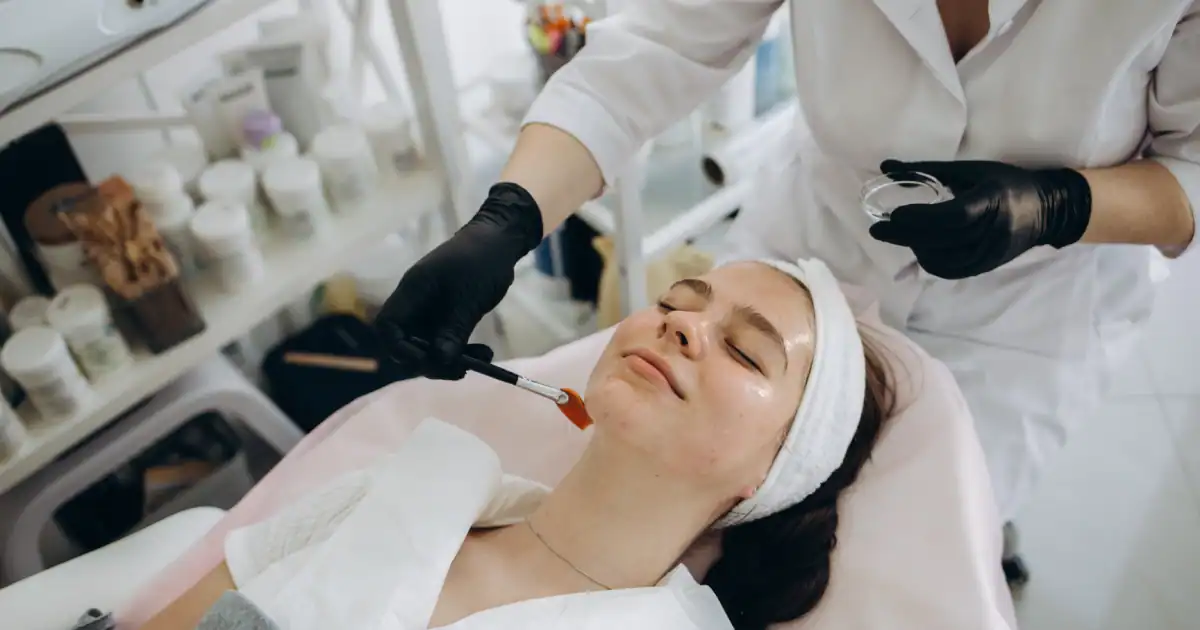
Acne & Acne Scarring
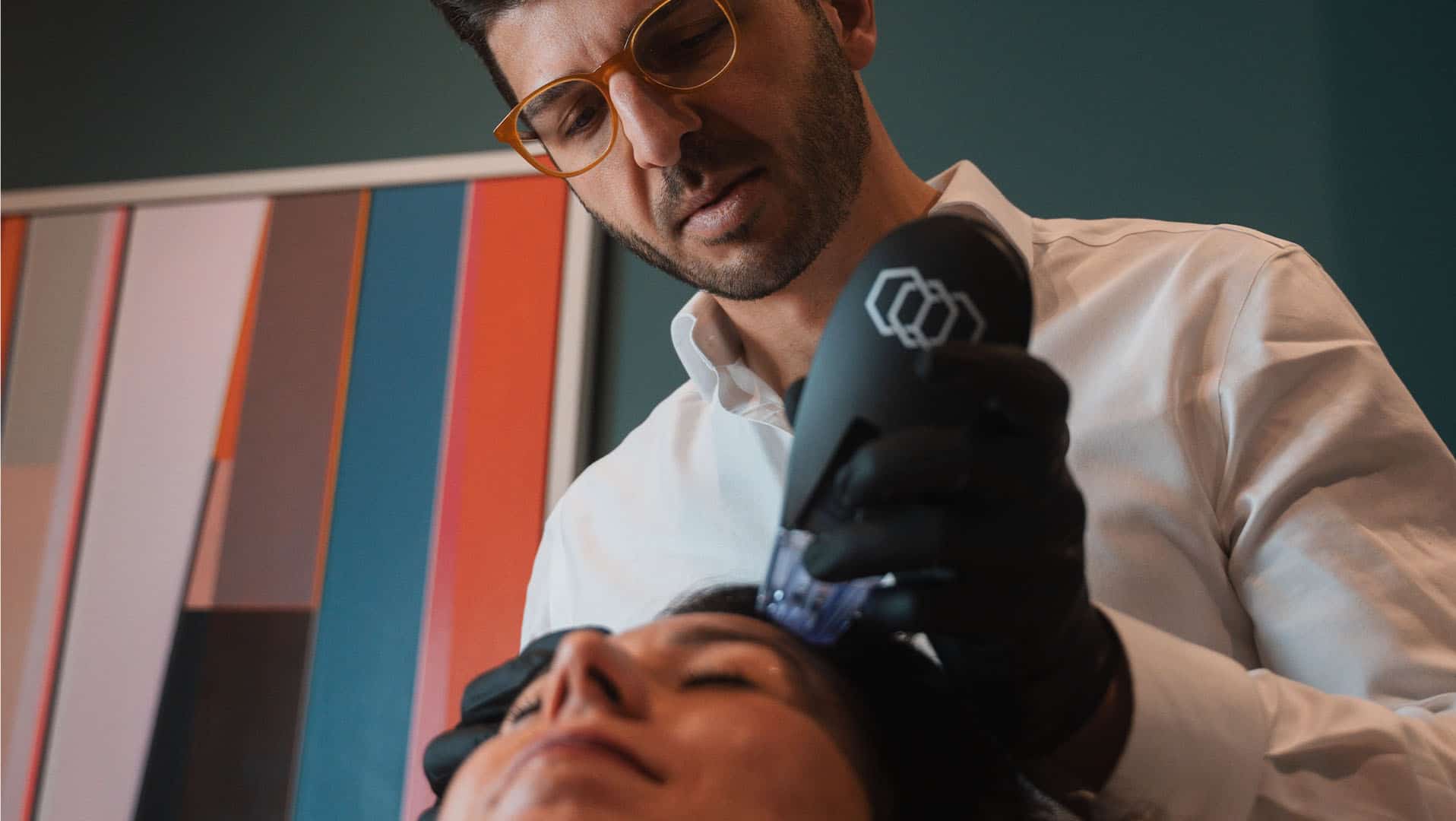
Acne & Acne Scarring
Acne & Acne Scarring

Blogs
Our clinic is located in Summertown, Oxford, just north of the city centre in one of Oxford’s most sought-after neighbourhoods. Discreet and easy to reach, we offer a premium setting for bespoke skin, aesthetic and wellness care.
We welcome patients from across Oxford city and Oxfordshire, including Summertown, Headington, Kidlington, Abingdon, Bicester, Witney and the surrounding towns and villages. Whether you’re coming for routine skin-health treatments or specialist aesthetic consultations, our location is well connected and simple to access.
Our clinic, Cannelle Skin Clinic, is just minutes from Oxford city centre and easily reached by car, bus or rail. Oxford’s mainline stations Oxford Station and Oxford Parkway are a short taxi or bus ride away, and regular services link to London, Reading, Didcot, Banbury and beyond.
By car, we’re conveniently accessed via key local routes with nearby parking options; by public transport, frequent bus routes along Banbury Road drop you within a short stroll of the clinic.
Whether you’re travelling from within Oxfordshire, further afield in the UK or internationally, our clinic offers a calm, personalised and professional environment for your visit.