You know what you would change about your skin. Here is how Dr Mattia matches sun damage, fine lines or acne scarring to one of three UltraClear treatments, and what recovery each one brings with it.
You know what you would change about your skin. For some it is the sun-marked patches across the cheeks, for others the fine lines that concealer now gathers in rather than covers. For plenty of people it is the acne scarring that has followed them since their teens. UltraClear at Cannelle Skin Clinic in Oxford is one laser with three treatments, and your skin decides which one is yours.
It all comes down to the cold fibre. UltraClear works at 2910 nanometres and resurfaces through thousands of microscopic channels. It lifts away the damaged surface, and your own healing rebuilds collagen beneath it. Around 95 percent of the energy goes into removing tissue and only about 5 percent becomes heat. That warmth stays inside its own channel rather than spreading into the skin beside it.
Keeping the heat in the channel shortens healing and widens who can safely be treated, deeper skin tones included. Dr Mattia Parducci (GMC 7635663) performs every UltraClear treatment at Cannelle himself, from the first pass to the last. He arrives with more than 100 of these laser treatments already behind him at our sister clinic in London, Dr Joney De Souza Skin & Laser. Cannelle is the only clinic in Oxford where UltraClear is performed by a doctor who has already performed more than a hundred of these treatments.
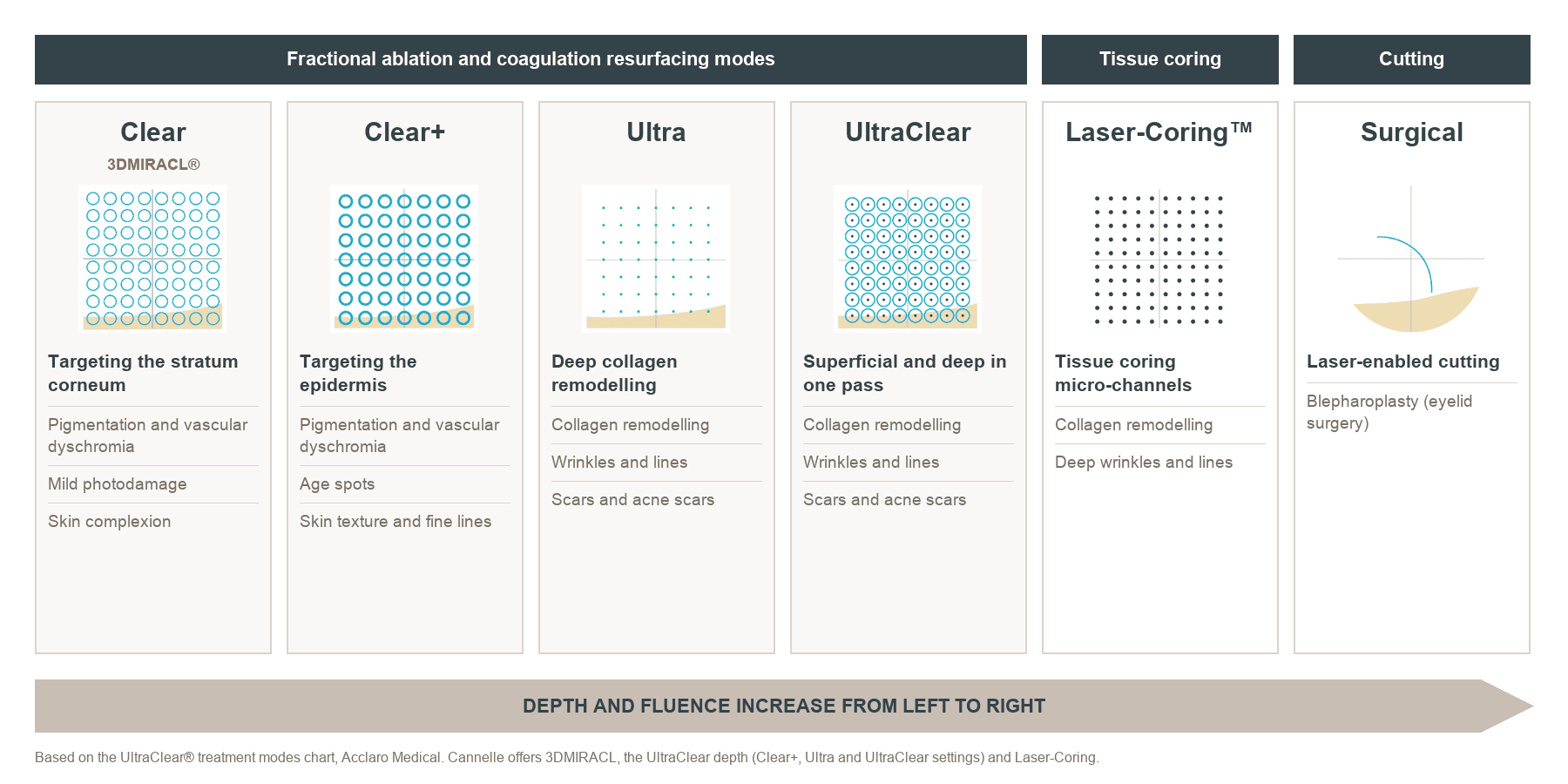
Most people arrive with a treatment already in mind. They have read that one pass sends you back to work the same afternoon and that another asks for a week, and they would like the quick one. Dr Mattia turns that around gently. Different targets need different modalities, and each modality carries its own recovery.
The reason is depth. Dull tone and early sun damage sit close to the surface, so a light pass lifts them and the skin barely notices. Fine lines and deeper sun damage live in the mid dermis, and reaching them means a whole new surface has to come through. An established scar is a column of tissue, and freeing your skin of it means taking that column away.
So the concern picks the treatment, and the treatment brings its recovery with it. Your part is to say what you see in the mirror and what you would love to see instead. Dr Mattia then matches the treatment to your skin. UltraClear works on the surface and the collagen beneath it rather than restoring lost volume. If he believes a biostimulator would suit you better, he will tell you honestly.
The three treatments sit side by side on the UltraClear page. Each one answers a different question about your skin, and each asks for a different week afterwards. Take them as three answers rather than as a menu, because that is how Dr Mattia reads a face.
Half of the faces in the manufacturer’s own library are men, and men come to Cannelle for exactly the same things: sun-weathered skin from years of cycling, acne scarring left over from their twenties, and a preference for a treatment that does not announce itself. Everything in this piece applies to them without adjustment, including the light pass that fits inside a lunch hour.
A word on who makes it. UltraClear is built by Acclaro Medical in the United States and is the only cold fibre laser working at 2910 nanometres. It is FDA cleared, it won NewBeauty’s 2026 Beauty Award in the category Best Laser Treatment for All Skin Tones, and the leading American dermatologists who use it presented their results at the American Academy of Dermatology this spring.
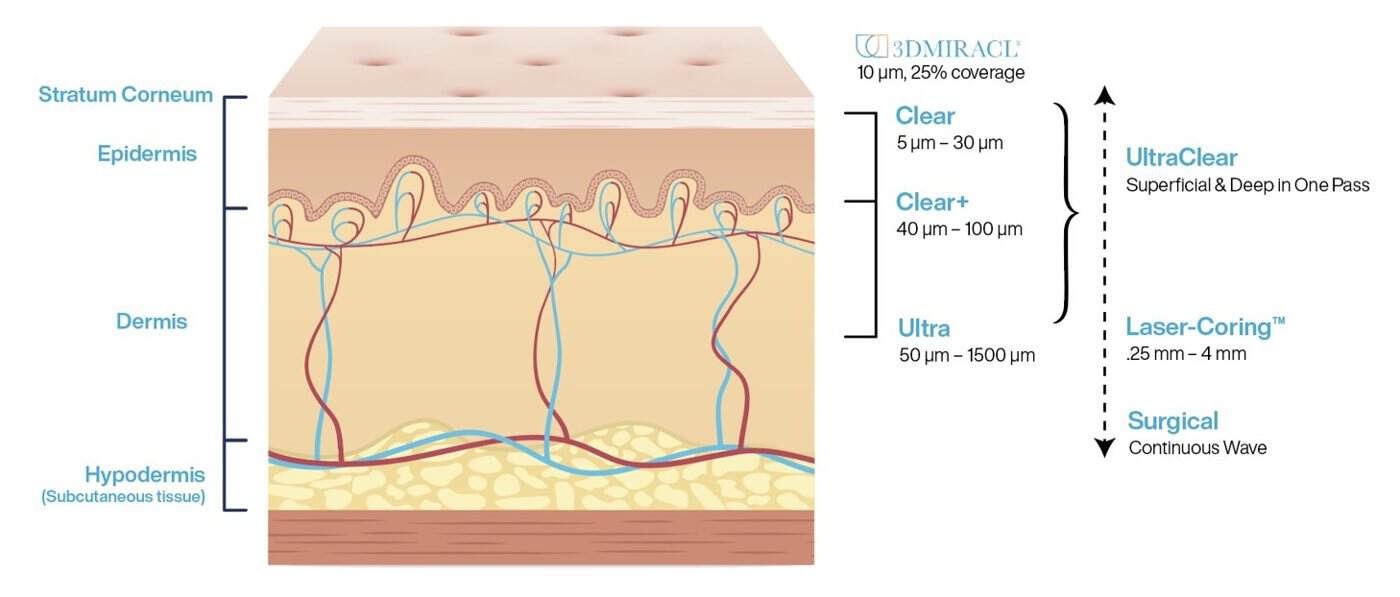
This is the treatment for skin that has lost its glow rather than its shape. Summer 2026 is provisionally the hottest on record in the UK, and plenty of people are looking at cheeks a shade patchier than they were in May. The 3DMIRACL pass is the lightest UltraClear offers, and it is built for exactly that.
It takes 10 to 15 minutes and needs no topical numbing. You feel a warmth like the first hour of a sunburn, and it settles within a few hours. You leave faintly pink at most. There is no formal downtime, so a lunchtime appointment puts you back at your desk the same afternoon.
One thing to expect, so that it never alarms you. Sun spots and freckles go darker for a day or two after 3DMIRACL, then flake away between the third and fifth day, and the brighter skin shows once they have gone. The warmth itself, the manufacturer’s own study of twenty patients found, scored an average of 1.75 out of 10 with no numbing at all.
Brightness shows within days, and the improvement builds from there. The light pass runs on a monthly rhythm rather than as a set course, each visit adding clarity to the one before. That also makes it the natural maintenance treatment between deeper sessions. Aftercare is sunscreen every day, a gentle moisturiser and nothing active on your skin for 48 hours. Our page on treating sun-damaged skin covers the wider picture for you.
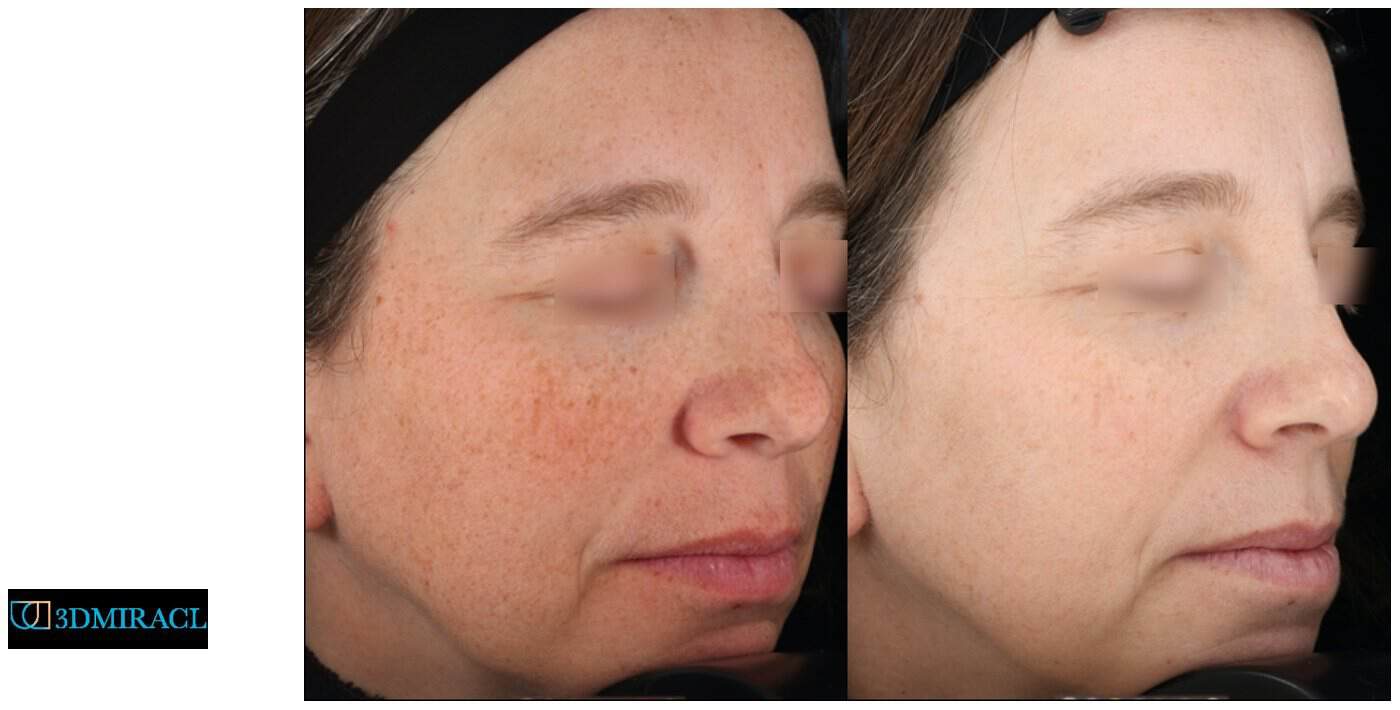
The lighter Clear settings also reach redness. The manufacturer’s US clearance covers benign pigmented lesions and vascular dyschromia, the diffuse flush and fine visible vessels that make a complexion read as hot even when it is calm. If your concern is more red than brown, tell Dr Mattia, and read our page on rosacea and facial redness for how the plan changes.
This one is for skin that now holds the light differently. Fine lines around the eyes and mouth catch the make-up rather than lose it. Open pores across the nose, a roughness to the texture and sun damage deeper than a tint all sit in the mid dermis. The mild scarring left by a bad year of breakouts sits there too, and the UltraClear depth reaches all of it.
Healing is the plan rather than a side effect. For three to seven days your skin flushes and then flakes as the new surface comes through. You go home with a written routine that carries you through it. It covers barrier cream and gentle cleansing, no heat, exercise or swimming until healed, and a date to bring your retinoids and acids back.
Healing has to finish before the result shows itself, and then it keeps coming. Texture, tone and firmness improve for three to six months as collagen reorganises beneath the new surface. Dr Mattia asks you to judge the result at three months rather than at three weeks. Most plans run to two or three sessions, three to four months apart.
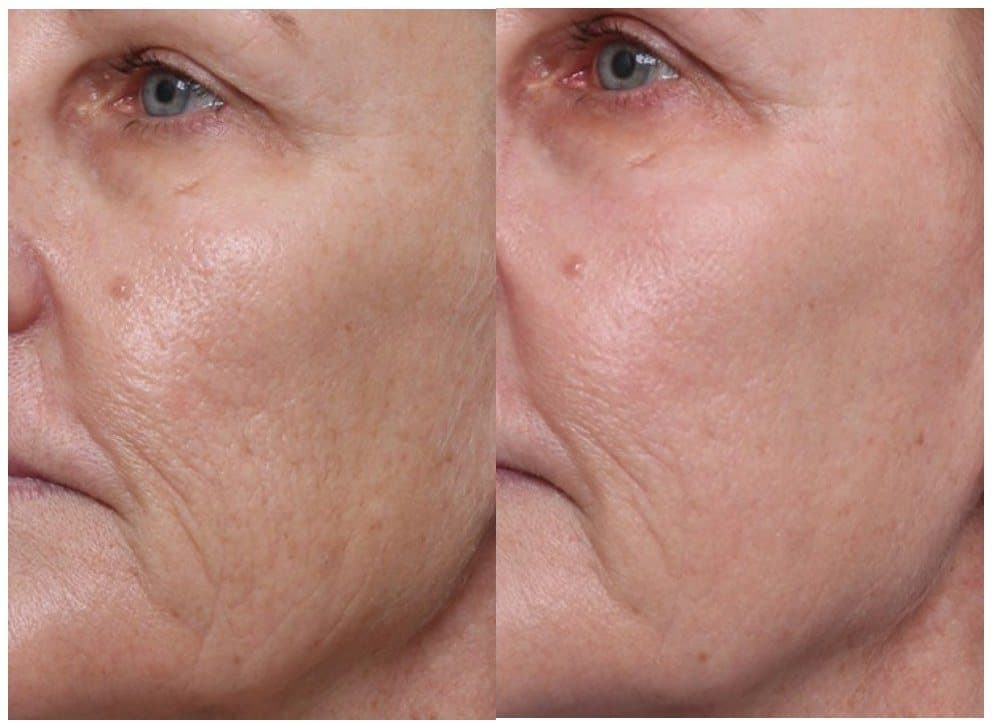
If your scars date from your teens, you have probably been told more than once that little can be done. Laser Coring changes that answer. Laser Coring is the deepest of the three treatments, and it works differently from the other two. It removes micro-columns of scarred tissue outright rather than heating them, and your own healing fills the space with fresh tissue.
The treatment is performed under topical numbing. Because tissue is being removed there is pinpoint bleeding on the day, sometimes noticeable on scars. That is expected, and Dr Mattia talks you through it before he begins. Healing takes seven to fourteen days with a written routine to follow, and most plans run to one to three sessions, four to six months apart.
Laser Coring was presented at the American Academy of Dermatology annual meeting in March 2026. A 2024 acne-scar study reported only trace-to-mild redness, swelling and pinpoint bleeding afterwards. For the scar you stopped looking at directly years ago, that is a genuinely new option. Our acne scarring page explains how it sits alongside the rest of our work, and the before and after gallery shows what one session does.
Scarring is not the only thing the deepest setting answers. Because Laser Coring removes columns of tissue and leaves the skin to knit them closed, it also firms skin that has started to slacken, which is why it suits a jawline that has softened or a neck that has lost its line. Somebody who came in about the scars on their cheeks often notices the jaw first when they look properly at three months. The photograph below was taken five months after a single session.
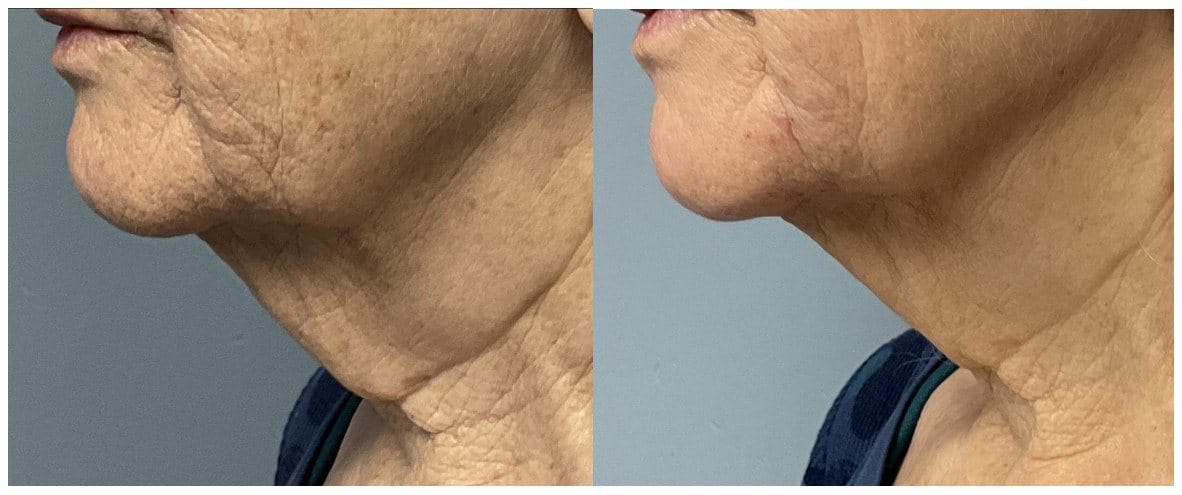
None of this is limited to the face. The neck, the chest and the backs of the hands are treated with the same three settings, matched to skin that is thinner and slower to heal, and the jawline in particular responds well to the deeper work.
Your first visit is a consultation with Dr Mattia, and it is where the choice is made. He looks at your skin under clinic lighting, then at the VISIA images, which show the sun damage and texture sitting below what a mirror reveals. You talk about your skin type, how you tan, what you use at home and what you would most like to change.
UltraClear is designed for Fitzpatrick I to VI. Dr Mattia patch-tests deeper skin tones before a full treatment, so your first proper session starts with your skin already understood. In a city where 29 percent of residents are from Black and minority ethnic backgrounds, a laser that treats confidently across every tone matters.
Whichever treatment he recommends, the same questions come first. Isotretinoin in the recent past, a tan now or a holiday soon, a history of cold sores that would want antiviral cover, pregnancy or breastfeeding, an active breakout, and whether your skin tends to scar thickly. The answers move the depth, the timing or both.
If there is a date in view, count backwards from it. The light 3DMIRACL pass wants about a week, so the faint pink has gone and the flakes have lifted. The UltraClear depth wants four to six weeks, so the flushing has settled and the first change is showing.
Laser Coring wants a season, ideally three months, because the result keeps arriving long after the healing ends. Keep the four weeks either side of any treatment free of tanning, and tell Dr Mattia the date at your consultation so he can plan around it.
By the time you leave you know which of the three treatments is yours. You also know how many sessions to expect and how they are spaced. As a guide, the light pass runs monthly, the UltraClear depth usually takes two or three sessions, and Laser Coring one to three. The consultation gives the real answer for your skin.
If you have spent the summer looking at skin that has lost its light, or years looking past a scar, come and see us in Summertown, welcoming patients from across Oxfordshire. Patients drive in from Kidlington and Woodstock to have it looked at properly. A Witney commuter can have the light pass at lunchtime and be back at a desk the same afternoon. Get in touch and we will find you a time.
The doctor who performs every UltraClear session at Cannelle, filmed treating with the same laser at our sister clinic in London, Dr Joney De Souza Skin & Laser. Watch how the handpiece moves, how calm the skin stays, and how little fuss the whole thing involves.
Three treatments, three jobs, three recoveries. This is the whole article in one glance, and the column to read first is the one about your own skin. Dr Mattia confirms the treatment and its timing at your consultation.
| Treatment | Best for | Feel, healing and rhythm |
|---|---|---|
3DMIRACL | Dull tone, early sun damage, redness and upkeep | No numbing. A few hours of mild sunburn warmth, faintly pink at most. Spots darken, then flake off by day five. Monthly. |
UltraClear depth | Fine lines, texture, deeper sun damage, open pores, mild scarring | Numbed first. Three to seven days of flushing and flaking. Two or three sessions, three to four months apart. |
Laser Coring | Established acne scarring, skin laxity, and deep lines on the jaw and neck | Numbed first. Pinpoint bleeding on the day, then seven to fourteen days of healing. One to three sessions, four to six months apart. |
Book a consultation with Dr Mattia Parducci at Cannelle Skin Clinic in Summertown and he will match the treatment to your skin, not the other way round. Call 01865 511960, message us on WhatsApp or book online, and bring the concern you have been putting off.
The questions we hear most about the three UltraClear treatments, from what each one feels like on the day to how long healing takes, answered plainly by the team at Cannelle. Anything we have missed is a question for your consultation.
Your skin decides, and Dr Mattia reads it at your consultation. Dull tone and early sun damage take the light 3DMIRACL pass. Fine lines, open pores, rough texture and deeper sun damage take the UltraClear depth. Established acne scarring and long-standing texture take Laser Coring. Each treatment reaches a different depth, and each brings its own recovery with it.
You can ask, and Dr Mattia will explain why the answer comes from your skin rather than your diary. The lightest pass works beautifully on dull tone and early sun damage because those sit near the surface. A scar or a deeper line lives further down, and reaching it means a new surface has to come through. The concern decides the treatment, and the treatment carries its recovery.
A warmth like the first hour of a sunburn, which settles within a few hours. It takes 10 to 15 minutes and needs no topical numbing, and you leave faintly pink at most. There is no formal downtime, so most people book it at lunchtime and go straight back to their afternoon. Brightness shows within days and builds with each monthly pass.
Three to seven days. Your skin flushes and then flakes as the new surface comes through, and you leave with a written routine covering barrier cream, gentle cleansing, no heat, exercise or swimming until healed, and a date to bring retinoids and acids back. The result shows itself at the end of healing, and texture, tone and firmness keep improving for three to six months.
Yes, and it is part of how the treatment works. Laser Coring removes micro-columns of scarred tissue outright rather than heating them, so there is pinpoint bleeding on the day, sometimes noticeable on scars. It is performed under topical numbing, healing takes seven to fourteen days, and a 2024 acne-scar study reported only trace-to-mild redness, swelling and pinpoint bleeding afterwards.
UltraClear is designed for Fitzpatrick I to VI. Because about 95 percent of its energy goes into removing tissue and only about 5 percent becomes heat, warmth stays inside each channel rather than spreading into the surrounding skin, which is what widens who can safely be treated. Dr Mattia patch-tests deeper skin tones before the first full treatment so your skin is understood from the start.
Every UltraClear treatment is performed start to finish by Dr Mattia Parducci (GMC 7635663), who is Cannelle’s Lead Aesthetic Doctor. He arrives in Summertown with more than 100 of these laser treatments already performed at the sister clinic in London, Dr Joney De Souza Skin and Laser, and Cannelle is the only clinic in Oxford where it is performed by a doctor with that record.
It depends on which treatment you have. After 3DMIRACL, brightness shows within days and builds with each monthly pass. After the UltraClear depth and Laser Coring, the first real change appears once healing finishes, and texture, tone and firmness then keep improving for three to six months as collagen reorganises. Dr Mattia asks you to judge the deeper treatments at three months.
No, and Dr Mattia will say so plainly if volume is what your face is missing. UltraClear works on the surface of the skin and the collagen beneath it, which is where lines, texture, sun damage and scarring live. Lost volume is the work of biostimulators or dermal fillers, and if he believes one of those would suit you better he will tell you honestly at your consultation.
The cost depends on which of the three treatments your skin needs and how many sessions Dr Mattia plans, so it is confirmed at your consultation once he has matched the treatment to you. A 3DMIRACL rhythm, a two or three session UltraClear depth plan and a Laser Coring plan are priced differently, and you leave the consultation knowing your number.
Our clinic is located in Summertown, Oxford, just north of the city centre in one of Oxford’s most sought-after neighbourhoods. Discreet and easy to reach, we offer a premium setting for bespoke skin, aesthetic and wellness care.
We welcome patients from across Oxford city and Oxfordshire, including Summertown, Headington, Kidlington, Abingdon, Bicester, Witney and the surrounding towns and villages. Whether you’re coming for routine skin-health treatments or specialist aesthetic consultations, our location is well connected and simple to access.
Our clinic, Cannelle Skin Clinic, is just minutes from Oxford city centre and easily reached by car, bus or rail. Oxford’s mainline stations Oxford Station and Oxford Parkway are a short taxi or bus ride away, and regular services link to London, Reading, Didcot, Banbury and beyond.
By car, we’re conveniently accessed via key local routes with nearby parking options; by public transport, frequent bus routes along Banbury Road drop you within a short stroll of the clinic.
Whether you’re travelling from within Oxfordshire, further afield in the UK or internationally, our clinic offers a calm, personalised and professional environment for your visit.