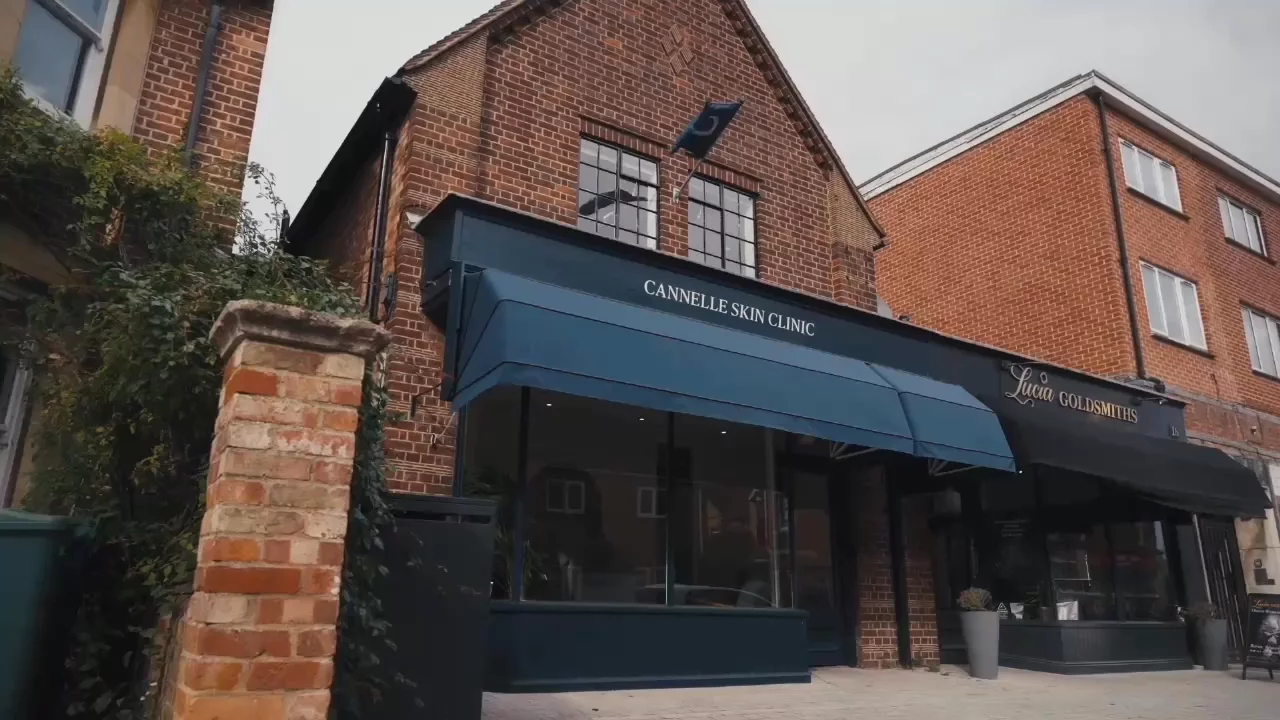
You have a date next June and a tattoo you would rather not see in the photographs. Four to eight sessions, six to eight weeks apart, is why a removal course at Cannelle in Oxford begins in autumn.
There is a date in your diary you would like to look your best for. A wedding next June, a holiday in July, or the photograph taken of you in a gown at the end of your degree. The tattoo you stopped liking years ago is in the frame of all three. Starting now is what gives PicoSure at Cannelle Skin Clinic in Oxford the time it needs.
Tattoo removal runs to a schedule your own body sets. Most designs take four to eight sessions, spaced six to eight weeks apart. That is somewhere between six and fourteen months from your first appointment. Count backwards from a date in June and you arrive at this autumn.
What happens between your visits is the part worth understanding. Each pulse lasts about a trillionth of a second, and it shatters ink by pressure rather than by heat. The fragments are small enough for your lymphatic system to carry away. Your tattoo keeps fading in the weeks after every appointment, which is why the gaps matter as much as the sessions.
Dr Mattia Parducci (GMC 7635663) runs the clinic, and every PicoSure plan and setting is his decision. He brought more than 100 of these laser treatments with him from our sister clinic in London, Dr Joney De Souza Skin & Laser. He is also the person who will tell you honestly what your date allows. If another treatment would serve you better, he will say that just as plainly.
Four to eight sessions is the usual range, and six to eight weeks is the usual gap. Put the two together and a course occupies six to fourteen months of your year. The range is wide because no two tattoos are alike. Ink density, layering, depth, the age of the piece and the colours in it all move the number.
Colour is the biggest single influence. Black and dark blue are the most predictable at 755 nm, and green and blue-green respond strongly as well. Red, orange and yellow rely on other wavelengths and lift more slowly, while white and pale inks are the least predictable. A small black outline and a layered colour sleeve sit at opposite ends of that range.
The waiting is not wasted time, and this is the part people are always pleased to hear. Your body clears the shattered ink over the weeks that follow, so the design carries on lightening between appointments. Book too soon and you are treating ink that was already on its way out. Leave the proper gap and every session starts on a lighter tattoo.
You will notice the change before anyone else does. The outline softens first, and the darkest areas lift towards grey, so the design starts to look like a memory of itself. If you have watched the same tattoo sit unchanged for a decade, that first real fade is a surprisingly good day. It is also the point at which six to fourteen months stops sounding long.
[ASSET PLACEHOLDER 1: Clearance timeline, the same tattoo photographed before each session across a full course. Credit: Images courtesy of Cynosure]
UV in the UK runs from roughly the middle of March to the middle of October. The months on either side of that are darker and cooler, and they suit a laser course. Your skin is at its own natural colour through the winter. The settings Dr Mattia chooses are matched to the skin in front of him.
Sunscreen every day is the one thing we ask of you between sessions, and the darker months make that easy to keep up. Long sleeves and higher necklines are the ordinary uniform of an Oxford autumn. A treated area stays covered without any effort from you. The treatment itself asks nothing else of your week.
Summer 2026 was provisionally the hottest on record in the UK, and 43% of adults here were sunburnt in the past year. Beginning a course as the light softens is simply kinder to good intentions. By the time the sun comes back, most of your course is behind you rather than ahead of you.
Brides have been doing this quietly for years, and the trend has been written about well beyond the clinics that see it. The advice around the industry is to begin twelve to eighteen months before the date, which is more generous than most courses need. A wedding at Blenheim next June, with a course that started in September, gives your skin most of a year to work with.
Graduation photographs fall at the same point in the year, and a gown leaves the forearms and the back of the neck on show. Oxford ceremonies fill the summer, and sessions six to eight weeks apart sit neatly around term dates. A July holiday works the same way, because the design keeps fading through the winter between appointments.
Tell Dr Mattia if a cover up is already drawn, since a partial fade needs fewer sessions than full clearance. Nobody can promise you a clear arm by a particular Saturday, and we will not try. What the consultation gives you is the likely number of sessions, how they are spaced, and an honest view of what your date allows.
Pricing follows the measured size of the design. A micro tattoo up to 2 cm is £90 a session, or £305 for a course of four. A small piece is £130 or £440, a medium one £195 or £665, and a large one £280 or £950. Extra large designs are £390 or £1,325, and the bands sit on the PicoSure tattoo removal page alongside the rest of our prices.
[ASSET PLACEHOLDER 2: Before and after. A forearm design photographed at the start of a course and again four sessions in. Credit: Images courtesy of Cynosure]
Your first treated session is also the most informative one. Dr Mattia sees how your tattoo answers the settings he chose. He sees how much has gone by the time you return six to eight weeks later. The plan is adjusted from there, colour by colour, rather than run to a fixed formula.
That is the point at which a rough timeline becomes your timeline. Averages give you a starting point, and your own tattoo writes the rest of the plan. Photographs at every visit mean you can see what has changed, rather than trying to remember how the design looked last spring.
A course that begins now has its early sessions behind it before Christmas. The ink you can still see in March will be lighter than the ink you are looking at today. The fading continues between every visit. That is what an early start gives you, and it is the one part of the plan entirely within your control.
Your first visit is a consultation with Dr Mattia, and it is the appointment that sets your schedule. He measures the design, reads the colours in it, and weighs how old and how densely packed the ink is, with your skin tone read alongside. VISIA skin imaging records exactly where you are starting from.
Then comes the patch test, which every tattoo course begins with. A small area is treated at the settings chosen for you, and at least twenty four hours pass before your first full session. Deeper skin tones are treated here regularly, and that short pause is what lets a course begin with your skin already understood.
A 2024 survey found that 26% of Britons have a tattoo, and about one in seven of them regrets at least one. If yours has been on the list for a while, September is the month to begin.
Our Summertown clinic is an easy run from Botley, Headington and Kidlington, and we welcome patients from across Oxfordshire. Start with the PicoSure tattoo removal page, and get in touch when you want the consultation in the diary.
Book a consultation with Dr Mattia at our Summertown clinic and put a real number of sessions against the date in your diary. Call 01865 511960, or message us on WhatsApp, and the course can start this autumn.
These are the questions we hear most from people working backwards from a date. If yours is not here, Dr Mattia will answer it properly once he has seen your tattoo.
Most tattoos take four to eight sessions, spaced six to eight weeks apart, and the design keeps fading between visits as your lymphatic system carries the shattered ink away. Black and dark blue sit at the quicker end, while layered or warm coloured pieces take longer. Those are averages, and Dr Mattia puts a number against your own design at the consultation.
Four to eight sessions at six to eight week intervals works out at six to fourteen months from your first appointment. The wide range comes down to ink density, layering, depth, the age of the piece and the colours in it. Starting in autumn puts most of that time behind you before the summer, and your consultation sets the likely length.
Because the fading carries on between appointments rather than finishing on the day. Each session shatters the ink, and your lymphatic system then needs several weeks to carry the fragments away. Leave the proper gap and every visit starts on a lighter tattoo, so each session does more for you. Book too soon and you are treating ink that was already on its way out.
Autumn is the natural point to begin for a summer wedding, since a course usually runs six to fourteen months. Industry advice is to allow twelve to eighteen months before the date, which is more generous than most courses need. Bring your date to the consultation and Dr Mattia will tell you honestly what it allows, rather than promising you a finish line.
UV in the UK runs from around mid March to mid October, so autumn and winter are the natural months for laser work. Your skin is at its own colour, sunscreen is easier to keep up, and sleeves cover a treated area without any effort. The sessions themselves ask nothing else of your week, whatever the season.
Nobody can promise that, and we will not pretend otherwise. What we can give you is the likely number of sessions, how far apart they sit, and an honest view of what your date allows. Most tattoos clear over four to eight sessions, and a partial fade for a cover up needs fewer. Your consultation turns those averages into a plan with dates on it.
Each pulse lasts about a trillionth of a second, so the sensation is brief rather than sustained, and the surface of your skin is never removed. The treated area is pink and warm for a few hours afterwards, and most people go straight back to their day. Dr Mattia talks you through what a session feels like and how long yours will take.
Pricing is by the measured size of the design. A micro tattoo up to 2 cm is £90 a session or £305 for a course of four. A small piece from 2.1 to 5 cm is £130 or £440, a medium one is £195 or £665, and a large one £280 or £950. An extra large piece is £390 or £1,325, and oversized designs are priced on assessment.
Yes, and it is a common reason for starting a course. Partial fading needs fewer sessions than full clearance, because the aim is to soften the old design enough for a new one to sit cleanly over it. Tell Dr Mattia what the new piece will be, and bring the artist’s drawing if you have it, so the course is planned around it.
Dr Mattia Parducci (GMC 7635663), our Lead Aesthetic Doctor, writes every PicoSure plan and chooses the settings behind it. He has carried out more than 100 of these laser treatments at our sister clinic in London, Dr Joney De Souza Skin & Laser. He reads your tattoo at every visit so the settings follow the fade, and the bands are on the PicoSure page.
Our clinic is located in Summertown, Oxford, just north of the city centre in one of Oxford’s most sought-after neighbourhoods. Discreet and easy to reach, we offer a premium setting for bespoke skin, aesthetic and wellness care.
We welcome patients from across Oxford city and Oxfordshire, including Summertown, Headington, Kidlington, Abingdon, Bicester, Witney and the surrounding towns and villages. Whether you’re coming for routine skin-health treatments or specialist aesthetic consultations, our location is well connected and simple to access.
Our clinic, Cannelle Skin Clinic, is just minutes from Oxford city centre and easily reached by car, bus or rail. Oxford’s mainline stations Oxford Station and Oxford Parkway are a short taxi or bus ride away, and regular services link to London, Reading, Didcot, Banbury and beyond.
By car, we’re conveniently accessed via key local routes with nearby parking options; by public transport, frequent bus routes along Banbury Road drop you within a short stroll of the clinic.
Whether you’re travelling from within Oxfordshire, further afield in the UK or internationally, our clinic offers a calm, personalised and professional environment for your visit.