Your face changed faster at 52 than it did at 42, and there is a reason. Up to 30% of skin collagen goes in the five years after menopause. Meet the resurfacing laser that asks your skin to rebuild it.
Your face changed more between 50 and 52 than it did across the whole of your forties. The cheeks have lost their spring, and fine lines around your mouth now gather concealer rather than hide beneath it. Light that once bounced off your cheekbones slides past them. That is exactly the skin UltraClear at Cannelle Skin Clinic in Oxford suits.
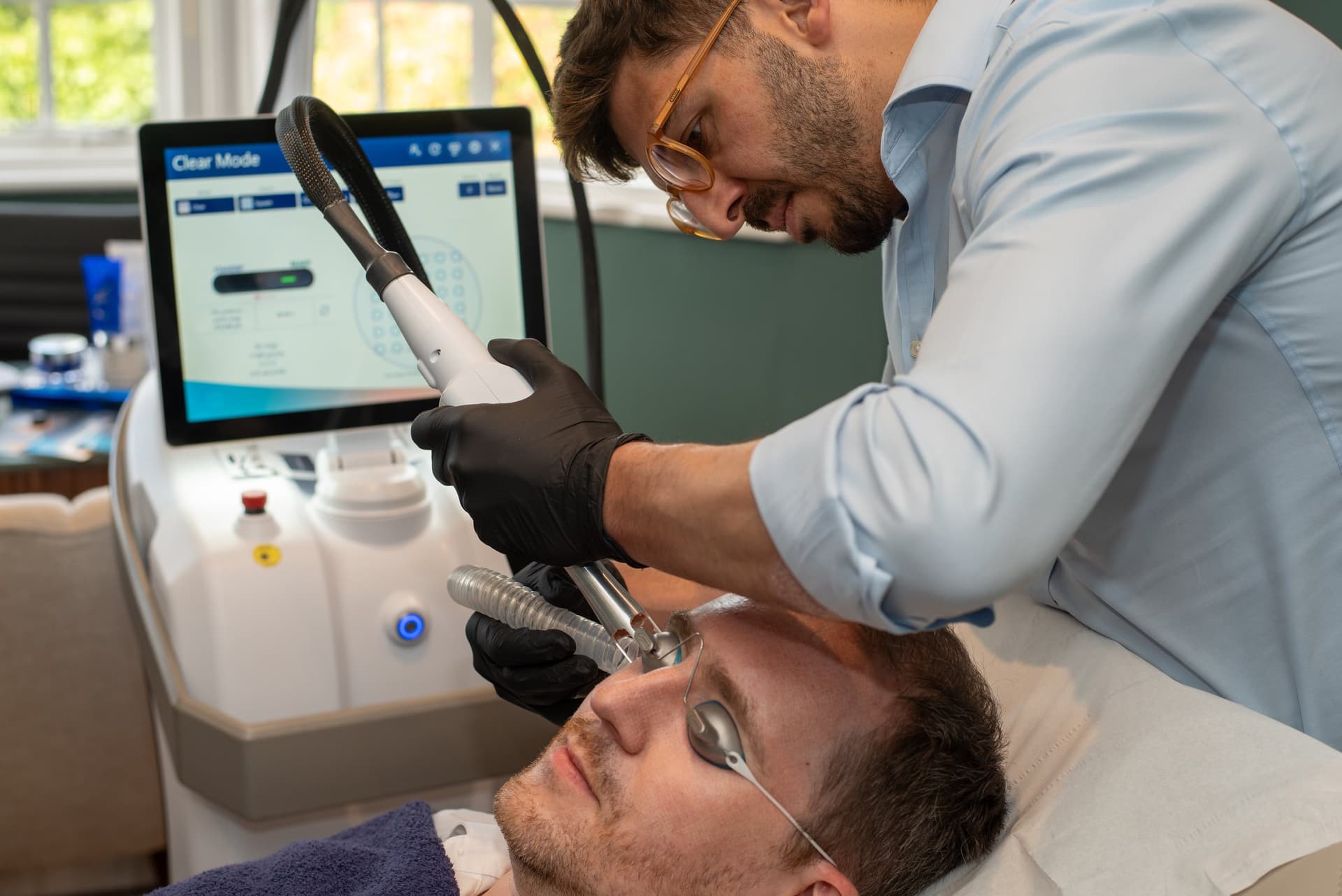
UltraClear is a 2910 nm cold fibre laser, and Dr Mattia Parducci performs every treatment himself. It resurfaces through thousands of microscopic channels, lifting away the worn surface. Your own healing then rebuilds the collagen beneath it, and the clever part is the temperature.
About 95% of the laser’s energy goes into removing tissue, and only about 5% lingers as warmth. That warmth stays inside each channel rather than spreading into the skin around it. Healing takes days rather than weeks, and the result keeps building for months. For skin that has lost collagen faster in five years than in the twenty before, that is very welcome news.
Menopause is finally being talked about properly in Britain, and skin has been the quiet chapter. One figure explains a great deal: up to 30% of the skin’s collagen goes in the first five years after menopause. Collagen is what keeps skin plump, smooth and springy. Losing nearly a third of it so quickly is why the face changes faster at 52 than at 42.
You see it as a softening along the jawline, and as a thinner, more crepey texture across the cheeks. Lines around the mouth arrive in a season rather than a decade. Skin that used to glow for a fortnight after a good facial now gives the glow back within days. Pores look more open, because the collagen that once held them tight has thinned.
None of this is a failure of your routine. The serums you have kept faith with work on the surface, and the surface is not where this change is happening. Collagen sits in the dermis, well below the reach of any cream. A skincare shelf that served you faithfully for a decade suddenly seems to do much less.
The Journal of Cosmetic Dermatology gathered specialists for a 2026 round table on perimenopausal and menopausal patients. That is a measure of how seriously the field now takes this stage of life. The encouraging part is that skin at this age still has the machinery it needs to make collagen. What it lacks is the prompt, and a resurfacing laser is precisely that.
A resurfacing laser removes the tired outer layer in a controlled pattern, so fresh skin comes through and new collagen forms beneath it. For years the price of that was heat. Older resurfacing lasers warmed the skin around each channel and stretched recovery to a fortnight. The cold fibre changes that, and Harper’s Bazaar in June 2026 called cold lasers the hottest new skin treatment.
The treatment that suits menopausal skin is the UltraClear depth, which reaches the mid dermis. Dr Mattia works across the face in a fractional pattern. He opens thousands of microscopic channels and leaves the skin between them untouched. Those islands of intact skin are what heal the surface so quickly, and the channels themselves set collagen production going again.
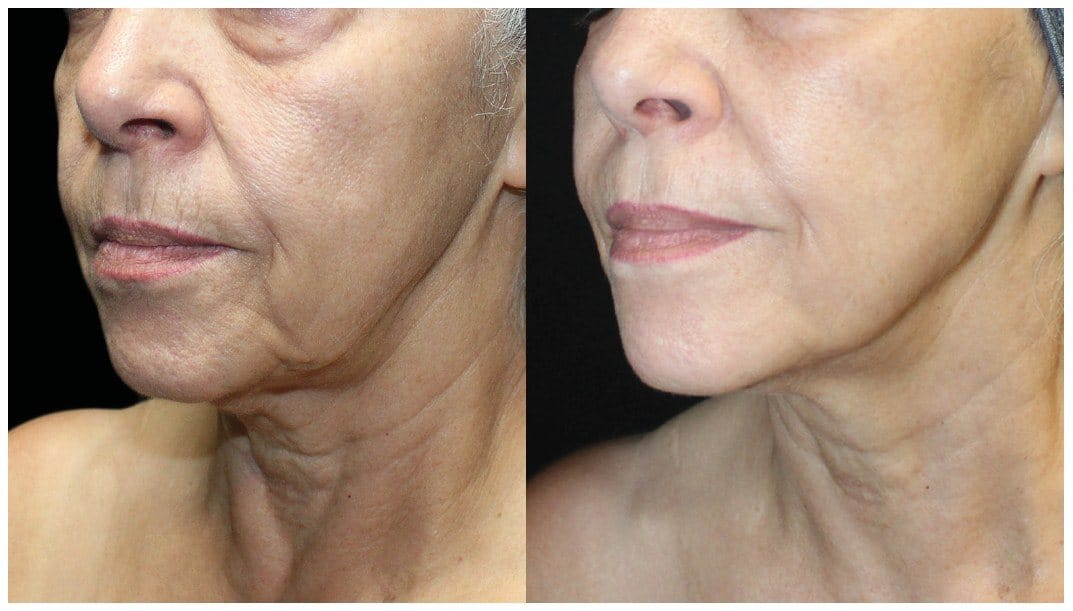
Once the new surface comes through, you notice a smoother, brighter finish across the cheeks. The lines around your mouth soften first. Over the following three to six months the firmer feel arrives, as collagen reorganises and the skin settles into a more even, luminous quality. Dr Mattia judges the result at three months, and it carries on improving after that.
UltraClear was designed for every skin tone, from Fitzpatrick I to VI. NewBeauty gave it a 2026 Beauty Award as Best Laser Treatment for All Skin Tones. For a woman weighing a resurfacing laser for the first time in her fifties, that gentleness is a reassuring place to start.
The face is where most people start and it is not where the laser stops. The neck, the chest and the backs of the hands have taken the same sun and thinned with the same hormones, and they often show it sooner because the skin there was never as thick. Dr Mattia treats all three with the same settings, chosen more gently for thinner skin, so the neckline and the décolletage keep pace with the face.
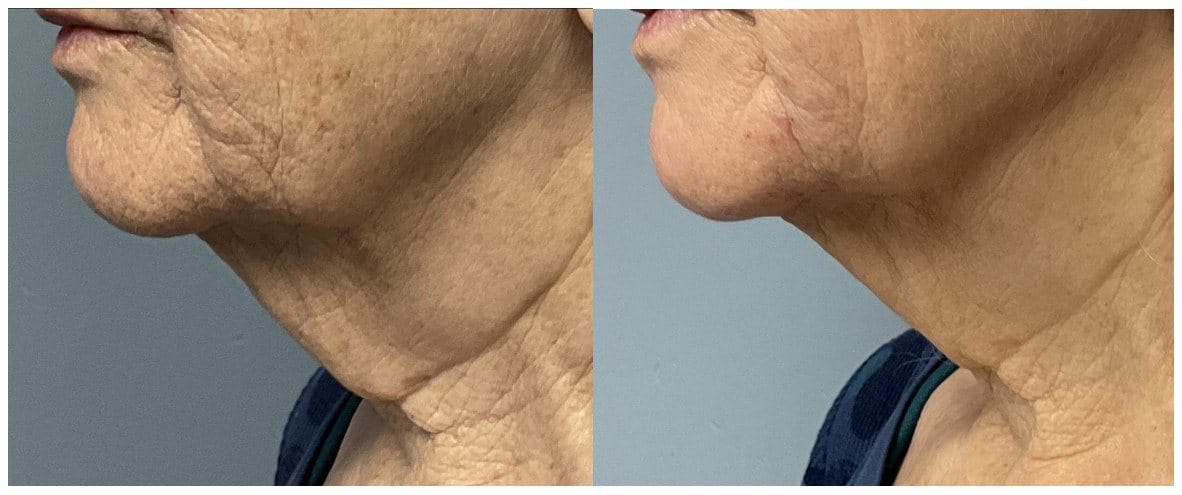
One laser rarely does everything, and Dr Mattia says so plainly at the consultation. UltraClear works on the surface and on the collagen beneath it, which is where menopausal skin changes most. It does not restore lost volume in the cheeks or temples. Where that is part of your picture, he will talk you through biostimulators, which do.
The plan he sets at this stage pairs the laser with treatments that work beneath the surface. Profhilo brings back the bounce and hydration that thinner skin loses. Polynucleotides support the skin’s own repair, so the collagen your laser sessions prompt has the best conditions in which to form. Together they make up the menopause skin plan at Cannelle.
This is where a doctor-led clinic earns its place. Pairing a resurfacing laser with injectable boosters is a medical plan rather than a menu choice. Dr Mattia sets the order, the spacing and the settings from what he sees in your skin. He sequences the skin boosters around the laser sessions, so your skin is never asked to heal two things at once.
If a different combination would suit you better, he says so before anything is booked. The point of the consultation is a plan written for the skin you have now, rather than the one you had at 42. You will know what each treatment is for and when it happens.
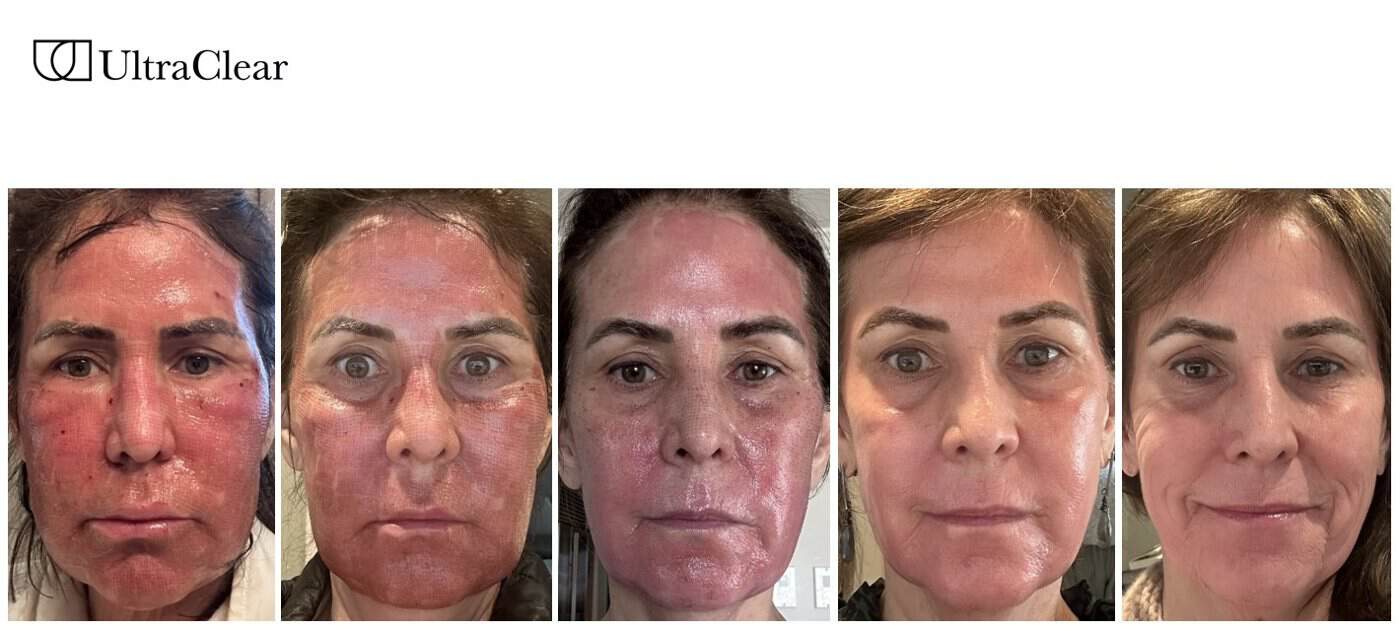
Healing after the UltraClear depth follows a set rhythm. The skin flushes on the day and feels warm, much like a day spent outdoors without a hat. Over the next three to seven days it flakes as the old surface lifts away. The new surface arrives pinker and finer, and once the flaking settles it is ready for make-up and a normal week.
The series below was photographed on each of the five days after a single customised UltraClear treatment, so you can see the week you would be booking rather than imagine it.
You leave with a written routine rather than a list to remember. It covers barrier cream and gentle cleansing while the surface is new, plus sunscreen every morning. There is no heat, exercise or swimming until your skin has healed. Dr Mattia gives you the date your retinoids and acids come back, so the routine that has served you well is paused rather than abandoned.
Once the course is complete, the lightest UltraClear treatment keeps the result glowing. A 3DMIRACL pass takes 10 to 15 minutes, with no numbing and no downtime. You feel a sunburn-like warmth that settles within hours, and the brightness shows within days. Taken in a monthly rhythm, it holds what the depth restored, so the face you see at three months is the one you keep.
Your first visit is a consultation with Dr Mattia Parducci (GMC 7635663), our Lead Aesthetic Doctor. He looks at your skin in good light and under VISIA skin imaging. That shows the texture, pore size and sun damage sitting beneath the surface. From there you talk through what has changed, what bothers you most and what you would like back.
In London, at our sister clinic Dr Joney De Souza Skin & Laser, he has performed more than 100 of these laser treatments. He performs every UltraClear treatment at Cannelle himself. The laser suits every skin tone, from the fairest to the deepest. He patch tests deeper tones before the first full session, so your settings are decided on your own skin.
He will ask a few questions that are easy to answer and easy to forget. Any isotretinoin in the last year, hormone treatment you are taking, a recent tan, a history of cold sores, and whether your skin has ever healed with a thick or raised scar. They are the ordinary checks of a laser consultation, and they let him set the treatment with confidence.
The UltraClear depth typically runs to two or three sessions, three to four months apart, with skin boosters woven between them. That is the average, and your consultation turns it into a plan with dates on it. By the time you leave you will know what is being treated, how it is spaced and what your face will look like week by week.
If your skin has changed faster in the last few years than ever before, a consultation is the useful next step. Cannelle sits in Summertown, welcoming patients from across Oxfordshire, and women drive in from Wolvercote, Kidlington and Woodstock for this appointment. We are the only clinic in Oxford where an experienced doctor performs UltraClear. Have a look at the UltraClear before and afters, or get in touch and we will take it from there.
The doctor who performs every UltraClear session at Cannelle, filmed treating with the same laser at our sister clinic in London, Dr Joney De Souza Skin & Laser. Watch how the handpiece moves, how calm the skin stays, and how little fuss the whole thing involves.
If your face has changed faster in the last few years than in the twenty before them, come and talk it through with Dr Mattia Parducci. He will look at your skin under VISIA imaging and set a plan for the skin you have now. Call 01865 511960 or message us on WhatsApp.
These are the questions women ask most often when they first read about resurfacing at this stage of life. A consultation answers them properly for the skin you have now, and these will get you started.
It suits it very well. UltraClear works on the surface and on the collagen beneath it, and those are the two things that change fastest in the years after menopause, when up to 30% of skin collagen goes. The UltraClear depth reaches the mid dermis and prompts your own skin to rebuild collagen, which is exactly what thinner, less springy skin at this stage needs.
No, and it is worth being clear. UltraClear is a laser for the skin, and it suits the way skin changes after menopause: the thinning, the fine lines around the mouth and the loss of bounce across the cheeks. It has nothing to do with hormones. What it does is ask your skin to rebuild the collagen it has lost, and it does that beautifully.
Not on its own. UltraClear resurfaces the skin and rebuilds the collagen beneath it, so texture, tone and firmness all improve, but it does not replace volume that has gone from the cheeks or temples. Where volume is part of your picture, Dr Mattia will talk you through biostimulators, which do restore it, and he often pairs the two in one plan.
Three to seven days. The skin flushes on the day and feels warm, then flakes over the following days as the old surface lifts away and the new one comes through, pinker and finer. Once the flaking settles you are back in make-up and back to your week. You leave with a written routine, and Dr Mattia sets the date your retinoids and acids return.
The change surfaces once healing finishes, as a smoother and brighter finish across the cheeks and softer lines around the mouth. The firmer feel arrives over the following three to six months as collagen reorganises beneath the new surface, and Dr Mattia judges the result at three months. It carries on improving after that, which is one of the nicest things about it.
The UltraClear depth typically runs to two or three sessions, three to four months apart, and that is the whole course. Dr Mattia often weaves skin boosters between the sessions so that each supports the other. That is the average, and the depth of your lines and the texture you start with both move it, so Dr Mattia confirms your course at the consultation.
Yes, and for menopausal skin that pairing is the plan Dr Mattia most often sets. UltraClear works on the surface and the collagen beneath it, Profhilo brings back hydration and bounce, and polynucleotides support the skin’s own repair. He sequences them so that your skin is never asked to heal two things at once, and he sets the order at your consultation.
It was designed for every skin tone, from Fitzpatrick I to VI, and NewBeauty gave it a 2026 Beauty Award as Best Laser Treatment for All Skin Tones. The cold fibre keeps warmth inside each channel rather than spreading it into the skin around it, which is what widens who can safely be treated. Dr Mattia patch tests deeper tones before the first full session.
The treatment is performed start to finish by Dr Mattia Parducci (GMC 7635663), who leads the clinic as our Lead Aesthetic Doctor. More than 100 of these laser treatments lie behind him at our sister clinic in London, Dr Joney De Souza Skin and Laser. He sets your settings, your spacing and your aftercare personally, and you meet him at your consultation.
It is a new arrival. The manufacturer lists 33 UK clinics, roughly 20 of them in London, and Cannelle is the only clinic in Oxford where it is performed by a doctor who has already performed more than a hundred of these treatments. Dr Mattia has been performing it at our sister clinic in London, so the laser arrives in Oxford with a doctor who already knows it well and the plans he has built around it.
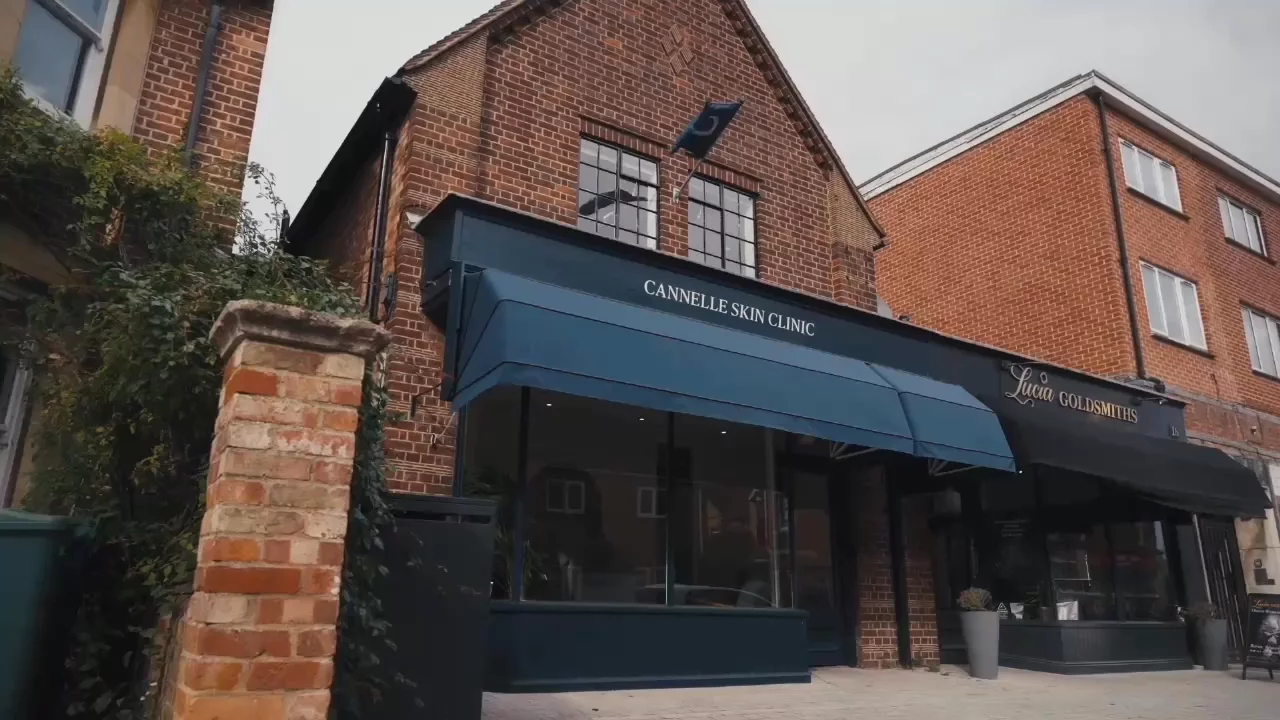
Our clinic is located in Summertown, Oxford, just north of the city centre in one of Oxford’s most sought-after neighbourhoods. Discreet and easy to reach, we offer a premium setting for bespoke skin, aesthetic and wellness care.
We welcome patients from across Oxford city and Oxfordshire, including Summertown, Headington, Kidlington, Abingdon, Bicester, Witney and the surrounding towns and villages. Whether you’re coming for routine skin-health treatments or specialist aesthetic consultations, our location is well connected and simple to access.
Our clinic, Cannelle Skin Clinic, is just minutes from Oxford city centre and easily reached by car, bus or rail. Oxford’s mainline stations Oxford Station and Oxford Parkway are a short taxi or bus ride away, and regular services link to London, Reading, Didcot, Banbury and beyond.
By car, we’re conveniently accessed via key local routes with nearby parking options; by public transport, frequent bus routes along Banbury Road drop you within a short stroll of the clinic.
Whether you’re travelling from within Oxfordshire, further afield in the UK or internationally, our clinic offers a calm, personalised and professional environment for your visit.