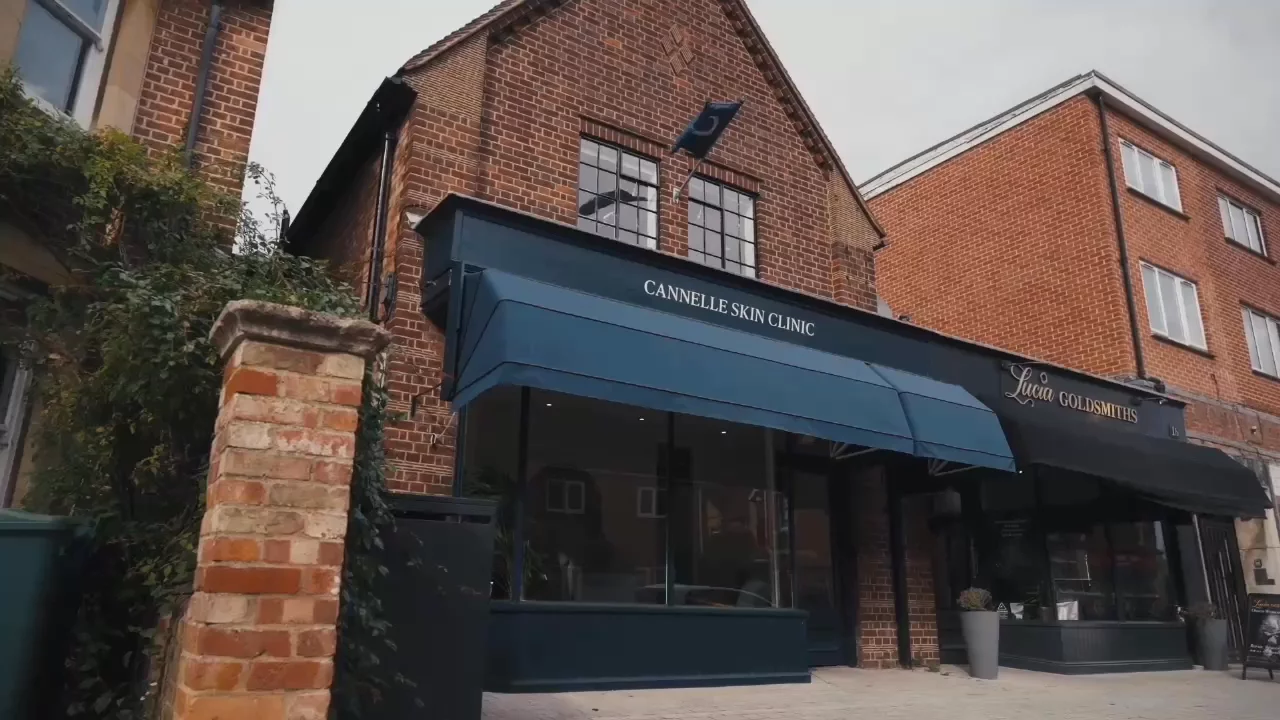
The patches come back every summer and your serums have barely touched them. Melasma is hormonal and heat sensitive, and PicoSure at Cannelle in Oxford is built for pigment that sits this deep.
The patches came back again this summer, soft at the edges and stubbornly matched on both cheeks. You have kept up with the brightening serums and the high factor sunscreen, and they have barely shifted. What you are looking at is melasma, and it behaves unlike any other mark on a face. PicoSure at Cannelle Skin Clinic in Oxford is built for pigment that sits this deep.
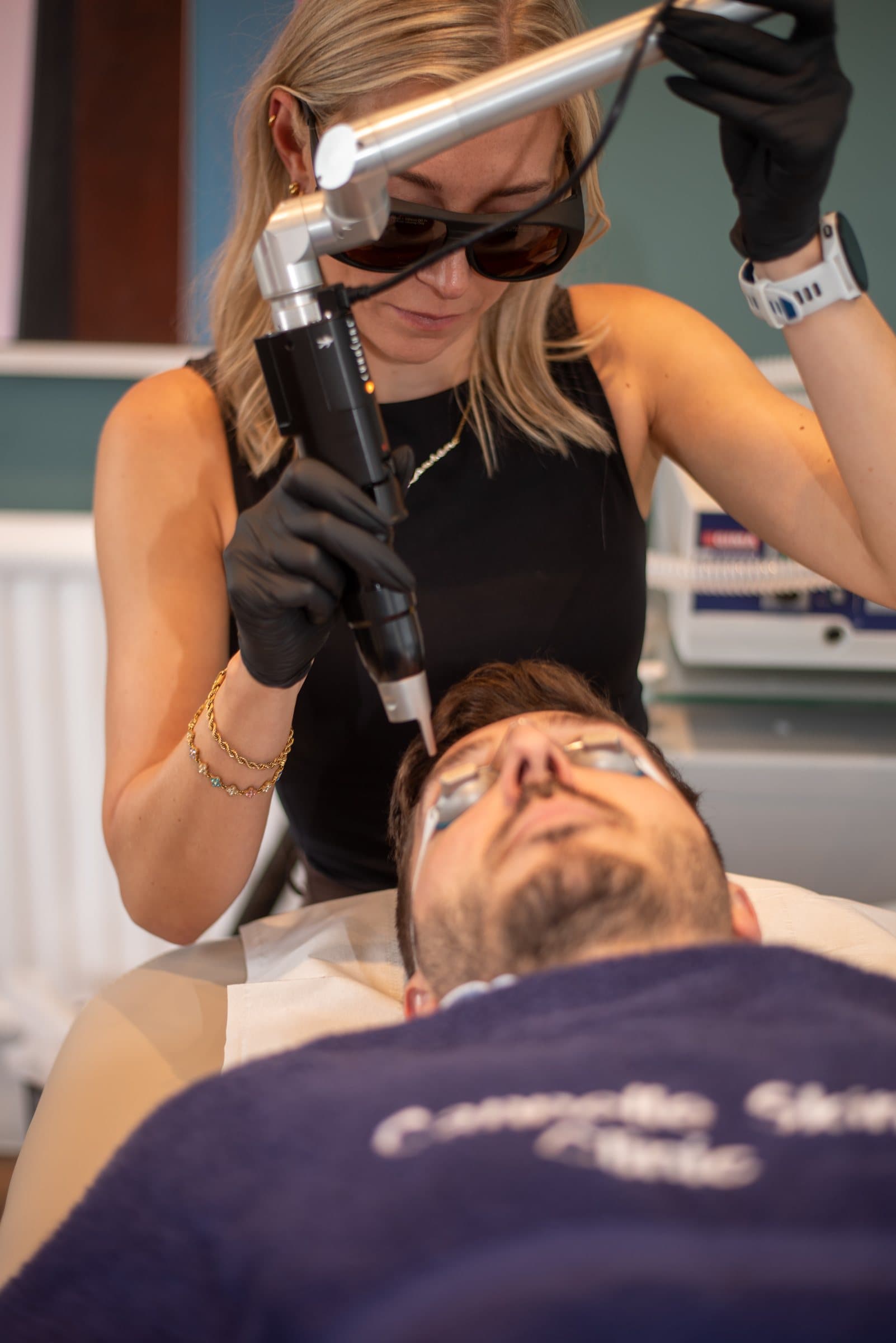
The clever part is how little heat is involved. Each pulse is done in about a trillionth of a second, so the pigment is shattered by pressure rather than warmed. The fragments are fine enough for your lymphatic system to carry away. Nothing is taken off the surface of your skin. Melasma rewards that restraint more than any other pigment does.
Dr Mattia Parducci (GMC 7635663) leads the clinic and sets every PicoSure plan and its settings. He has performed more than 100 of these laser treatments, already at our sister clinic in London, Dr Joney De Souza Skin & Laser. He assesses every pigment case himself, which matters here, because melasma is the mark most often mistaken for something else.
Melasma shows up as larger, soft edged patches, usually symmetrical across the cheeks, the upper lip or the forehead. It answers to hormones and to heat as much as it answers to sunlight. Pregnancy, the contraceptive pill and the years around menopause all bring it forward. A strong summer or a hot kitchen can do the same.
That hormonal root is why your serums have underperformed. A good cream lifts the shallowest pigment and leaves the deeper clusters exactly where they sit. Melasma is not a sun spot, and treating it as one is what keeps it coming back. It needs a plan that reaches the depth the pigment is actually sitting at.
You notice it most in daylight, when the light falls across the cheek and the patch reads as a shadow that will not wash off. Concealer flattens it for a morning, and the edges are showing again by the afternoon. It is a nuisance rather than a danger, and knowing exactly what it is turns it into something with a plan attached.
Melasma also falls hardest on deeper skin tones, where reported prevalence runs as high as 40% in South Asian populations. Asian residents make up 15.4% of Oxford, so a great many women in this city are living with it. Plenty of them have been told that their skin type rules out laser treatment altogether. That sentence has kept people out of clinics for years.
Melasma is heat sensitive, and that is the detail most treatments miss. Devices that work by warming the skin can leave melasma more stubborn than they found it. The British Skin Foundation notes that some melasma treatments irritate deeper skin and set off further pigmentation. That is the experience behind a great deal of disappointment, and it is not a failing of your skin.
A picosecond pulse changes what actually reaches you. At a trillionth of a second the energy arrives as a sharp mechanical pressure, and almost no warmth follows it in. PicoSure runs at 755 nm, a wavelength that brown pigment absorbs strongly, so the light goes after the colour you want gone. The skin around each patch is left alone.
What that means for you is a treatment melasma tolerates. There is no long recovery to arrange your week around, and you leave pink and warm for a few hours at most. Your skin looks brighter over the following weeks as the fragments clear, rather than flaring and settling back into the same patch.
The published evidence is catching up with what melasma has always needed. A small 2026 case series in the Journal of Cosmetic Dermatology followed ten patients with Fitzpatrick III to V skin. They were treated with a 755 nm picosecond laser, and the series reported reduced pigment with minimal side effects. Ten patients is a small study, and it is a welcome piece of evidence for women who have waited a long time for any.
[ASSET PLACEHOLDER 1: Before and after. Melasma across the cheeks on Fitzpatrick V skin, after a full PicoSure course. Credit: Images courtesy of Cynosure]
Three marks look almost identical in a bathroom mirror and behave nothing alike under a laser. Melasma is soft edged, symmetrical and driven by your hormones. A sun spot is a discrete, well defined deposit of pigment, and it tends to stay cleared once it has gone. A post breakout mark is flat, brown or grey, and it fades on its own timeline long after the spot has healed.
Telling them apart is the work of the consultation rather than of guesswork at home. Dr Mattia examines your skin in good light and under magnification, and he reads how deep the pigment is sitting. The depth sets the settings, and the settings are what keep melasma calm rather than provoked. Where a mark needs dermatology or histology input, the clinic arranges that referral for you.
[ASSET PLACEHOLDER 2: Graphic, melasma against a sun spot against a post breakout mark, shown side by side with depth and edges labelled. Credit: Cannelle Skin Clinic]
Pigmentation at Cannelle averages a course of three sessions, four to six weeks apart, and most people see a lift after the first. Melasma asks for the full course and then maintenance once or twice a year. It is managed rather than cured, which is a plan rather than a disappointment. Handled patiently, melasma settles, and your skin looks clearer and more even between visits.
Daily sun protection is the other half of that plan, through an Oxford summer and a bright winter morning alike. A medical grade routine does the quieter work at home between your sessions. Tyrosinase inhibitors are what Dr Mattia reaches for most often. Have a look at the medical grade skincare we stock, and he will tell you which of it your skin genuinely needs.
Pigmentation sessions start from £230, with a course of three from £585 for a small or focal area. A full face is £390 a session or £995 for a course of three, and face and neck is £510 or £1,300. Every band sits on the PicoSure page, and the wider picture is on our pigmentation page.
A consultation comes first, and what is decided there shapes the rest of your course. Dr Mattia reads your skin with VISIA skin imaging, which shows how much pigment is sitting below what the mirror shows you. He asks about your hormones, your medication, the sun you get and what you are already using at home.
If you have a deeper skin tone, a patch test comes first. A small, discreet area is treated at the settings chosen for you, and your first full session waits at least twenty four hours behind it. Fitzpatrick types IV, V and VI are treated here regularly. The 755 nm wavelength has a strong safety record when the settings are matched to the person in the chair.
On average you are looking at a course of three, then maintenance once or twice a year. Your own course is counted at the consultation, once Dr Mattia has read the pigment properly. Where another treatment would serve your skin better, he says so plainly. You leave knowing what is being treated, how the sessions are spaced and what the whole course costs.
Melasma has a habit of being put off, because it comes and goes with the seasons and never quite forces the issue. The month you start in matters far less than starting. Your course is planned around the patches you can see today. Come in and you will at least know precisely what you are dealing with.
If you have ever been told that your skin type rules out lasers, that conversation is worth having again in Summertown. Cowley, Headington and Kidlington are all short journeys in, and anyone across Oxfordshire living with melasma is welcome to have this pigment read properly. Everything else sits on the PicoSure treatment page, and a message through get in touch starts that conversation with him.
A consultation at our Summertown clinic gives you a clear reading of the pigment you have been fighting with creams. Dr Mattia sets your plan and your settings himself. Call 01865 537885, message us on WhatsApp, and we will get you booked in.
These are the questions we hear most from people who have spent years on creams for melasma. If yours is not here, Dr Mattia will answer it properly when he looks at your skin.
Melasma is a hormonally driven pigmentation that shows as larger, soft edged patches, usually symmetrical across the cheeks, upper lip or forehead. It answers to hormones and heat as much as to sunlight, which is why pregnancy, the contraceptive pill and the years around menopause so often bring it forward. It sits deeper than most creams can reach, and it responds beautifully to patient, low heat treatment.
A good serum lifts the shallowest pigment and leaves the deeper clusters exactly where they were, so the patch lightens a little and then returns. Melasma also answers to hormones and heat, which no cream can change. PicoSure works below the level your skincare reaches, and a medical grade routine at home then holds the result steady between sessions.
Melasma is managed rather than cured, and that is the honest and useful way to plan it. A full course clears the pigment you can see, and maintenance once or twice a year keeps it settled, since the hormonal tendency behind it does not go away. Alongside daily sun protection, that plan keeps skin looking even for years rather than for weeks.
PicoSure is suitable across Fitzpatrick types I to VI when the settings are matched to you, and types IV, V and VI are treated at Cannelle regularly. Because each pulse works by pressure rather than heat, very little warmth reaches the skin around the patch. Dr Mattia sets the settings himself and patch tests deeper tones before your first full session.
Pigmentation averages a course of three sessions, four to six weeks apart, and most people notice a lift after the first. Melasma asks for that full course and then maintenance once or twice a year, because the hormonal tendency behind it stays with you. Those are averages, and Dr Mattia sets the course your own skin needs once he has seen it.
Because each pulse is over in about a trillionth of a second, the sensation is brief rather than sustained. Most people describe a light flicking feeling, and the treated area is pink and warm for a few hours afterwards. The surface of your skin is never removed, so you can go straight back to your day with sunscreen on.
They look alike in a bathroom mirror and behave nothing alike under a laser. Melasma is soft edged, symmetrical and hormonally driven, while a sun spot is a discrete, well defined mark that tends to stay cleared once it goes. Dr Mattia tells the two apart at your consultation, under bright light and with VISIA imaging, and the settings follow from what he sees.
The tendency stays, because it is hormonal, so the plan builds that in from the start. A full course clears what you can see now, and a maintenance session once or twice a year keeps it quiet. Daily sun protection is the other half of holding that result, in an Oxford summer and on bright winter mornings too.
Dr Mattia writes your routine at the consultation, and it usually centres on a tyrosinase inhibitor and sunscreen every single day. The idea is simple enough: the laser clears the pigment already there, and your home routine slows the skin down from making more. You can see the medical grade skincare we stock, and he will tell you which of it your skin needs.
Pigmentation is priced by the area being treated. A small or focal area is £230 a session or £585 for a course of three, a full face is £390 or £995, and face and neck is £510 or £1,300. The eye area or perioral area is £230 or £585. Your consultation sets the area and the course, so you know the full cost before anything begins.
Our clinic is located in Summertown, Oxford, just north of the city centre in one of Oxford’s most sought-after neighbourhoods. Discreet and easy to reach, we offer a premium setting for bespoke skin, aesthetic and wellness care.
We welcome patients from across Oxford city and Oxfordshire, including Summertown, Headington, Kidlington, Abingdon, Bicester, Witney and the surrounding towns and villages. Whether you’re coming for routine skin-health treatments or specialist aesthetic consultations, our location is well connected and simple to access.
Our clinic, Cannelle Skin Clinic, is just minutes from Oxford city centre and easily reached by car, bus or rail. Oxford’s mainline stations Oxford Station and Oxford Parkway are a short taxi or bus ride away, and regular services link to London, Reading, Didcot, Banbury and beyond.
By car, we’re conveniently accessed via key local routes with nearby parking options; by public transport, frequent bus routes along Banbury Road drop you within a short stroll of the clinic.
Whether you’re travelling from within Oxfordshire, further afield in the UK or internationally, our clinic offers a calm, personalised and professional environment for your visit.